Martial Development

Martial arts for personal development

Watch “The Men Who Stare At Goats” Free Online

November 3rd, 2009 · 7 Comments

Maj. Gen. Albert N. Stubblebine III: The key to all of this…it has nothing to do with bending metal [spoons]…Lord Mercy, if I can do that with my mind, what else can I do? It wasn’t clear whether they thought I was nuts. In any event, the reaction that I got was, “we’re not very interested.”

But as Jon Ronson’s investigation shows, they were in fact very interested. During the last few decades, the United States military has conducted a series of experiments in psychic warfare. On the record, these attempts to create superhuman “warrior monks” for a “First Earth Battalion” were a complete failure. (Off the record, you have no need to know.)

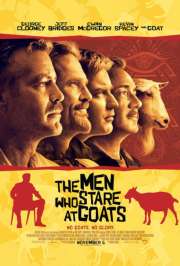
The Men Who Stare at Goats

One of the least successful experiments is parodied in the new Hollywood comedy “The Men Who Stare at Goats,” and further documented in a book of the same name. It is also covered in the British documentary “Crazy Rulers of the World”, which you may watch for free below. [Read more →]

Qi Magazine: Free To Download Today

September 14th, 2009 · 7 Comments

Qi Magazine covers

For almost twenty years, Qi Magazine featured original articles on kung fu, qigong, and other facets of Chinese culture, many written specifically by and for martial artists. (Qi Magazine is not to be confused with Qi Journal, which seems more targeted to the Goji berry set.)

Qi Magazine ceased production in early 2009, and publisher Michael Tse has since opened the archives. [Read more →]

One Man’s Experience With Spring Forest Qigong

September 10th, 2009 · 9 Comments

Below is the second half of our exclusive interview with qigong researcher Drew Hempel. (Here is the first half.)

Through this intensive practice, you progressed rapidly. What experiences and events marked this progress? In what manner was your brain “transformed”?

The first energy transmission I had from Master Chunyi Lin was this flash of light (while my eyes were closed)…very bright, and my whole body filled with this amazing deep bliss. [Read more →]

A Conversation with Qigong Researcher Drew Hempel

September 9th, 2009 · 1 Comment

The enigmatic Drew Hempel—activist, author, polymath, and accomplished qigong practitioner—shares his fascinating story in this Martial Development exclusive interview.

Drew, how were you first introduced to the ancient art of qigong?

I first discovered Taoism back in the 1970s, in first grade. My best friend at the time was adopted from Korea. He told me he always got his lunch from “Tao Foods” [a local grocery store], so that made me wonder what it was about.

Later, in 1995 I noticed a flyer posted to see qigong master Effie P. Chow, a Chinese master who lives in San Francisco. Immediately I wanted to go, but I was also skeptical of New Age gimmicks. I actually called to request a lower entrance fee, [Read more →]

Mantak Chia on Sex, Discipline, and Qigong

September 8th, 2009 · 7 Comments

Mantak Chia
Mantak Chia

Mantak Chia was born in Bangkok, Thailand in 1944. His pursuit of Taoist teachings led him to meet the White Cloud Hermit Master Yi, a Taoist Master living in the mountains near from Hong Kong.

Over a period of five years, Master Yi transmitted to Master Mantak Chia the most sacred and closely held Taoist practices, formulas and methods of internal alchemy, culminating in the Reunion of Heaven and Man.

The author of dozens of books, booklets, videos and CDs describing these practices, Master Mantak Chia has taught hundreds of thousands of eager students the principles of Taoist internal practice over the past 40 years.

Following is an excerpt from a recent Blog Talk Radio interview with Mantak Chia:

Lama Tantrapa: What is the purpose of qigong practice?

Mantak Chia: The initial purpose of qigong practice is to become stronger, to heal yourself, and increase your wisdom and knowledge. The early stages are like Taiji, and afterwards we can begin what we call supreme inner alchemy practice. [Read more →]

The Challenge and Promise of Scientific Qigong Research

June 23rd, 2009 · 6 Comments

Excerpted from Professor Lu Zuyin’s “Scientific Qigong Exploration”, a survey of qigong research experiments conducted in China between 1978 and 1992.

Scientific research in the last ten years has captured many external qi phenomena and qualitatively recognized certain characteristics of external qi. On the whole, research on external qi is still at a qualitative stage. It is not easy to establish quantitative laws and phenomenological theories thereby moving to a quantitative stage.

The difficulty is mainly due to insufficient investigation of external qi and the resulting lack of scientific means to express the level of external qi. With more than a thousand qigong schools and numerous different qigong methods, it is difficult to establish common standards.

In addition, a qigong master’s qi-emission power is closely related to his own physical, mental, emotional state at the time of qi emission. As a result, each external qi emission is at best only roughly the same, and it is not as precisely reproducible as an instrument. Experiments seeking basic laws of external qi are not easy to accomplish because they require tens or even hundreds of strictly repeated experiments.

[As demonstrated by our previous experimental results,] qigong is more advanced than contemporary science, thus it is difficult to fit into the framework of contemporary science. However, like all fields of scholarship, if qigong research does not pass strict scientific examination, it will not survive in contemporary society, let alone be accepted in international academic circles. This is a fundamental contradiction. [Read more →]

Chi Gong 101: How to Feel Your Chi Energy

June 17th, 2009 · 35 Comments

A Simple Guide In Plain English

Introduction

  • Chi (qi) is an ancient Chinese term, which can be translated as energy. Like energy, the word chi is used in both abstract and concrete terms, and applied to both general concepts and specific phenomena. In other words, chi is ambiguous. (People who use the term often have a specific meaning in mind.)
  • In the broadest sense of the word, chi is generally understood to be pervasive, present in everyone and everything, but it is not uniformly distributed.
  • Chi moves freely around the universe, assuming various forms along the way. Disciplines such as Chi Kung (Qigong) and Feng Shui purport to observe and manipulate chi, for the specific benefit of human life.

[Read more →]

The Devil’s Dictionary of Martial Arts

April 19th, 2009 · 17 Comments

The Devil's Dictionary

BLACK BELT – That uniform accessory most coveted by students of martial arts, who, upon receiving it, pretend it never held any interest at all.

PRACTICE – To endlessly repeat the same sequence of movements, always hoping for different results. (See also: INSANITY.)

KATA – An awful form of dance, often assumed to divulge some hidden meaning after sufficient PRACTICE.
[Read more →]

“Empty Force” and No-Touch Knockouts Real? Take Our Survey

December 4th, 2008 · 9 Comments

Many martial arts bloggers (Striking Thoughts, Mokuren Dojo and Dojo Rat to name a few) have published their opinions on the veracity of chi projection, empty force (ling kong jing) and no-touch knockouts. Naturally, I have a few opinions of my own–but I do not intend to share them here and now. No, my purpose today is a humble and scientific one: to gather data.

The plural of anecdote is data, right? So, please take this multiple choice poll. [Read more →]

The Rise and Fall of Mesmerism

June 7th, 2008 · 23 Comments

The Cure Within: A History of Mind-Body Medicine

The following passage is excerpted from “The Cure Within: A History of Mind-Body Medicine” by Anne Harringtona recent addition to my recommended reading list.

The End of Medical Exorcism in Europe

Appreciating the interweaving religious, philosophical and political stakes [in 18th century medicine] is important, because it can help us make sense of an episode whose significance we might otherwise misinterpret: the showdown between the German exorcist Father Johann Joseph Gassner and the Viennese physician Anton Mesmer.

Johann Joseph Gassner

Gassner was an exorcist whose ability to cast out devils was legendary. People came from all over to be healed, and in dramatic public performances—witnessed by crowds from all sectors of society—Gassner would oblige. Official records were made; competent witnesses testified to the extraordinary happenings. All agreed on the basic facts. On being presented with a supplicant, Gassner would typically wave a crucifix over his or her body and demand in Latin that, if the disease he was seeing had a “preternatural” source, this fact must be made manifest. The patient would then typically collapse into convulsions, and Gassner would proceed to exorcise the offending spirit.

Sometimes he added flourishes to this basic routine: in one dramatic instance, for example, he ordered the demon inside a woman to increase the poor woman’s heartbeat and then to slow it down. [Read more →]