Entries Tagged as 'Meditation'
Are you feeling run down? Suffering from tired blood? Do encounters with foreign cultures leave you confused and angry?

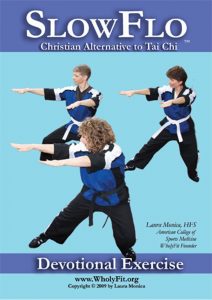
If so, then we have a solution for you. It’s called SlowFlo, the Christian alternative to Tai Chi.
Inspired by Chuck Norris, the art of SlowFlo reforms the inscrutable pagan art of Tai Chi Chuan into a safe and guilt-free form of Christian exercise. [Read more →]
September 21st, 2010 · 8 Comments
A Martial Development Meta-Investigation
I can see inside Vyacheslav Bronnikov’s head.
Not because I possess the disputed X-ray vision skills–though if I did, I would probably keep quiet about it. No, I’m just saying that I may understand what Bronnikov was thinking when he did what he did.
I should back up, and tell the tale from the start. Derren Brown is a renowned ‘psychological illusionist,’ a performer who combines magic, suggestion, psychology, misdirection and showmanship in order to seemingly predict and control human behavior. Imagine a younger, more talented, and more personable version of James Randi…
For the past ten years Derren has created TV and stage performances that have stunned audiences, debunked the paranormal and encouraged many to improve and enhance their own mental abilities. His first show appeared in 2000, Derren Brown: Mind Control, and followed with Trick of the Mind, Trick or Treat and a series of Specials including the controversial Russian Roulette and the hugely popular Events.
In the second episode of his latest television series, Darren Brown Investigates…, the illusionist set out to test The Bronnikov Method of human potential development. Created by Vyacheslav M. Bronnikov, this system–based in ancient Tibetan Yoga–promises to awaken dormant human skills and abilities, among them the ability to see while blindfolded, or indeed with no eyes at all.
Derren traveled to a Bronnikov seminar in Belgium, accompanied a woman who has been legally blind for more than a decade. As for what happened next… [Read more →]
September 17th, 2010 · 1 Comment

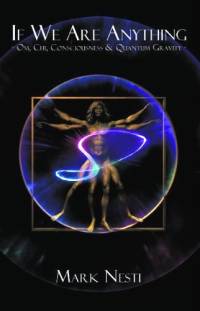
Mark Nesti is not your average New Age flake. After five years’ service with a recon/sniper cell in the Australian army, his career shifted into helicopter testing and maintenance, emergency communications, and business development. When he eventually began to explore the fields of theoretical physics and alternative therapies, his broad engineering mindset granted him a unique perspective.
Mark wrote a book about his exploration and research into quantum mechanics, meditation, chi, and consciousness. He isn’t promising you a new car or a diamond necklace in return for your fealty, but you may find his work rewarding in other ways. Mark recently sent me a few words regarding his personal inspiration and investigation, which I share with you below.
—
Perhaps, in some measure, modern society has lost regard for nature, in a divine sense, or otherwise. If true, this can only be attributed to a loss of spirit within the individual. In an attempt to define the connection between science and spirituality, between the observer and the included, I hope that spirit will be reunited.
I would like to share with you a personal experience of just how powerful some types of meditation can be. Many of you already know that there are many forms of meditation, from practices which are designed to energize and relax, all the way to practices aimed at raising awareness, and some with the specific goal of raising the levels of Chi (accumulations called Kundalini) within the human system. I am of the belief that western society, in a general sense, is not yet ready to tackle the more advanced forms of meditation. My reasoning is that, as a culture, we have not yet been exposed to this type of practice as a part of our daily activities. Furthermore, we have not been raised from children with such disciplines integrated within our daily lives. You will see what I mean as we progress.
Several years ago, my partner and I brought over an Indian meditation teacher to conduct courses at our wellness centre and alternative therapy training institute; this became a regular event and one which attracted many students. One type of meditation he conducted, Dhyan, is a practice originally designed to promote prolonged awareness. However, the ancient Indian Hindu yogis referred to this particular meditation in a more appropriate manner: “the practice of dying”. [Read more →]
There are seventy thousand Jedi knights in Australia. Four hundred thousand in England and Wales. In New Zealand, Jedi is the second most popular religious affiliation, ahead of Judaism, Islam, Buddhism, and most everything else. So concluded the official 2001 census in each of these countries.
It is unclear how many respondents were serious about their Jedi faith, but their governments did not take them seriously. Tallies were ignored or reclassified, and citizens were threatened with fines for providing “false or misleading” information.
So it is forbidden. Religions may not originate in movies–at least not in movies of Star Wars mediocre quality. But with the unprecedented critical and commercial acclaim of the hit film Inception, some of the formerly irreligious are reportedly inspired to worship again. [Read more →]
Introduction
- Qigong (chi gong) is most often understood as a set of active exercises, guiding qi (chi) energy around the body through intention, movement, and sound. It is less well known that Qigong incorporates rigorous courses of standing and seated meditation. These active and passive, external and internal modalities are mutually supportive.
- One of the first goals of Qigong meditation is to reach a deep level of quietude within the mind and body. Sustained quiet allows a student to perceive increasingly subtle objects and movements inside their body.
- In a quiet meditative state, relationships and correspondences that were previously hidden or overlooked, become clear and credible. In other words, meditation allows for biofeedback training without the need for electronic biofeedback instrumentation.
[Read more →]
Intuition is a phenomenon most widely associated with women and mothers–but what about soldier’s intuition?

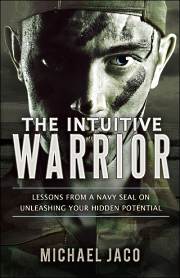
In his new book, The Intuitive Warrior: Lessons from a Navy Seal on Unleashing Your Hidden Potential, author and retired Navy SEAL Michael Jaco describes how he channeled the challenges he faced in military training and combat toward aligning his body and mind. With the two working in unison, Jaco remained calm and positive in extremely stressful situations. When he retired, Jaco then used these techniques as a civilian to enrich his everyday life.
Through personal accounts of real experiences, Jaco explains how the challenging situations he endured as a member of one of the most elite Special Forces units in the United States taught him to control his emotions and tap into his intuition. Using these capabilities, he enhanced both his mental and physical strength. In The Intuitive Warrior, Jaco says that anybody can develop the perception and awareness skills that he learned and employ them to achieve a more fulfilling life, whether seeking to improve job performance, personal relationships or physical shape.
Michael Jaco answers a few questions for Martial Development readers in this exclusive interview… [Read more →]

John Chang was a practical joker. I had been on an elevator with him one evening along with twenty other people. The elevator was a glass-walled unit that ferried people up and down the floors of a shopping mall; there was a steel railing all around that people rested their backs on. We were going out to eat that evening at a local restaurant on the top floor of the mall.
Suddenly a burst of current pulsed through the steel backstop. Women screamed and everyone pulled away, suspecting a short circuit. John pulled away too, as I had, but I needed only one look at the barely suppressed grin on his face to realize what had really happened: He had sent a pulse of bio-energy through the railing!
Serious training in meditation, qigong, or kundalini yoga is long, hard, often boring, and sometimes downright bitter. Yet when a student reports their discovery of an exciting fringe benefit, such as heightened or extrasensory perception, certain other members of the community are quick to scold them.
“Pay no attention to such things,” the lecturer instructs. “They will only distract you from the ultimate goal of cosmic union.” Well, maybe so, and maybe not, but in the meantime, I think it is important to keep one’s sense of humor intact. [Read more →]
September 10th, 2009 · 11 Comments
Below is the second half of our exclusive interview with qigong researcher Drew Hempel. (Here is the first half.)
Through this intensive practice, you progressed rapidly. What experiences and events marked this progress? In what manner was your brain “transformed”?
The first energy transmission I had from Master Chunyi Lin was this flash of light (while my eyes were closed)…very bright, and my whole body filled with this amazing deep bliss. [Read more →]
September 9th, 2009 · 6 Comments
The enigmatic Drew Hempel—activist, author, polymath, and accomplished qigong practitioner—shares his fascinating story in this Martial Development exclusive interview.
Drew, how were you first introduced to the ancient art of qigong?
I first discovered Taoism back in the 1970s, in first grade. My best friend at the time was adopted from Korea. He told me he always got his lunch from “Tao Foods” [a local grocery store], so that made me wonder what it was about.
Later, in 1995 I noticed a flyer posted to see qigong master Effie P. Chow, a Chinese master who lives in San Francisco. Immediately I wanted to go, but I was also skeptical of New Age gimmicks. I actually called to request a lower entrance fee, [Read more →]

Excerpted from Beyond Biofeedback, a record of Elmer and Alyce Green’s research on theta brainwave training, which they describe as an accelerated form of meditation.
When Jack Schwarz was in his early teens, he saw a stage hypnotist enter a self-induced trance and then push pins into his arm while he talked about the power of mind to control pain and bleeding. Jack had the normal response to pain until he saw that demonstration, and then, for no particular reason, he knew that he would be able to do the same thing. He got some pins and tried it, and sure enough he could turn pain off. What a conversation piece, he thought.
Jack said that at first he never tired of amazing his friends. He developed a cocky attitude, in spite of the fact that he had not had to develop his skills, but “woke up one morning and found all the diplomas were on the wall.” He could stop pain, stop bleeding, influence people through hypnosis, remove pains in other people by putting his hands on them and thinking about the pain going away, and could often “guess” other people’s thoughts precisely.
We did not make a focused effort to interrogate Jack when we began the laboratory work. As with Swami Rama, we asked him to tell us what he would like to demonstrate. Dale and Alyce wired him in the same way we prepared college-student subjects in other research. When he sat down in the experimental room he produced an envelope with two 6-inch steel sailmaker’s needles. [Read more →]