Martial Development

Martial arts for personal development

Qigong 102: Secrets of Meditation and Emotional Balance

July 2nd, 2010 · 12 Comments

Introduction

  • Qigong (chi gong) is most often understood as a set of active exercises, guiding qi (chi) energy around the body through intention, movement, and sound. It is less well known that Qigong incorporates rigorous courses of standing and seated meditation. These active and passive, external and internal modalities are mutually supportive.
  • One of the first goals of Qigong meditation is to reach a deep level of quietude within the mind and body. Sustained quiet allows a student to perceive increasingly subtle objects and movements inside their body.
  • In a quiet meditative state, relationships and correspondences that were previously hidden or overlooked, become clear and credible. In other words, meditation allows for biofeedback training without the need for electronic biofeedback instrumentation.

[Read more →]

One Man’s Experience With Spring Forest Qigong

September 10th, 2009 · 9 Comments

Below is the second half of our exclusive interview with qigong researcher Drew Hempel. (Here is the first half.)

Through this intensive practice, you progressed rapidly. What experiences and events marked this progress? In what manner was your brain “transformed”?

The first energy transmission I had from Master Chunyi Lin was this flash of light (while my eyes were closed)…very bright, and my whole body filled with this amazing deep bliss. [Read more →]

A Conversation with Qigong Researcher Drew Hempel

September 9th, 2009 · 4 Comments

The enigmatic Drew Hempel—activist, author, polymath, and accomplished qigong practitioner—shares his fascinating story in this Martial Development exclusive interview.

Drew, how were you first introduced to the ancient art of qigong?

I first discovered Taoism back in the 1970s, in first grade. My best friend at the time was adopted from Korea. He told me he always got his lunch from “Tao Foods” [a local grocery store], so that made me wonder what it was about.

Later, in 1995 I noticed a flyer posted to see qigong master Effie P. Chow, a Chinese master who lives in San Francisco. Immediately I wanted to go, but I was also skeptical of New Age gimmicks. I actually called to request a lower entrance fee, [Read more →]

Mantak Chia on Sex, Discipline, and Qigong

September 8th, 2009 · 10 Comments

Mantak Chia
Mantak Chia

Mantak Chia was born in Bangkok, Thailand in 1944. His pursuit of Taoist teachings led him to meet the White Cloud Hermit Master Yi, a Taoist Master living in the mountains near from Hong Kong.

Over a period of five years, Master Yi transmitted to Master Mantak Chia the most sacred and closely held Taoist practices, formulas and methods of internal alchemy, culminating in the Reunion of Heaven and Man.

The author of dozens of books, booklets, videos and CDs describing these practices, Master Mantak Chia has taught hundreds of thousands of eager students the principles of Taoist internal practice over the past 40 years.

Following is an excerpt from a recent Blog Talk Radio interview with Mantak Chia:

Lama Tantrapa: What is the purpose of qigong practice?

Mantak Chia: The initial purpose of qigong practice is to become stronger, to heal yourself, and increase your wisdom and knowledge. The early stages are like Taiji, and afterwards we can begin what we call supreme inner alchemy practice. [Read more →]

Return of the Jedi: Five Questions with a Neigong Expert

September 16th, 2008 · 144 Comments

內功 neigong (pronounced nay-gung): the science of observing, strengthening and directing bio-energy, or chi.

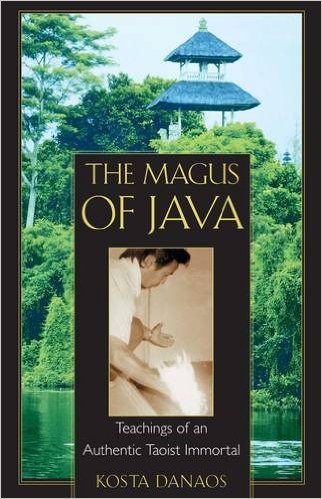
The Magus of Java

A repository of extraordinary skills such as telekinesis, pyrogenesis, telepathy, remote viewing and levitation, the esoteric Eastern school known as Mo-Pai has been described as a real-life order of Jedi Knights. Some have even speculated that its history inspired George Lucas’ script for Attack of the Clones.

Among the ancient neigong lineages still in existence today, the Mo-Pai is characterized by an unusual openness. The school and its headmaster, known by the alias “John Chang”, has been the subject of two recent books and a video documentary.

Jim McMillan, who identifies himself as a longtime disciple of John Chang, has graciously agreed to share a few of his experiences with Martial Development readers: [Read more →]

Who Wants to Learn Mo Pai Nei Kung?

May 18th, 2008 · 63 Comments

John Chang
“John Chang”
a.k.a. “Dynamo Jack”

The Final Qigong Demonstration of John Chang remains one of my most popular posts. With the help of Youtube’s new viewer demographics feature, we can learn more about the people who find this video so fascinating. [Read more →]

Ordosclan, The Grumpy Savant of rec.martial-arts

March 31st, 2008 · 6 Comments

Long before the invention of the blog, and even before the creation of the World Wide Web, there was Usenet. The world’s first electronic social network was established in 1980, and martial artists have been arguing there ever since.

Back in the late 1990s, I started reading the rec.martial-arts newsgroup as most people do, with posts sorted by discussion topic. I soon discovered that, since 90% of the replies on any given topic were rubbish, it made more sense to sort by author instead. Although I abandoned rec-martial arts years ago, due to its low-signal-to-noise ratio, I can still remember the names of some of my favorite writers. At the top of that list, I place the mysterious Ordosclan, also known as Turiyan Gold.

I don’t know Ordosclan’s real name, or his training history. I don’t know how many of his posts were written under the influence of anti-psychotic medication, as his critics claimed. Perhaps not enough of them.

Black Belt Mama's Admired Martial Artists Month

Ordosclan’s martial arts commentaries were sagacious and entertaining, sometimes cryptic and unfortunately brusque. In honor of Black Belt Mama’s Admired Martial Artists Month, I’d like to highlight a few:

Why punch from the hip?

In boxing, the boxer keeps his hands up on either side of his face for protection. Punches are thrown from this position. One hand goes out, the other stays by the face for protection.
Why does karate require that you throw a punch from the hip? What is gained by this?

The point of pulling the fists back is to open the chest. Doing so during stance changes makes it harder to use the arms for balance. It’s not for punching. Punches done from the hip are just a training exercise. The Japanese simply copied basic Shaolin from the Chinese. Some teachers try and read ridiculous theories into why something is the way it is: “It’s for qi,” “it’s for jing,” “It trains you to monkey elbow a guy that puts you in a bear hug from behind”, etc.

If you start taking things out of MA that are not combat-relevant, you’re left with punches and kicks, knees and headbutts. The simple answer is: it’s not martially oriented. Its just a myth that Shaolin monks are/were “fighting” monks. That’s nonsense. And everyone knows it.

[Read more →]

Astral Projection and Yin Shen: A Taoist Perspective

November 10th, 2007 · 6 Comments

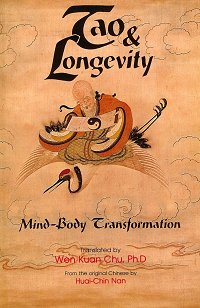
Tao and Longevity: Mind-Body Transformation

Excerpted from the book Tao and Longevity by Nan Huaijin

Does the spirit actually leave the body during the transformation of chi into shen?

There are many [Taoist] descriptions of being pregnant for ten months, suckling the baby for three years, and facing the wall for nine years that have led some people to believe that successful meditation must involve astral projection. The supposition is that the spirit or divine self has a fetal body of its own which ultimately shoots out of the top of the head and ascends into heaven itself. To believe that this is the way of transforming chi into shen is a serious mistake.

According to the Tan Tao school, yang shen (or positive spirit) and yin shen (or negative spirit) may both account for the projection of the spirit from out of the body. [Read more →]

Think, Grow Rich, or Die Trying: The Bruce Lee Story

July 8th, 2007 · 15 Comments

As a fan of Bruce Lee, you probably already know about his extensive library. Bruce’s collection reportedly spanned more than 2000 books on philosophy and martial arts. (In fact, much of the material in his “signature work”, the Tao of Jeet Kune Do—compiled and published posthumously from his notes—was copied from these primary sources.)

Bruce Lee was influenced by D.T. Suzuki, J. Krishnamurti, and many other teachers, but perhaps no author left a greater impression on him than Napoleon Hill. [Read more →]

The Final Qigong Demonstration of John Chang

March 28th, 2007 · 144 Comments

Since writing Teachings of an Authentic Taoist Immortal a few weeks ago, I’ve discovered some newer video footage of the Indonesian acupuncturist and qigong master known as John Chang. [Read more →]