It’s not the size of the duck in the fight, but the size of the fight in the duck that counts.
Unlocking human potential through martial arts
It’s not the size of the duck in the fight, but the size of the fight in the duck that counts.
From the 2008 reptile documentary Life in Cold Blood:
Cobras grapple not only with their prey, but with one another, in dispute over mates and territory. This is one of the most formidable: the King Cobra, highly venomous, and about four meters (fourteen feet) long. Disputes between rival male King Cobras are potentially very dangerous indeed, for this species specializes in eating other kinds of snakes. So they observe strict rules in their fights, which prohibit the use of their lethal bite.
Slowed down, it’s a performance full of grace, as each contestant strives not to kill his opponent, but simply to slam him to the ground.
More dangerous animal news of the weird…
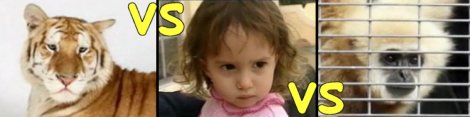
A 2-year-old girl survived a stare-down with a 500-pound Bengal tiger after the tiger escaped its enclosure—with the help of a gibbon, of course—at a Florida exotic animal park.
Officials at Jungle Island in Miami called the incident a “freak accident.” First, a White-Handed Gibbon escaped its enclosure and wandered to the tiger exhibit, where he riled up the massive Bengal tiger.
“With the momentum and the excitement he had from seeing the gibbon, (the tiger) was able to get over the fence,” Jungle Island’s Ashley Serrate said.
That’s where the tiger met 2-year-old Dianita Barratt, who was spending the day at Jungle Island with her mom, Diana… [continued]
WINNER: Toddler

Claude the bear, from Hiroshima zoo
(Yes, it’s real)
Maj. Gen. Albert N. Stubblebine III: The key to all of this…it has nothing to do with bending metal [spoons]…Lord Mercy, if I can do that with my mind, what else can I do? It wasn’t clear whether they thought I was nuts. In any event, the reaction that I got was, “we’re not very interested.”
But as Jon Ronson’s investigation shows, they were in fact very interested. During the last few decades, the United States military has conducted a series of experiments in psychic warfare. On the record, these attempts to create superhuman “warrior monks” for a “First Earth Battalion” were a complete failure. (Off the record, you have no need to know.)

One of the least successful experiments is parodied in the new Hollywood comedy “The Men Who Stare at Goats,” and further documented in a book of the same name. It is also covered in the British documentary “Crazy Rulers of the World”, which you may watch for free below.
If you’re being chased by an angry bull, and then you notice you’re also being chased by a swarm of bees, it doesn’t really change things. Just keep on running.
Hit back. If a shark is coming toward you or attacks you, use anything you have in your possession—a camera, probe, harpoon gun, or fist—to hit the shark’s eyes or gills, which are the areas most sensitive to pain. The nose is not as sensitive as these areas.
Commemorating the birthday of Charles Darwin, and capping our recent discussions on the evolution of martial arts, I offer you one worst-case example of a real-life assault.
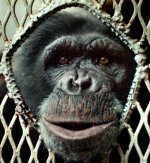
LaDonna Davis, 64, and her husband, St. James Davis, were visiting Animal Haven Ranch near Bakersfield on Thursday when two male chimps escaped their enclosure and attacked the couple.
“When we made eye contact, the charge was on,” LaDonna Davis said. “There was no stopping anything, and the big chimp came around from behind me and pushed me into my husband. The male came around from behind and chomped off my thumb. My husband must have realized we were in deep trouble because he pushed me backward. At that time, they both went for him.”
Rabid fans of mixed martial arts often consider their sport to be a proven, scientific, and highly evolved form of fighting. Modern MMA practices are contrasted with those of American Judo and Karate-do—unwittingly cast to represent “traditional martial arts” at large—and judged uniformly superior.
Putting aside the revisionist history underlying such comparisons, let us consider the possibility and implications of MMA’s evolution. What can Darwin’s theory teach us about the present state, predict for the future fate of mixed martial arts?
Many centuries ago, a flock of pigeons departed their native land, roosting on the tiny Indian island of Mauritius. Enjoyed the relaxing tropical atmosphere, and an environment free of natural predators, they decided to stay awhile.
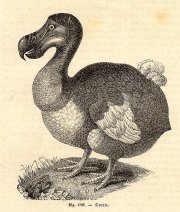
While the vast ocean protected the birds from attack, evolutionary forces reshaped their bodies and minds.
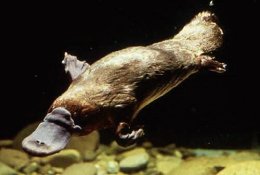
Platypus: The Unofficial Mascot of MMA
Sporting a duck’s bill, otter’s feet and beaver tail, the platypus is considered by some to be the greatest combination of all animals.
Photo credit: striatic
While many Chinese martial arts take inspiration from animals—Tibetan Crane Kung Fu, Monkey’s Fist, Dragon Style, and White Ape Boxing are just a few popular examples—Tai Chi Chuan uses dreary references to binary arithmetic. Small wonder, then, that most people consider Tai Chi boring. It has a serious image problem.
To remain competitive with the thrilling spectacle of mixed martial arts, Tai Chi Chuan should adopt a provocative animal mascot. But what kind of animal best embodies Tai Chi’s unique qualities?
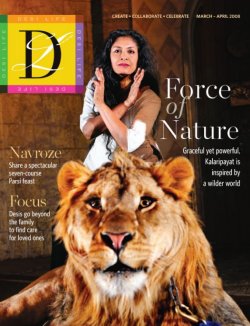
From the March-April 2008 issue of Desi Life:
Some scholars estimate that Kalari (also written as Kalari Payatte or Kalarippayattu) dates to 12th-century India. According to one legend, Kalari is the world’s first martial art.
Gita Kolanad is 54, but she looks, and moves as though she were at least a decade younger. Born in Kerala, she moved to Winnipeg at age 6. She used to do yoga, but says she found it boring and took up Kalari in her 30s to keep in shape for dance.
“Kalari is a real holistic system. It’s not just the martial art, but the healing aspect and the focus aspect,” Kolanad says. “When you get into the weapons, it’s a constant lesson in focus. When you lose your focus, you immediately get hit. I know that yoga has this aspect of meditation, but you don’t get any feedback on whether you’re doing your meditation right. Here you’re constantly getting feedback,” Kolanad says. “That’s why I love Kalari and I think it’s poised to be bigger than it is right now.”
At the highest stages of Kalari practice, it is said “the body becomes all eyes.” Masters become totally aware of everything around them. Kolanad doubts she will get to that point, but says that’s not a concern: “I enjoy every aspect of it.”