Martial Development

Martial arts for personal development

Entries Tagged as 'Qigong'

Guo Lin’s Qigong Cure for Cancer

May 20th, 2008 · 5 Comments

Qigong Fever

Excerpted from Qigong Fever: Body, Science, and Utopia in China by David A. Palmer

There were no officially sanctioned qigong activities in China until its rehabilitation in 1978, after the end of the Cultural Revolution. However, one woman, Guo Lin, an artist and cancer victim from Guangdong province who had cured herself by practicing qigong during the 1960s, was brave enough to teach other cancer patients in the parks of Beijing as early as 1970. Her ‘New Qigong Therapy’ inaugurated a new, collective form of qigong teaching and practice that would later be adopted by most qigong masters. Guo Lin can thus be said to have triggered the qigong wave of the 1980s.

Born near Zhongshan, Guangdong in 1909, Guo Lin was trained as a young girl in traditional body technologies by her paternal grandfather, a Taoist in Macau, where her family had fled following the 1911 revolution. Later, as a student of landscape painting, she visited several holy mountains; the breathing technique she used when climbing the steep slopes would become the basis for her future qigong method.

In 1949 Guo Lin was hit by uterine cancer, which was treated by hysterectomy. The cancer recurred in 1959 while she was teaching at the new Beijing Painting Academy. Guo Lin remembered the techniques that she had learned in her youth, and decided to practice them to treat her cancer. [Read more →]

Who Wants to Learn Mo Pai Nei Kung?

May 18th, 2008 · 63 Comments

John Chang
“John Chang”
a.k.a. “Dynamo Jack”

The Final Qigong Demonstration of John Chang remains one of my most popular posts. With the help of Youtube’s new viewer demographics feature, we can learn more about the people who find this video so fascinating. [Read more →]

Ordosclan, The Grumpy Savant of rec.martial-arts

March 31st, 2008 · 7 Comments

Long before the invention of the blog, and even before the creation of the World Wide Web, there was Usenet. The world’s first electronic social network was established in 1980, and martial artists have been arguing there ever since.

Back in the late 1990s, I started reading the rec.martial-arts newsgroup as most people do, with posts sorted by discussion topic. I soon discovered that, since 90% of the replies on any given topic were rubbish, it made more sense to sort by author instead. Although I abandoned rec-martial arts years ago, due to its low-signal-to-noise ratio, I can still remember the names of some of my favorite writers. At the top of that list, I place the mysterious Ordosclan, also known as Turiyan Gold.

I don’t know Ordosclan’s real name, or his training history. I don’t know how many of his posts were written under the influence of anti-psychotic medication, as his critics claimed. Perhaps not enough of them.

Black Belt Mama's Admired Martial Artists Month

Ordosclan’s martial arts commentaries were sagacious and entertaining, sometimes cryptic and unfortunately brusque. In honor of Black Belt Mama’s Admired Martial Artists Month, I’d like to highlight a few:

Why punch from the hip?

In boxing, the boxer keeps his hands up on either side of his face for protection. Punches are thrown from this position. One hand goes out, the other stays by the face for protection.
Why does karate require that you throw a punch from the hip? What is gained by this?

The point of pulling the fists back is to open the chest. Doing so during stance changes makes it harder to use the arms for balance. It’s not for punching. Punches done from the hip are just a training exercise. The Japanese simply copied basic Shaolin from the Chinese. Some teachers try and read ridiculous theories into why something is the way it is: “It’s for qi,” “it’s for jing,” “It trains you to monkey elbow a guy that puts you in a bear hug from behind”, etc.

If you start taking things out of MA that are not combat-relevant, you’re left with punches and kicks, knees and headbutts. The simple answer is: it’s not martially oriented. Its just a myth that Shaolin monks are/were “fighting” monks. That’s nonsense. And everyone knows it.


[Read more →]

Qigong and Energetic Arts a Danger to Health?

March 29th, 2008 · No Comments

Welcome to the fourth edition of Qigong and Energy Arts Forum, a monthly collection of the best new articles on qigong (chi kung), reiki, kundalini yoga, meditation, and other related disciplines. This edition focuses on the risks and dangers–physical, intellectual, and spiritual–of improper practice.

Army’s New PTSD Treatments: Yoga, Reiki, and Bioenergy by Noah Shachtman (The Danger Room)
The military is scrambling for new ways to treat the brain injuries and post-traumatic stress of troops returning home from war. And every kind of therapy–no matter how far outside the accepted medical form–is being considered. The Army just unveiled a $4 million program to investigate everything from “spiritual ministry, transcendental meditation, [and] yoga” to “bioenergies such as Qi gong, Reiki, [and] distant healing” to mend the psyches of wounded troops…

Feature articleDangers of Kundalini Yoga by Anmol Mehta (Mastery of Meditation, Enlightenment and Kundalini Yoga)
Kundalini Yoga is certainly a powerful science and if not approached with intelligence and respect it can produce some challenges and difficulties for the practitioners. That is not meant to discourage you from taking up its practice, it is meant to help guide you so that you undertake Kundalini Yoga practice safely and thus, enjoy the enormous benefits that this form of yoga bestows… [Read more →]

The Scientist, The Master and The Deviant: Three Perspectives on Qigong

March 28th, 2008 · 6 Comments

Excerpted from Breathing Spaces: Qigong, Psychiatry, and Healing in China by Nancy N. Chen

Breathing Spaces: Qigong, Psychiatry, and Healing in China

Qigong in the Scientific Community

Qigong began to be actively debated within the [Chinese] scientific community during the 1980s, when scientists, especially physicians, sought to legitimate the phenomenon of qi. While popular publications focused on practice or gave life histories of particular masters, the discussions of qigong among scientists addressed questions of how to measure the force field of qi energy. Qi as a material phenomenon had to be quantified. This interest paralleled attention to the phenomenon of teyigongneng, or special psychic abilities.

…The doors of scientific research opened when Qian Xuesen, the prominent founder of China’s space research, declared that teyigongneng merited serious study. In his account of this movement, Paul Dong, a US-based qigong master, described how young children in China were tested for their abilities to “hear” characters being written and to perform psychokinesis (the power to move objects with their minds); there were reports of pills disappearing from bottles only to materialize outside their containers.

Scientific experiments also commenced during this period, as many researchers believed that special abilities could be enhanced with qigong. Over a dozen scientific journals and publications, among them, Zhiran Zazhi (Nature magazine) and Dongfang Qigong (Eastern qigong), began to discuss human potential and somatic science. [Read more →]

Cure Your Sore Lower Back with Tai Chi Ruler

March 16th, 2008 · 9 Comments

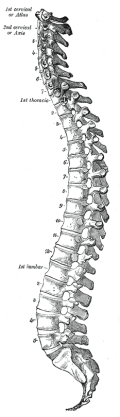
Vertebral column

Although Tai Chi is an effective treatment for stiffness and lower back pain, the complexity of its forms discourages some from learning the practice.

Fortunately for back pain sufferers, not all Tai Chi forms are long and elaborate. While some traditional forms contain more than one hundred movements, others contain less than a dozen. The short forms are easier to learn and faster to complete, but no less beneficial to the practitioner’s health.

Among the short forms, Tai Chi Ruler is the easiest to learn. The ruler, or chih, is a simple wooden dowel, approximately one inch thick and one foot long. Fundamental ruler practices consist of a single movement, repeated a few dozen or few hundred times.

Many of the Tai Chi Ruler movements do not actually require a ruler, and can be performed just as well without it. Here I will describe one such exercise, which is suitable for any age and fitness level. [Read more →]

Vladimir Vasiliev, Russia’s Mind Warrior

February 25th, 2008 · 8 Comments

Excerpted from Vladimir Vasiliev: Russia’s Mind Warrior is Set to Hit the U.K. by Trevor Robinson

Through training in the martial arts, we begin to pay more attention to aspects of experience that might have seemed peripheral, if not hard to believe before. We begin to start noticing and giving more credence to experiences such as meeting someone for the first time and instantly liking them or disliking them without knowing anything about them. We like their vibes, we can tell if someone is staring at us and when we look up (what makes you look?) we feel we know what they are feeling or that something is going to happen, the phone rings and we know who it is before we answer it. As we allow ourselves to develop new sensitivities, we begin to view the world quite differently.

Training in Psychic Energy

Vladimir Vasiliev is a Master in The System [Systema] and he has an outstanding command of its use. Though he is so humble, I’m sure he would be the first to deny it! What I will relay now is on his personal account of the Psychic Training he received while he was with the Special Operations unit in Spetsnaz. In his own words:

The goal of the training was to make you multi-functional. You were to be able to work effectively in any kind of situation and never fear it. Perhaps more importantly, you were expected to learn how to be creative and act spontaneously. Divergent thinking, being able to come up with unconventional and unusual responses and decisions in different situations was an absolute necessity. You had to be totally adaptable to survive in the unit.

The key to this adaptability was the Psychic Training you received. You were expected to go well beyond the mere physical and psychological mastery to a point where intuition and that sixth sense, that we all have but seldom use, became a part of your daily life.

Awareness, or tapping into your sixth sense, was a focus for many of the exercises. Training classes could run for five hours and in some, you’d be blindfolded for the entire time. You’d have to follow what was going on, do your exercises and come to an understanding of the principles the instructor was teaching without the use of sight.

While sparring, the instructor would also walk around the class looking for trainees who weren’t paying attention to the total environment they were working in. If he thought you weren’t aware of his presence, he’d hit you with a stick over the head, this taught the trainee very quickly to be aware of where everyone was at all times.

At other times, we were brought up into pitch-black rooms and had to guess how many people were in it, if any. We’d also be blindfolded and have to identify colors just by touching colored blocks of paper. Again, awareness was to extend far beyond the normal five senses into the area of the psychic.

Some instructors who were skilled at passing psychic energy would take a few glasses of water and charge them with energy. This was a charge grounded in a psychic form of energy. It was much like touch healing. They’d concentrate on the water and send energy into it through their fingers without touching it. The trainee would then have to come into the room and tell the instructor which classes had been charged with the energy. The purpose behind this exercise was to teach the trainee how, on a mission, to tell if their drink was poisoned. Poison has a much stronger energy than regular water and that energy is discernible to those who have learned to access and use their psychic abilities.

[Read more →]

Chi: Real Energy or Martial Art Myth?

February 2nd, 2008 · 10 Comments

Welcome to the third edition of Qigong and Energy Arts Forum. This main topic of this edition is science and skepticism.

Feature articleChi debunked? by Bob Patterson (Striking Thoughts)
Martial Development has a challenge for skeptical martial artists: Prove that chi is scientifically impossible. Naturally, since I consider myself to be an open-minded skeptic and a martial artist, I had to take a crack at this one.
From a scientific perspective, “chi” has not made it past the hypothesis stage…

Clearing the Air on George Dillman and Chris Thomas by Rick Fryer (Kicks Boxes)
Char-la-tan (n.) a person who pretends to be an expert in something or to have more skill that is really the case; quack; fake. That’s how Websters defines the word charlatan, but many martial artists on websites and forums like Bullshido.com or FightingArts.com would like to define it as ‘George Dillman,’ or as my instructor, ‘Chris Thomas’… [Read more →]

From Chi Kung Skeptic to Iron Shirt Master in 28 Days

December 29th, 2007 · 10 Comments

Qigong and Energy Arts Forum welcomes any submissions related to chi, ki, prana, orgone, et cetera. For this edition, I would also like to extend a special invitation to skeptics, rationalists and disbelievers.

Do you know why chi kung doesn’t exist? Can you prove it is scientifically impossible? Have you personally encountered any frauds, mountebanks or charlatans? Educate us.

Iron Shirt
Iron Shirt

Provide your best evidence, clearest arguments and most entertaining stories. One participant will be randomly selected to win a prize from the new Martial Development Shop. [Read more →]

If It Doesn’t Look Fake, Then It Isn’t Real Taiji

December 10th, 2007 · 18 Comments

The position of refinement of consciousness in the theory and practice of martial arts is utterly critical. It pervades the fundamentals of training in martial arts as well as the most advanced contents of their highest level. This is the technical and theoretical core and quintessence of martial arts.

To abandon this is tantamount to throwing away the living soul and fundamental work of the techniques and theories of martial arts, leaving only low level “external exercises” with their peculiarities of outward form…

Consciousness as we use it here does not mean consciousness in the ordinary sense, abstract logical thought, or abstract ideation; neither is it formal thinking in the ordinary sense…it is always a result of combined refinement of body and mind.

from Mind Over Matter: Higher Martial Arts by Shi Ming


Master Shi Ming, from Bill Moyers’ Healing and the Mind

Shi Ming’s demonstration, and similar performances by other Taiji masters always draw criticism from the incredulous.

The most common objection is at the appearance of cooperation between teacher and student: the disciples appear to be throwing themselves. In many cases, that is exactly what they are doing. This fact alone does not, however, prove that the master is a fake. [Read more →]