The inaugural Crossing The Pond Martial Expo was held last weekend in West Seattle. This seminar brought together five six well-known and highly skilled instructors of martial arts and self-defense from across the United States and United Kingdom.
Over the weekend, two one-hour workshops were held by instructors Al Peasland, Nicholas Yang, Kris Wilder, Rory Miller, Marc “Animal” MacYoung, and Iain “Tuna Fish Pizza” Abernethy.
Approximately thirty-five people were in attendance. Among the students, at least one third appeared to be black belts and/or instructors themselves.
Participants were open-minded, polite, and patient–especially with this author, who hadn’t done any Karate training since elementary school. Egoism, inappropriate competition, and input from self-declared “assistant instructors” was minimal. This is a credit to the affable seminar host, Kris Wilder, and the other teachers as well, who together set the right tone for the event.
Sensei Pacer is not only a former member of The Power Team, a crew of Christian Evangelist strongmen. He is also a personal trainer, and the founder of Hip Hop Martial Arts.
Master Sensei Pacer likes to say that “nobody in the world moves like Sensei Pacer.”
Suzi Wong, Fytedancer
Sorry, Sensei Pacer, but I know someone who moves like Sensei Pacer! [Read more →]
“They lie amongst us, preparing for battle, waiting to rise and change things for good. Some are gifted in ability, others are trained to master it and some, some have it bestowed upon them at birth, but they all must choose.” These words, spoken in a James Earl Jones baritone, could be the opening crawl for the latest “X-Men” movie. But they aren’t referring to traditional superheroes, at least not in the masked and overly muscled sense. They are dancers.
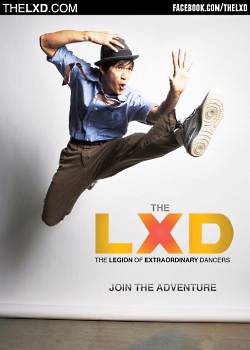
The lines come from the first episode of “The LXD” or “The Legion of Extraordinary Dancers,” a new dance-inspired Web series created by Jon M. Chu, the 30-year-old director of the hit 2008 movie “Step Up 2: The Streets” and the soon to be released “Step Up 3D.”
The series, which made its debut on July 7 on Hulu is produced by Mr. Chu and Hieu Ho with Agility Studios, and is a leap in Web-based original programming. “This is the most ambitious project that has been done for the Internet,” said Thomas F. Lesinski, the president of Paramount Digital Entertainment, adding later that the cinematography “could hold up in a movie theater.” New episodes will appear every Wednesday throughout the summer. Changing public perceptions about dancers was part of what Mr. Chu had in mind when he conceived the series.
“Dancers actually have a real power,” said Mr. Chu, who studied tap growing up in Palo Alto, Calif., before he fell for filmmaking, and this is how he views the dancers in the show. “Some people call it aura, some people call it chi, we call it ra,” he said. “And the ra is that power.” He added: “So when a b-boy does his spins, if you concentrate, you can see him shoot out that power, and it can affect someone physically. Or like when a ballerina cuts her leg through the air, it’s actually like a Ninja slice across someone’s face. And a jazz dancer’s jazz hands can actually rumble the floor if they know how to do it in the right way.”
[Yesasia] [IMDB]
I would love to cite Raging Phoenix as the first awesome martial arts film with a female lead. I would love to do that. But its choreographers and writers conspire against me.
Raging Phoenix is the story of a young female rocker (played by Jeeja Yanin) who gets caught up in a ruthless kidnapping ring. Women are abducted off the streets of Thailand, drugged, and taken to a secret laboratory hidden within a Temple of Doom, which is in turn hidden within a metropolitan sewage system. Naturally, the women’s tears are harvested there, to concoct a patent medicine for eccentric billionaires.
Only one force is strong enough to thwart the kidnapper’s plans: a small group of drunken vigilantes who learned to combine Muay Thai boxing with stylish hip-hop dance moves. [Read more →]
In the latest episode of America’s Best Dance Crew, each team was asked to incorporate a unique style of martial arts into their routine. The styles chosen were: Capoeira, XMA, Kali, Karate, Muay Thai, Taekwondo, and Shaolin Tiger. You can watch every performance below.
The extraordinary transformation of an ordinary teenager into wannabe monk began nine years ago, when China’s famed Shaolin monks performed their extraordinary show of martial arts and physical feats at London’s Dominion Theatre.
Matthew says, ‘I was 11 and my older brother and cousin took me along to see the show. I was quite interested in martial arts, and I liked watching Jackie Chan films, but nothing could have prepared me for this.
I sat in the audience absolutely mesmerized. The show started just like it still does today, with a candle burning and soft chanting before the monks start demonstrating gentle tai chi moves. Suddenly, it all explodes into wonderful combat sequences and incredible feats of human endurance. The monks walk up stairways made from razor-sharp knives, lie on beds of knives with concrete slabs on top of them, and break metal bars over their own heads–showing how they can overcome pain.
He says, ‘People say that there is often a moment in life where everything changes, and for me, it was watching that one performance. I knew immediately that all I wanted to do in life was go to China and join the Shaolin monks. When I got home, I told Mum and Dad, and I think they assumed it was just a passing phase. But they were wrong…[continued at Daily Mail]
Martial arts are systems of codified practices and traditions of training for combat. While they maybe studied for various reasons, martial arts share a single objective: to defeat a person physically or to defend oneself from physical threat.
~ Wikipedia
Wikipedia’s simplistic definition begs the question: martial arts are martial arts. The statement itself is neither true nor untrue—it is a game rule—but it does reflect an ignorance of, or perhaps a malevolence towards historical facts. Taken at face value, it encourages a dismissive, one-dimensional analysis of the arts’ tremendous potential.
To avoid limiting our achievement in the martial arts, we should begin with an honest and dispassionate accounting of the past. What was the real original purpose of various “martial arts”?
The first clues may be found in our forefathers’ own speech and writings. [Read more →]
In 2006, I saw a few episodes of MTV’s reality TV show Final Fu. At the time, I thought the performers displayed physical competence, but not greatness, and I found the level of demonstration and competition disappointing. Head judge Ernie Reyes Jr. praised his players’ abilities to throw a variety of high kicks.
When I subsequently watched auditions for Fox’s televised dance competition, So You Think You Can Dance, I was both delighted and appalled by the disparity in standards. Somehow, I had expected martial austerities to result in a deeper achievement, when compared to the frivolous motivations of dance. [Read more →]