Martial Development

Martial arts for personal development

Entries Tagged as 'Tai Chi'

Qi Magazine: Free To Download Today

September 14th, 2009 · 7 Comments

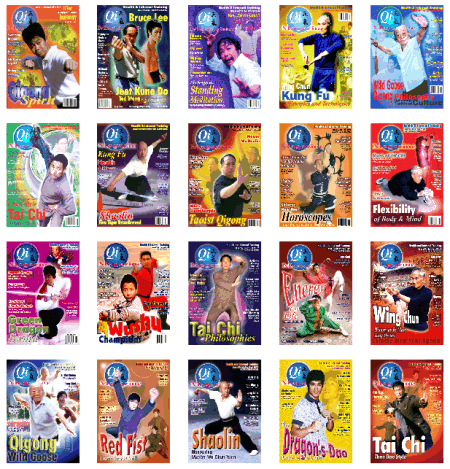
Qi Magazine covers

For almost twenty years, Qi Magazine featured original articles on kung fu, qigong, and other facets of Chinese culture, many written specifically by and for martial artists. (Qi Magazine is not to be confused with Qi Journal, which seems more targeted to the Goji berry set.)

Qi Magazine ceased production in early 2009, and publisher Michael Tse has since opened the archives. [Read more →]

Yang Jwing-Ming: “Tai Chi was the only doctor I could afford”

September 7th, 2009 · 6 Comments

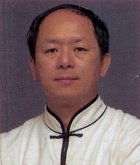
Yang Jwing-Ming
Dr. Yang Jwing-Ming

From his recent interview with Lama Somananda Tantrapa…

“Between the ages of 9 and 12, I had almost no food. Taiwan was preparing for a war against mainland China. Most of us kids were starving.

There were nine children in my family, and at that time, feeding nine children was not easy. All our problems gave me an ulcer by the time I was 16 years old. [Read more →]

The Secret of The Talking Sword

August 3rd, 2009 · 8 Comments

When learning the art of the sword, we are often told that we should wield it as an extension of our own body. The sword’s edge and tip should exhibit all the speed, power and grace of the hand that holds it, for instance. That is a fine objective—but what if the hand has no speed, power or grace to start with? [Read more →]

Chen Bing’s Taiji: From Silk Uniforms to the MMA Cage

June 7th, 2009 · 3 Comments

Chen Bing is one of dozens of martial arts instructors visiting Seattle this year.


Chen Style Taiji: 38-posture form

[Read more →]

The Best of Tui Shou, The Worst of Tui Shou

May 29th, 2009 · 15 Comments

In theory, the Seattle Martial Arts Club has no teacher. Members meet to practice martial arts drills and exercises of their choosing, under their own direction, for the benefit of all involved.

In practice, no two practice partners are ever equal, and the partner in control usually sets the pace and the tone of a practice session—if not intentionally, then haphazardly.

As I am often the senior Taiji practitioner in attendance—or in other words, the unpaid and under-appreciated Taiji instructor in attendance—it seems appropriate to briefly discuss my personal guidelines and preferences for tui shou (pushing hands) practice. [Read more →]

Inside Deadliest Warrior’s Combat Simulator

May 7th, 2009 · 65 Comments

Science is what we understand well enough to explain to a computer. Art is everything else we do.
~ Donald Knuth

Deadliest Warrior

You’ll never appreciate the true complexity of a mundane, everyday task, until you’ve tried explaining it to a computer.

Contrary to popular perception, computers are not smart. Actually, they are stone dumb. Given a lengthy set of precise instructions, your computer can follow them well enough, most of the time, but when asked to exhibit the tiniest bit of reasoning or creativity, your cutting-edge laptop PC is helpless and hopeless. Ditto for the Mac. Sorry, Linux won’t help either.

Consider the simple act of making a peanut butter and jelly sandwich. You can teach the average six year-old child this skill in a few minutes; writing the equivalent instructions for a general-purpose computer could literally take weeks or months of effort.

Command prompt

Knowing all this, I was amazed by the concept and promise of Spike TV’s new show, Deadliest Warrior:

In Los Angeles, CA, we’ve created a high-tech fight club, with scientists, martial arts experts, and lots and lots of weapons. It’s all here to create a virtual battle between two legendary warriors. We’ll test their weapons and fighting techniques on high-tech dummies—stand-ins for human victims. Based on this data, a battle simulation program will stage a true-to-life fight to the death. The winner will be The Deadliest Warrior.

Could it possibly be true? Would the endless debates over the ultimate fighting style finally be put to rest, by indisputable scientific evidence? [Read more →]

Why Natural Breathing is Smart Breathing

March 30th, 2009 · 9 Comments

When I hear a professional martial arts instructor advising their students to be more natural, I cannot help but feel contempt. Could any help be less helpful?

What is the most natural method for safely evading a knife thrust, while simultaneously positioning oneself for an effortless disarm and throw? How does one naturally reverse a guillotine choke? People who know the answer to these questions don’t need an instructor or a class; for the rest of us, more detailed guidance is appropriate.

With that said, I am a strong advocate of “natural breathing” for martial applications, in contrast to the more exotic approaches advanced in some dojos. [Read more →]

My Art is Sustainable, Ethical and Green

March 10th, 2009 · 17 Comments

Bamboo electric car
Bamboo electric car
Environmentally friendly, or death trap?

Looking at ridiculous news reports of bamboo laptop computers and recycled toilet paper, it would be easy to conclude that the so-called “green revolution” has gone too far.

I think it hasn’t gone far enough. While many embrace the concept on a shallow and symbolic level, fewer people are asking themselves difficult questions about sustainability. [Read more →]

The Taiji Solution to Weight Loss and Fiscal Solvency

October 3rd, 2008 · 12 Comments

Many long-term students of Taiji enjoy improvements in their metabolic and kinesthetic efficiency. They burn fewer calories, and expend less effort, to accomplish the same amount of work, whether that “work” consists of repeating the Taiji forms or any other activity.

When food is scarce and plain, this efficiency is an obvious benefit. For most people living in developed countries today, however, food is abundant and tasty. To a person who has become addicted to eating—as the majority of Americans are, studies show—this hard-earned fruition of Taiji is actually a problem: it makes you fat. (Technically, eating the food makes you fat, but let us ignore that detail, as everyone does.)

Dedicating oneself to longer and more strenuous practice might seem like an intelligent solution. Unfortunately, this is likely to accelerate the efficiency gains, exacerbating the problem in the long run. If we choose to define physical fitness as effort and exertion, then Taiji is a lousy fitness routine.

Big Mac inflation
Big Mac inflation (2012 projection)

A comfortable and plausible short-term solution: redefine success as failure, and vice-versa. Prioritize effort expended, rather than work accomplished. Sure, your new Taiji may be less functional, but at least you’ll look good doing it!

The more responsible, but less appealing solution is to start eating within your means: to consume calories in accordance with physical needs, rather than insatiable desires. In the meantime, returning to one’s target weight requires a disciplined starvation diet, in conjunction with regular exercise.

Can we view this scenario as a metaphor for the United States economy? [Read more →]

Tanuki: The New Official Mascot of Tai Chi?

August 9th, 2008 · 5 Comments

Platypus swimming
Platypus: The Unofficial Mascot of MMA
Sporting a duck’s bill, otter’s feet and beaver tail, the platypus is considered by some to be the greatest combination of all animals.
Photo credit: striatic

While many Chinese martial arts take inspiration from animals—Tibetan Crane Kung Fu, Monkey’s Fist, Dragon Style, and White Ape Boxing are just a few popular examples—Tai Chi Chuan uses dreary references to binary arithmetic. Small wonder, then, that most people consider Tai Chi boring. It has a serious image problem.

To remain competitive with the thrilling spectacle of mixed martial arts, Tai Chi Chuan should adopt a provocative animal mascot. But what kind of animal best embodies Tai Chi’s unique qualities? [Read more →]