In a class of twenty new Taekwondo students, ten will probably drop out within three months’ time. Though they will cite a variety of excuses for quitting, all the dropouts show a lack of commitment to Taekwondo training.
One year after their first entry into the dojang, half again will have quit, leaving perhaps five of the original twenty students. Only one, maybe two, is likely to stick around long enough to attain the rank of black belt.
Like those early quitters, the black belts are motivated by a variety of factors. Beyond these varied reasons, though, there must be some unique character attribute that drives these people to reach elite black belt status. [Read more →]
December 30th, 2008 · 3 Comments

Ryan Watkins, 18-year-old senior from Kimberly, Wisconsin, is a couch potato and video-game junkie. Ryan is worried that he doesn’t have the discipline to change his life, but he fears that it’s now or never.
With the help of Taekwondo coach Chan Lee and his three flamboyant ninja assistants, Ryan builds his confidence, earns his golden belt, and competes in his first martial arts tournament. MTV MADE chronicled his difficult journey; watch the entire episode below.
[Read more →]
Patrick Parker (of Mississippi’s Mokuren Dojo) asked for comments on the article, Martial Arts Poison. Unlike author Kim Soo, I am not a 10th-dan black belt and do joo nim (founder) of my own Karate style. Nevertheless, I venture to offer my own perspective on the topics he addresses.
How do martial arts build character?
Many people believe martial arts training is helpful in building one’s character. This is especially important for growing boys and girls — to build their characters, and give them self-defense skills for life. Parents often want to send their children to martial arts schools, for they have heard of the benefits of traditional training.
But all too often, the negative consequences of poor martial arts teaching appear, and very quickly — injuries in the dojang; development of radical, trouble-making attitudes; declining grades; fighting; discipline problems in school. When children turn out to be aggressive, parents regret sending them to the dojang. But the problem is not martial arts, but poor instruction and improper values (such as emphasizing competition and fighting).
So, parents may think the dojang is a source of such troubles, but the children still are drawn to martial arts training because of consistent exposure to movies and TV—that constant advertising for martial arts schools. Parents may not think martial arts training is good for children, yet the children still nurture powerful and glamorous images
they are getting through the media. This can also set the stage for discord and strife in the home and family.
I am among those who believe martial arts practice has character building potential—a potential that many students and teachers never realize. Therefore, when a Karate dojang (dojo) claims their lessons will build character, I expect to hear some illuminating details.
Why do so many schools tout character, without defining what they mean by the term? [Read more →]
October 28th, 2007 · 1 Comment

ENGLEWOOD, CO—After months of being taught to develop courage, inner strength, and other values of the martial arts, Daniel Finkelstein finally achieved the self-confidence necessary to stand up to his parents and quit taking karate lessons, the area sixth-grader reported Monday. [Read more →]
September 16th, 2007 · 26 Comments

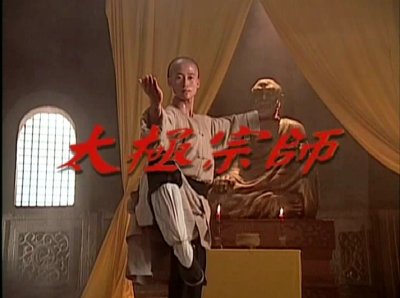
The Tai Chi Master (太極宗師)
Have you ever wondered how the slow and graceful movements of Tai Chi could possibly be applied in a real fight? If so, this expertly choreographed movie will give you some ideas.
In The Tai Chi Master, Chinese action hero Wu Jing (a.k.a. Jacky Wu, Jason Wu) portrays real-life master Yang Lu-Chan, the founder of Yang Style Tai Chi. Here, Wu Jing re-enacts the famous tower sequence from Bruce Lee’s Game of Death. [Read more →]
No doubt you’ve heard of Monkey Kung Fu. But did you know that monkeys practice Korean martial arts too? [Read more →]