Martial Development

Martial arts for personal development

Martial Arts Movies of 2010: The Best, and the Rest

February 27th, 2011 · 5 Comments

Last year was a good year for martial arts movies. With more than two dozen releases to theater and DVD, few people will have the time and interest to screen them all–myself included! Rather than writing a review for each, I have decided to simply list those you cannot afford to miss.

The Best


Bodyguards and Assassins
Winner: 2010 Hong Kong Film Award, Best Film

Bodyguards and Assassins [IMDB rating: 6.9/10]
Starring Donnie Yen, Nicholas Tse, Cung Le

[Read more →]

Kodak Playsport Zx3 Video Camera Review

September 29th, 2010 · No Comments

Celebrities like to say that the camera adds ten pounds, but I think it is even harsher on martial artists. For them, the camera takes away three years–of skill.

Kodak Playsport Zx3

A video camera is an essential tool for exploring your own posture and movement habits. It speeds you along the path to your own ideal performance, by capturing and exposing your mistakes. The camera sees what you cannot, even with the help of a partner and a full-length mirror. It is the next best thing to constant corrections from a master instructor.

Since I can’t afford a live-in Kung Fu master, I decided to buy a camcorder. After reading some mixed reviews for the popular Flip Video models, I chose the Kodak Playsport Zx3 instead.

The Playsport is a great value at a low price. [Read more →]

Science and the Problem with Chi

September 14th, 2010 · 18 Comments

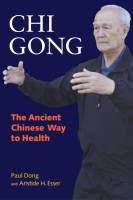
Chi Gong: The Ancient Chinese Way to Health by Paul Dong and Aristide Esser

Chi theory is an ontology, in which it is pointless to declare one’s belief or disbelief prior to understanding. In this excerpt from Chi Gong: The Ancient Chinese Way to Health, author Bruce Holbrook addresses the root of the controversy, which is neither logic or science, but cultural impedance.

The concept of chi is confusing to Western readers, not because it is a difficult one, but because our own culture stands in the way.

Occidental civilization is based on certain religious and philosophical premises which invite false translation of chi and related concepts. For example, our philosophy forces a choice between two fundamental levels of reality, which in the Chinese worldview are but a single one. That historically recent epistemological expression of our civilization, science, forcefully fights against comprehension of a single reality. Through out this section, therefore, “science” and related terms such as “physical,” are used within quotation marks when they refer to Western concepts. This may promote correction of the false, but very widespread, ethnocentric assumption that Western science is the only form of science.

Our “science” is firmly based on inanimate models and data-recording devices, whereas chi (in the central sense of this book) is intimately related to distinctively animate phenomena and cultivated human sensing. An additional problem is that Western science–especially “medical science”–has become dogmatic, so that it rejects any logical conclusion which lies outside its paradigm. The prevailing attitude is: If we can’t deal with it on our terms, it does not exist, because only our terms are valid. Cultural anthropologists call such systematic ignorance “ethnocentrism”–being confined, unaware of the confinement, by one’s own culture.

Western scientists can describe in unparalleled detail a decline in metabolic energy and regenerative capacity, but as soon as they state or suggest that these are the causes of natural dying, they are refusing to answer the question at hand: How does a human die of natural causes?

Given such widespread ethnocentrism, it is only natural therefore that Western thinking beyond the scope of “science” has surrounded chi with a mystical aura, while “scientific thinking” has reduced and deformed the concept into something manageable on its own terms. Such terms are untrue to the original concept and reality of chi. Beyond that there is a natural difficulty with distinctions among different kinds of chi. This can give rise to the impression that Chinese thinkers indulged in unnecessary conceptual multiplication to compensate for their own weaknesses in natural scientific understanding. Nothing could be further from the truth. [Read more →]
Crossing The Pond – Martial Expo 2010 Review

August 18th, 2010 · 1 Comment

Crossing The Pond

  • The inaugural Crossing The Pond Martial Expo was held last weekend in West Seattle. This seminar brought together five six well-known and highly skilled instructors of martial arts and self-defense from across the United States and United Kingdom.
  • Over the weekend, two one-hour workshops were held by instructors Al Peasland, Nicholas Yang, Kris Wilder, Rory Miller, Marc “Animal” MacYoung, and Iain “Tuna Fish Pizza” Abernethy.
  • Approximately thirty-five people were in attendance. Among the students, at least one third appeared to be black belts and/or instructors themselves.
  • Participants were open-minded, polite, and patient–especially with this author, who hadn’t done any Karate training since elementary school. Egoism, inappropriate competition, and input from self-declared “assistant instructors” was minimal. This is a credit to the affable seminar host, Kris Wilder, and the other teachers as well, who together set the right tone for the event.

[Read more →]

The Religion of Inception

August 1st, 2010 · 2 Comments

Inception

There are seventy thousand Jedi knights in Australia. Four hundred thousand in England and Wales. In New Zealand, Jedi is the second most popular religious affiliation, ahead of Judaism, Islam, Buddhism, and most everything else. So concluded the official 2001 census in each of these countries.

It is unclear how many respondents were serious about their Jedi faith, but their governments did not take them seriously. Tallies were ignored or reclassified, and citizens were threatened with fines for providing “false or misleading” information.

So it is forbidden. Religions may not originate in movies–at least not in movies of Star Wars mediocre quality. But with the unprecedented critical and commercial acclaim of the hit film Inception, some of the formerly irreligious are reportedly inspired to worship again. [Read more →]

Feiyue Martial Arts Shoes: A Mixed Review

May 23rd, 2010 · 6 Comments

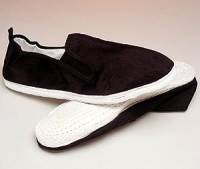
Cotton-sole slippers

I have always been a fan of cotton-sole kung fu slippers. They are very cheap, and very comfortable. With their soft and smooth bottoms, they don’t scuff hardwood floors, and they don’t tear vinyl or canvas mats.

Cotton shoes do have some weaknesses, though. They absorb water and dirt, so you can’t really wear them outside. And unfortunately, they tend to slip a bit during kicking, jumping, and tumbling exercises. It was for these reasons that I recently decided to upgrade my footwear. [Read more →]

An Affordable Martial Arts Insurance Plan For Everyone

March 9th, 2010 · 6 Comments

Advocates of compulsory health insurance plans will often ask rhetorically, “What if you got hit by a bus?” Yet we all know that the relatively poor health of America today isn’t the result of some freak accident. It wasn’t the shark attack, the falling piano, or the runaway Prius that has led so many of us to physical (and financial) ruin.

The real cause is inappropriate conduct. It is, primarily, neglect and disregard for the effects of diet, exercise, environmental conditions, and other factors under our imperfect but substantial control.

As a holistic form of exercise, martial arts can arguably be classified as health care. Experienced practitioners also recognize it as a form of health insurance. Daily practice provides a richly detailed baseline against which latent health issues can easily be observed, and hopefully corrected in their earliest stages.

Those are the straightforward facts; now here is the tricky part: we can use martial arts to insure and ensure our health, but how do we insure the practice itself? [Read more →]

2009 Review: The Best Kung Fu Movies

December 6th, 2009 · 8 Comments

Jeeja Yanin, Raging Phoenix

Raging Phoenix

[Yesasia] [IMDB]
I would love to cite Raging Phoenix as the first awesome martial arts film with a female lead. I would love to do that. But its choreographers and writers conspire against me.

Raging Phoenix is the story of a young female rocker (played by Jeeja Yanin) who gets caught up in a ruthless kidnapping ring. Women are abducted off the streets of Thailand, drugged, and taken to a secret laboratory hidden within a Temple of Doom, which is in turn hidden within a metropolitan sewage system. Naturally, the women’s tears are harvested there, to concoct a patent medicine for eccentric billionaires.

Only one force is strong enough to thwart the kidnapper’s plans: a small group of drunken vigilantes who learned to combine Muay Thai boxing with stylish hip-hop dance moves. [Read more →]

Chuck Norris Gets His Facts Right?

November 6th, 2009 · 4 Comments

Did you know?

In 1982, Chuck Norris was choked out by the famous Gracie Jujitsu family. A decade later, everybody started copying him. We now know this phenomenon as the UFC. (pg. 57)
 

On the set of “Walker, Texas Ranger,” Chuck Norris once took a live rattlesnake by surprise. Then he set it down on the ground, and grabbed it again. The director fleed the scene in terror. (pg. 2)

Chuck Norris is half Irish, and half leg. (pg. 20)

In the interest of full disclosure: I owe Chuck Norris a favor. It was by introducing his “facts” to the mainstream audience back in 2006, that I first established this blog as a premier source for martial arts humor, news, fact and opinion. As payback, he has kindly allowed me to review his latest book, [Read more →]

One Man’s Experience With Spring Forest Qigong

September 10th, 2009 · 10 Comments

Below is the second half of our exclusive interview with qigong researcher Drew Hempel. (Here is the first half.)

Through this intensive practice, you progressed rapidly. What experiences and events marked this progress? In what manner was your brain “transformed”?

The first energy transmission I had from Master Chunyi Lin was this flash of light (while my eyes were closed)…very bright, and my whole body filled with this amazing deep bliss. [Read more →]