An Unauthorized Bibliography
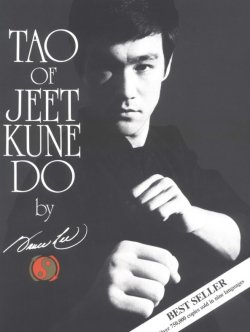
There’s nothing new within this book; there are no secrets. “It’s nothing special,” Bruce used to say. And so it wasn’t.
With over 750,000 copies sold in nine languages, The Tao of Jeet Kune Do is the bestselling martial arts book in modern history. Although Bruce Lee’s name and photo appear on the cover, dedicated fans know that he did not actually write Tao of Jeet Kune Do—at least not in its current form. (The book is a compilation of Bruce’s personal notes, organized and published posthumously by Dan Inosanto, Linda Lee and Gilbert Johnson.)
While credit for fighting methods expressed in Tao of JKD is rightfully given to boxer Edwin Haislet, fencers Hugo and James Castello, and others, we are left to infer that Jeet Kune Do’s philosophical underpinnings are Bruce’s unique contribution.
Quite the contrary, Jeet Kune Do is an orthodox expression of Taoist, Buddhist, and Western metaphysical principles. From the poem on the book’s opening page, to the passionate expressions of its final chapter, ideas in Tao of JKD can be traced directly to earlier written works. Here is a sampling of these sources.
Into a soul absolutely free
From thoughts and emotion,
Even the tiger finds no room
To insert its fierce claws.
Inspired by the Tao Te Ching, chapter 50: “It is said that he who knows how to live meets no tigers or buffaloes on the road…for in him, a tiger finds nothing to lay his claws upon.”
Turn into a doll made of wood: it has no ego, it thinks nothing, it is not grasping or sticky. Let the body and limbs work themselves out in accordance with the discipline they have undergone.
Probably inspired by Chuang Tzu’s classic tale of the wooden fighting cock.
If nothing within you stays rigid, outward things will disclose themselves. Moving, be like water. Still, be like a mirror. Respond like an echo. (pg. 7)
Lao Tzu chapter 8 uses a water analogy to describe the highest level of human virtue. Chuang Tzu chapter 7 explains “The mind of the ultimate man functions like a mirror. It neither sends off nor welcomes; it responds but does not retain.”
Truth has no path. Truth is living and, therefore, changing. It has no resting place, no organized institution, no philosophy.
In August 1929, spiritual teacher Jiddu Krishnamurti delivered a speech to his followers, formally dissolving their organization. His talk was transcribed and titled Truth is a Pathless Land.
In Buddhism, there is no place for using effort. Just be ordinary and nothing special. Eat your food, move your bowels, pass water and when you’re tired go and lie down. The ignorant will laugh at me, but the wise will understand.
This is a direct quotation of Chan (Zen) Buddhist master Linji.
An assertion is Zen only when it is itself an act and does not refer to anything that is asserted in it.
Taken from Daisetz Teitaro Suzuki’s essay, Practical Methods of Zen Instruction.
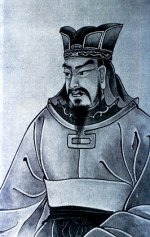
Sun Tzu
Author, The Art of War
Jeet Kune Do favors formlessness so that it can assume all forms and since Jeet Kune Do has no style, it can fit in with all styles. As a result, Jeet Kune Do utilizes all ways and is bound by none, and, likewise, uses any techniques or means which serve its end.
The superiority of formlessness was expressed in The Art of War (chapter 6), written two thousand years ago.
Empty your cup so that it may be filled; become devoid to gain totality.
This is a reference to the famous koan, which can be found in the 101 Zen Stories collection.
Just as yellow leaves may be gold coins to stop the crying children, thus, the so-called secret moves and contorted postures appease the unknowledgeable martial artists.
Presenting yellow leaves as golden coins is a traditional example of the “skillful means” used by Zen teachers. Such acts are intended to be compassionate, rather than cunning or ignorant as Bruce Lee implies here.
The form of an attack is generally dictated by the form of the defense used by the opponent. In other words, between opponents of approximately the same caliber, an attack can rarely be successful unless it deceives or outwits the defense.
“Warfare is the tao of deceit”—Sun Tzu’s most famous quotation.
Prajna [wisdom] immovable doesn’t mean immovability or insensibility. It means that the mind is endowed with capabilities of infinite, instantaneous motion that knows no hindrance.
Takuan Soho, Zen Buddhist master of 17th century Japan, gave this instruction to the Shogun’s fencing teacher. It was subsequently reported by D. T. Suzuki in his essay, Zen and Japanese Culture.
Let your opponent graze your skin and you smash into his flesh; let him smash into your flesh and you fracture his bones; let him fracture your bones and you take his life! Do not be concerned with your escaping safely–lay your life before him!
Again taken from Suzuki’s essay, Zen Buddhism and Its Influence on Japanese Culture.
Bruce Lee and Eric Hoffer
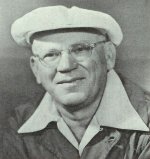
Eric Hoffer
We have more faith in what we imitate than in what we originate. We cannot derive a sense of absolute certitude from anything which has its roots in us. The most poignant sense of insecurity comes from standing alone and we are not alone when we imitate. It is this with most of us; we are what other people say we are. We know ourselves chiefly by hearsay.
Secretiveness can be a source of pride. It is a paradox that secretiveness plays the same role as boasting: both are engaged in the creation of a disguise. Boasting tries to create an imaginary self, while secretiveness gives us the exhilarating feeling of being princes disguised in meekness. Of the two, secretiveness is the more difficult and effective. For the self-observant, boasting breeds self-contempt. Yet, it is as Spinoza said, “Men govern nothing with more difficulty than their tongues, and they can moderate their desires more than their words.” Humility, however, is not verbal renunciation of pride but the substitution of pride for self-awareness and objectivity.
We are told that talent creates its own opportunities. Yet, it sometimes seems that intense desire creates not only its own opportunities, but its own talents as well.
That we pursue something passionately does not always mean that we really want it or have a special aptitude for it. Often, the thing we pursue most passionately is but a substitute for the one thing we really want and cannot have. It is usually safe to predict that the fulfillment of an excessively cherished desire is not likely to still our nagging anxiety. In every passionate pursuit, the pursuit counts more than the object pursued.
The entire contents of Tao of JKD pages 205-207 were copied verbatim from Eric Hoffer’s book, A Passionate State of Mind! Hoffer’s name is not mentioned anywhere in Tao of JKD.
Bruce Lee, Plagiarist?
Immature poets imitate; mature poets steal; bad poets deface what they take, and good poets make it into something better, or at least something different. (T.S. Eliot)
In this semi-biographical movie Dragon: The Bruce Lee Story, Lee is portrayed as a noble teacher of all who would learn the martial way, regardless of race or nationality. And The Tao of Jeet Kune Do exhorts the martial artist to investigate the root of martial arts, rather than focusing on its various branches and leaves.
Ironically, by neglecting to acknowledge its many sources, the book makes such an investigation needlessly difficult—especially for non-Chinese who lack the relevant cultural literacy. Perhaps this is why Jesse Glover, one of Lee’s first students, derided Tao of JKD as “…at best a poor joke on a great martial artist.”
To mistake Bruce Lee for a rebel or a radical would be a mistake. Wisely, he built his Jeet Kune Do on the shoulders of giants; their names are Lao Tzu, Eric Hoffer, Krishnamurti, Alan Watts, Sun Tzu and Fritz Perls.
This page contains affiliate links. We may earn a commission from purchases following these links.
Excellent Blog. Keep it up!
Hi Chris,
I’ve responded to your post and comment back on my original post. I’ve enjoyed your blog and respect what you do here, at the same time I feel that your title ‘Bruce Lee, Plagiarist?’ is misleading.
It’s true that The Tao of JKD is pulled from various sources, but let’s not forget that it was a publication of Lee’s notes after his death by his widow Linda Lee, and so it’s a stretch to lay the blame on Lee on this one (I go into more detail on my blog’s comment).
Reading your conclusion, I don’t think that’s where you’re going with this post, but I hope you can clarify that one.
Calling Lee a plagiarist will certainly get you lots of web traffic, unfortunately at the cost of your integrity and credibility. What was put together as a book were Lee’s notes, only a small portion of which were meant to be notes for a potential book. Lee kept so many notes, diaries, sketches and ideas jotted down that his estate is still putting them together in a cogent way. Much of this non-scandal would have been avoided if the “Tao” had been put together by a martial artist or someone with a background in philosophy, and eastern culture and literature. Inosanto was unfortunately not involved, and while Mrs. Lee-Cadwell gave some insight, she herself did not have the background to put much of the material in perspective. If you had done a tad bit more research, you would have found that many of the same quotes, passages and ideas are found in many repeated instances in Lee’s journals and notes, often with author citations and page numbers. A person who copies material repeatedly for their personal use does not usually cite it’s author every single time they add it to their notes. As someone who is a compulsive note-taker, I do this myself. You make the veiled assumption, somehow, that Lee’s handwritten notes, compiled after he died, are exactly as he would have wanted an organized, typed, proofed and edited manuscript to appear. And unfortunately, you have nothing to suggest why that would be. Lee was a philosophy student, he would have known any cribbed notes would have easily been discovered. Why would he have risked his reputation for lack of citing an authors name, as he had done at UW again and again as a basic rule?
Again, if a MA, a philosophy student and expert in eastern culture and lit. had organized his personal notes, he would have added the citations as he saw them. If a non-martial arts publishing company had published the book, they would have put it through a much more thorough proofing process, and the lack of citations would have been caught.
How many of us martial artists and self-improvement junkies have a box of journals filled with notes from seminars, Taoist quotes, bits of the Hagakure and the Book of Five Rings? All of us? Well, you better get out out your MLA guidebook and get in and edit that book of notes, because if a bus hits you tomorrow and your aunt throws your notes into a book, some kid in the coffee shop down the street may jump on his little blog and accuse your corpse of being a dishonest, fraudulent plagiarist. And increase his page hits, of course, there has to be an upside to defaming the dead, right?
Alvin,
Plagiarism is a fair question, and I do not apologize for posing it, even as I answer with a qualified No. Obviously, someone is responsible.
jon,
Here is another quote from Tao of JKD: “The book’s organization, however, could not have been justly done were it not for the patient attention of Danny Inosanto…”
You expect the reader to consult some other resource for proper attributions? You would send us to inspect Lee’s journals ourselves, while excusing the publisher from doing the same? Absurd. This book is in its forty-seventh printing.
You want to claim defamation, but your finger is pointing in the wrong direction.
P.S. I write here under my real, full name. Consider that while you sip your coffee.
I could be mistaken, or maybe the movie “Dragon: The Bruce Lee Story was mistaken, but didn’t his wife, Linda, help him write the book when he was injured so severely in the fight? (And I apologize if this was just artistic license that the movie producers took.)
You carefully avoided any point made in the post regarding the fact that none of Lee’s notes were prepared for publication, and the majority were not even intended for publication. You have to ignore this, or it exposes your insinuations of dishonesty for what they are; a publicity-seeking defamation based on a guess. You are right about the publisher being responsible for printing uncredited source material, a point I had already made. And seriously, an author, even a blog-level writer, actually attempting to mock the idea of a journalist going to source material before they published their opinions on it? Are you kidding? I understand you are not a real journalist, but seriously. Inosanto has said he had almost no input into the book, another googled tidbit a writer would know how to look up.
Listen, I am not defending a infallible myth of man who had, like all of us, many failings. I am annoyed at your re-hash of a non-story for the purpose of getting attention for yourself.
You have merely made a guess you are unable to back up with new new information, have failed to provide motivation or reasoning for the supposed actions, have ignored readily-found data that defeats your thesis, can’t defend the piece from reasonable arguments, ignore these points rather than counter them, and you mock the idea of reading the source material itself you make your claims about.
When you post this type of attack, you should expect people to respond. If you cannot counter the arguments, it exposes the fact that the piece was never of a level of quality to begin with, and should never have left your house.
And my name? What difference would my name make to what I did to your work? I rarely post a whole name online. Basic internet safety.
Chris,
If you don’t mean to call Lee out as a plagiarist, perhaps you can think of amending that title and make it clearer.
Martial Arts Mom,
According to biographer Tom Bleecker:
jon,
It is you who has carefully avoided the point, that the reader should not have to purchase a second book to discover who actually wrote the first! And you carelessly ignored the very first paragraph above, where I acknowledge the source as Lee’s personal notes, published after his untimely death.
I don’t presume to know his original intentions, sir, while you presume to know mine. Putting aside the ad hominems, you haven’t done much to my thesis, which is: martial artists would benefit from knowing Lee’s own sources.
Alvin,
Duly noted.
“If I have seen further it is by standing on ye shoulders of Giants.” – Newton, who failed to attribute it to it’s originator, Bernard of Chartres. I didn’t know Lee, but I give him the benefit of the doubt that he was well-read enough to know he didn’t get where he was on his own, both philosophically and martially.
Hi, amongst all the mystery that appears to be surrounding this book, and sadly also all the insults flying around to each other; the book itself has been a great teaching aid to my young sons who often refer to it. It has been an inspiration to them and has taught them a lot whilst striving towards their black belts. Amongst many other things, it has helped me to teach them respect for life, knives and other weapons & discipline; so important, especially these days when we hear so many horror stories involving our youth. So for me, regardless of who wrote it, it’s a winner. Finally, does anyone know the biographical details of the book, i.e. 1st edition date/year, name of publisher etc? I’d be grateful for a reply.
Thanks – Richard – London
First edition published in 1975, by Ohara Publications Incorporated.
Thanks Chris. It’s appreciated.
The martial arts including boxing are based upon understanding hard work, and a total comprehension of skills. Power training and the use of force are easy, but total comprehension of all of the skills of the martial arts are very difficult to achieve. To understand them you must study all of natural movement in all living things.
Just a few sentences to me is enough to build a base from. Thirty four years of the book making me 49 and it isn’t hard bound, I’m missing three pages; and Bruce is only getting younger.
i think bruce is one of the most amazing people in the world beacuse he did what no other person would dare and he succeeded
hi,
also, in the Jeet June Do (Commentaries) book, there are all sorts of quotes from self-help books of the time, including Think and Grow Rich, starting around page 361, 362, 368, 371,
Subconscious Mind (Murphy)
James Allen (As Man Thinketh)
PMA, Positive Mental Attitude
I get the sense he was just writing down phrases he liked, and internalizing them. They should put a note in there that most of those are from other sources!
While I acknowledge the amount of research you put in your post I am not in agreement with your conclusions. While the cover sheet (with his picture and “by Bruce Lee”) might attract more attention than eventually it would have done otherwise, I am still convinced that what I read in it was interesting information. I am convinced that Bruce Lee did a great job in reading and studying material that was probably not common at that time and shared, in his notes, what he thought it was relevant for him.
Martial arts are usually an evolution of one or more styles that get merged and blended into a new one that absorbs some of the previous concepts. Jeet Kune Do is not a style but a concept, based on trying different martial arts and absorb what is good and working for you from each of them. Bruce lee might have taken ideas from many different people it’s unlikely he defined Jeet Kune Do fighting principles from Lao Tzu, Krishnamurti, Sun Tzu. For me the great innovation from Lee’s point of view was to get rid of traditions of dogmatic believes about that or the other style and simply accept that no style is perfect for anybody and that is fine borrowing techniques from boxing because they punch hard or from fencers because of the way they base they fighting.
If I take a concept from Michio Kaku, author of ‘Hyperspace’ and apply it to fighting, am I a plagiarist, even if I don’t cite Mr Kaku? Not really. I’m not claiming to have invented the concept of 11 dimensions, wrapped up in a small point.
But if Mr Little or Linda quote a famous philosopher, -and- claim that BL originated that quote it is potential plagiarism.
Perhaps Mr Little was in a ‘rush’ to get those notes out there, and did not exercise due diligence. I don’t think he nor Linda would object to footnotes being added to subsequent printings. The thrust of TToJKD is the martial application of these ‘great thoughts’.
So…I see both sides. Valid points but not a deal breaker/game over issue, imo.
Just realized that pages 205-207 IS a word-for-word copy from Eric Hoffer’s ‘Passionate State of Mind – Aphorisms’.
Sadly, many people quote Mr. H’s phrases attributing them to BL now. (google some).
So, I’m revising my comment to suggest that future editions of TToJKD be annotated and properly attributed.
It won’t take away from the book, in fact, it may impress BL fans to know he read and incorporated Krishnamurti and Hoffer into his studies. Not really surprising, since he was a philosophy major.
Still, it’s not ‘the right thing to do’ to omit proper citations.
Bruce Lee is dead. I’m sure he doesn’t care about his reputation because he is in heaven kicking ass.
Any martial artist of any real value circa 2009 has basically moved beyond the political shitstorm of the J.K.D. community and taken the heart and soul of Bruce Lee’s self-discovery to basically enforce the principles of Aliveness into their intense and vigorous training as an athlete and fighter.
All that recycled philosophical circular talk and incomplete 19-20th century boxing and fencing knowledge, really did need to be summed up in the Tao of Jeet Kune Do. It provided the people who TRAIN and TEST with Aliveness (rather that sit around reading dead geniuses private and undeveloped concepts) a starting point to develop our own personal development.
Look…don’t look at the Tao of J.K.D. as an instruction book to limit your martial arts journey, but a shortcut to your own combative functionality and personal development.
I know and train with people who personify the soul of Bruce Lee’s training philosophy and motivations who never even picked up one of this books in their life, who don’t even know what the letters J.K.D. stand for! They would read halfway though the first section of this book and express that “isn’t this just common sense?”
As for this book misleading two generations of martial artists: that is bullshit. If some traditionalist reads it and gets off the path to disapointment and failure, that a is positive outcome. But for me the Tao of J.K.D. served as a way to organize my own thoughts and training and did not just create a new cicle of the downfalls in martial arts that Bruce Lee had raged against in his life.
~ D ~
in short, I think that this debate is sort of stupid. Bruce would be training instead of typing on this friggin website.
~ D ~
Bruce Lee wrote and communicated a great deal. For many people writing and communicating is another facet of complete training.
There is more to training then physical aspects, there are mental and spiritual aspects. Conversing on websites can be a part of training, it won’t replace physical training, but someone who has physical training and mental training is a better martial artist than someone with only physical training.
Bruce Lee is nobody special. He is over hyped and worshiped, but he was just another human being like you. I think that celebrity worship is idolatry for fools. Who cares what celebrities think and do. Live you own life.
Gweilo D,
Bruce Lee thought the source texts were important enough to read in their entirety. That is the primary reason why people are still (mis)quoting him decades later.
Come on people ..Every current martial artist, philosopher etc. is a mimic or copy of every master/teacher that came before. Even Lao Tzu had a teacher . Everything that i have read regarding this book indicates that the man pulled his insights and information from many sources. So if Mr Lee is a plagerist then so is every and anyone that calls themselves an artist of any kind.
Get over yourselves. Stop getting caught up in semantics. Take what you can from the book and move on.
Beverly, everything you have read regarding Tao of JKD, was written by people like me, in books and articles like this one. Having read and benefited from it, you now ask everyone else to move on? If you have nothing to contribute to this conversation, then please take your own advice.
Martial arts Mom-
“I could be mistaken, or maybe the movie “Dragon: The Bruce Lee Story was mistaken, but didn’t his wife, Linda, help him write the book when he was injured so severely in the fight? (And I apologize if this was just artistic license that the movie producers took.)”
Yes, it’s totally artistic license to make the movie more dramatic. The question about how the book was compiled has already been addressed, so I won’t go there, but I will ad that he was not hospitalized due to his fight with the china town representative.
That fight actually took place impromptu in his school, when they showed up and challenged him. He was actually not injured in the fight, he won quite handily, and was only disappointed because it took too long.
The injury actually came from a weight lifting accident when he hadn’t properly warmed up, and pushed himself a little too hard on an exercise he called “good mornings”.
Chris long ago, as with most of his articles, reversed his illogical and unsupportable original thesis, backed off his claims and made new ones- so let this thread die or remove it. It brought him some web traffic while lowering his credibility. Wing Chun writers will remain insecure and write these sort of articles criticizing Lee until a wing chun student who can actually fightwith WC techniques appears and shores up their backbone. Wing Chun, Aikido and Ninjitsu guys, stop writing this drivel and take a boxing class. You will learn more in a month than in 5 years of WC. It won’t improve your writing, but that’s a different class.
Kill this thread- the author can’t defend it.
In most universities up to a PhD level we are taught that plagiarism is something that someone else wrote that you did not give credit to in your paper, using over three consecutive words, unless it is general knowledge that is at a 10th grade level or lower. Here is a big problem. Let us use something like; the water will roll where there is no resistance. The complex mind will not understand this, a fifth grader gets it! In our ever changing complex world we have burnt all those cells that are needed to really understand, you are told what and how to understand, you have been trained like monkeys, and you have accepted that as the norm. Out of the trillions of sentences written in just the English language, there will always be three words in a sentence, every sentence! So there is nothing you can write in today’s world that is 100% free of what you know as plagiarism.
Here is another one to think on. When you direct a sentence at a different subject or use this information in a different context is it now still plagiarism. Here is one for you, you’re an idiot. This has been written over 400 trillion times yet now it is being aimed at you, that makes it new and it is general knowledge. I believe most of Bruce Lee’s writings were linked together to give meaning to the concepts of where the human mind meets the spirit in the form of combat. We use things in business like the 7 habits to know that your habits are connected to the way you live, the way you live is connected to the way you function in the business world.
I was 12 years old when I found out about Bruce Lee. I was a great fan and of course wanted to be him, not like him. Years later after lessons in Calif. from a person I remember as Master Kim that had a permanent limp from a fight with Lee, or exhibition, or something like that. I remember the pictures showed them in the ring and Lee come down on the leg. He had a chain tied up about eight to nine feet in the air and would just jump up and kick it that was incredible for a man with a limp leg. I was handed a book and told that it was one of twelve in the world, written by Bruce Lee, it was hard to follow and all I remember it was all hand written and showed very little combat and mostly philosophy. So there are my thoughts on this situation.
I wish he was here to read all these folks, some good and some might be a little mislead by there false teachings. I think I know a reply he might have and it would go something like this, just be you and you have already won! Do not structure your thoughts or life around mine, get on with it! Be kind in everything you do because you are the greatest. Hope you all happy thoughts!
Bruce is still alive in the heart of martial arts like me because of his work. The philosiphies written by bruce are best & know one can write & so the same things. He prooved his philosiphies. easy to right philosiphies but to prove them is verry much hard. What he shown (did) in life is published by linda that is ok if the book is not written by brucelee because bruce did the things. Aftor showing the way each dog says that I was influence beforly the way. but main thing is that who shown & proved the way. There is no man who can perform like bruce hence they don’t have the right to drop down the bruce lee’s techniques or philosiphy.
There is no matter of who written first on paper but it’s matter of who shows proved first, by which we can know that the philosiphy exist in real world or not.
In India in Hindi Language a line said – Jo jeeta woh sikandar aur baki ke bandar” Means- winner is sikandar who won Half of world & the looser is monkey. And the bruce is winner.
Wow, lots of research you did, I’m quite impressed, and no doubt that Bruce Lee loved and studied philosophy and influenced to people with more clear and better understanding of life and martial arts……
He gathered bunch of ideas for martial arts and for philosophies, I guess there is some complains about this book though that it wasn’t meant to be printed but I heard it was suppose to be a guideline for Bruce Lee himself.
He was great philosopher in his own rights.
Many of Bruce Lee’s statements are derived from his own studies of various schools of philosophy and the martial arts, and are sometimes paraphrases of previous expressions by others which he wrote down for his own instruction.
What’s with thee 11. Good # though, more to it than meets your eye, you wanna relate to the tao and how!!! and to the movement like the man, it’s movement at its finest and fully capable by any that wanna know themself
and again, just remember the martial arts including boxing are based upon understanding hard work, and a total comprehension of skills. Power training and the use of force are easy, but total comprehension of all of the skills of the martial arts are very difficult to achieve. To understand them
Ohara Publications has acknowledged Edwin Haislet, Hugo and James Castello, Roger Crosnier and Julio Castello as original sources.
Many of Bruce Lee’s statements are derived from his own studies of various schools of philosophy and the martial arts, and are sometimes paraphrases of previous expressions by others which he wrote down for his own instruction.
Bruce Lee was the greatest martial artist and philosopher.
Many of Bruce Lee’s statements are derived from his own studies of various schools of philosophy and the martial arts, and are sometimes paraphrases of previous expressions by others which he wrote down for his own instruction into his own words.
He was no doubt a great martial artist and philosopher and much more…..
What I most glean from Lee and whatever was published in his name is how to be a good student. In his notes, he taught this by example and frequently reminded himself of the path to find, follow and return to after exploring elsewhere. I do feel however that it would be a better more useful work and a greater honor to him if it were properly annotated.
My article was focused on JKD philosophy, but some of the book’s comments on technique were also copied from other sources. Not paraphrased (as repeatedly alleged by a single commenter above, using 3 different names), but quoted without attribution.
According to Steven Barnes, these and others are taken from “Boxing”, a handbook published by the US Naval Institute. (This is not the Edwin Haislet book, but another with the same title.)
Actually if you look at 90% of his writings and notes they’re all taken out of various sources and authors. Calling him a Plagarist is harsh, and even the authors Johnson and Lee-Cadwell should be called such. They had to go over thousands of copies of papers, and it was almost impossible to cross reference check everyone of them!!
Granted they should’ve used the references on the pages taken into the Tao of JKD. However with that said, if you look at many of the writings, books, and systems now, they all “borrow” from other sources, many times without acknowledging where they came from.
And Yes Dragon The Bruce Lee Story is mainly taken out of context for 70% of the story NEVER took place or was altered for the sake of hollywood!!
Ultimately every artist in the world has an influence from someone else, either inspiration wise, note taking wise, or philsophically and artist wise. If that’s called plagarism, then well were all guilty!!
(I will grant that adding the authors references to whatever you borrow, is always vital!!)
CORRECTION
You should NOT call Johnson or Lee-Cadwell plagarists as well… (My mistake!)
I will add that cross referencing, especially nowdays is relatively easy, considering the internet.
I agree with BOB although I will add that it’s not “impossible” to cross refence thousands of pages of notes, it’s more time consuming. Prehaps they should’ve taken more time with cross referencing and providing the PROPER author onto the works. We must remember these were NOTES complied into this so called book. They weren’t for editorial or publishing purposes.
I’ve crossed reference quite a few “paragraphs and sentences” from Tao and have found it to be quite interesting in where he was possibly trying to go with Tao of JKD. However well never know.
Citing sources when you use them is crucial, no matter what! But using one’s own notes and personal papers for $$ and memorializing one is just wrong!! Especially given we have no idea on how Bruce Lee would’ve wanted this to be told.
It is true that in college (as I’m sure you all know) plagarism is always checked on when papers are handed in. It is also taught how to avoid it and how to cite proper authorities when you borrow something. I will add that in reality for the most part 95% JKD is a combination of previous authors and artists ideas, works, notes, and systems. So technically there’s really nothing “new” about JKD and even Bruce Lee said it himself.
If you really want to get to the bottom of it, plagarism is very simple. How many of us actually take notes, cite ALL authors, page numbers, publishers, etc…. Every time especially when your writing fast and in a note taking mind set? (I know for the most part I do- however I’ve been known to slip at a time or two)
Bruce was not a Plagarist!! If you read up on his life you’ll find that Bruce was always note taking, reading, and researching different ideas, concepts, and training. Many students have said Bruce would always cite his references when explaining things to them.
Now leave this alone!!! It’s published, everyone for the most part knows about it, and not everyone is obsessed with Plagarism as some of you all seem.
How can a man who died be a plagiarist of something he did not write?
You mention the notes were taken after his death, obviously why they are not attributed to the original authors. They were notes put together by another, and not Lee himself, for the benefit of others.
Hmmm…
I do not claim to know a great deal about jeet kun do but what I do understand of it is that Bruce did not intend his concept to be debated or even studied to a ridiculous point. Even though this is an interesting and thought provoking article, I am still inspired to live my life with his concept in mind.
I said and this ripped me off, so I’m saying something else because I didn’t copy it, or did I? understand some all the time, and some, all the time. And a punch only gets better, and becareful older, your tendons and ligaments don’t respond as well.
Thank you for pointing the sky is blue.
Every literary work, philosophical concept or anything of the sort is derivative of and influenced by something. That’s how the world works. Nothing is or will ever be original.
That may be so, but professional writers have been fired and disgraced for copying less than Tao of JKD does, without attribution.
Tao of Jeet Kune Do provides clearly framed training aids and exercises for easy referencing.
Let’s get something straight here. Lee didn’t major in philosophy, he majored in drama, just ask the college where he studied.
hi everyone ,
i have no idea whether this blog is still active or not !
i just wanted to know the meaning of a poem in The Tao of Jeet Kune Do. For those who dont know whts that , here it goes –
” Into a soul absolutely free
From thoughts and emotion,
Even the tiger finds no room
To insert its fierce claws.
One and the same breeze passes
Over the pines on the mountain
And the oak tress in the valley;
And why do they give different notes?
No thinking, no reflecting,
Perfect emptiness;
Yet therein something moves,
Following its own course.
The eye sees it,
But no hands can take hold of it –
The moon in the stream.
Clouds and mists,
they are midair transformations;
Above them eternally shine the sun and the moon.
Victory is for the one,
Even before the combat,
Who has no thought of himself,
Abiding in the no-mind-ness of Great Origin. ”
A good reply would be appreciated.
Thanks.
Shakespeare was a plagarist too. Some of his sources aren’t noted even in leading editions edited by famous scholars. For example: “ye elves of hills…” speech in the Tempest is right out of a popular English translation of Ovid. “Sleep no more Macbeth doth murder sleep” comes right out of Shakespeare’s source for that tragedy, as does the weyward sisters’ “Hail to thee that shalt be king hereafter”(with tiny changes to match his metre). Heck “to be or not to be” was said to be a common moot point for law students of the era!
“Pladgarism” is an invalid concept. It is appled to real authors by petty critics, small minded teachers, and intellectual property enforcing capitalists. It is irrelevant to any discussion of “authorship” outside of those domains.
To definitively end this for anyone who is unconvinced, I recommend looking into theoretical semantics — particularly “hypercontexts”.
The content of this post is excellent. The rhetoric is ignorant. The phrasing is clickbait.
Sincerely,
an annoyed internet user
One I forgot to mention…
Written by D.T. Suzuki, Essays in Zen Buddhism, 1926.
Attributed to Bruce Lee–who seemingly removed the part about following a teacher.
As a JKD teacher trying to accurately source some of these quotes rather than attributing them to Bruce since they don’t even sound like the kind of words Bruce would use, the plagiarism issue really p!sses me off!
Linda Lee and Ohara Publishing to blame? Definitely not Bruce.
People who say get over it, it’s a non issue, get back to training, need to read the quote about Physically Bound people because that’s what they are. Inconsiderate meatheads. It’s a highly important issue for me as a JKD teacher to avoid mis-attributing some of these quotes to Bruce, including the quote I’ve just referenced for which I’m still looking for the true source.