In medical science, one must pay attention not to plausible theorizing, but to experience and reason together.
— Hippocrates
The James Randi Educational Foundation has not validated any extraordinary human ability; ergo, none is likely to exist.
— Anonymous crank
Are psi and other forms of mental kung fu real? Some research suggests that they are, but to properly evaluate the data, you need a solid background in experimental design, statistical probability, and the subject itself. Science is hard.
Supposition and common-sense appeals are easy, and unlike research data, they always support the desired outcome. A suitable bit of folk wisdom can be found to justify any emotional investment.
For example, if you want to master a difficult new skill, you’ll remember that practice makes perfect; later, if you become frustrated and finally give up, it is only because you can’t teach an old dog new tricks. This is all ex post facto rationalization—not reason, and certainly not science.
So belief and disbelief are not two poles on the spectrum of opinion, or two sides of the same coin. They are both on the same side of the coin. There is nothing inherently rational about a default to skepticism, it’s just another bias.
Maybe we can do better than that.
According to reason, you can do neither the one thing nor the other; according to reason, you can defend neither of the propositions. Do not, then, reprove for error those who have made a choice; for you know nothing about it…You must wager. It is not optional. You are embarked.
— Blaise Pascal
The JREF Million Dollar Paranormal Challenge
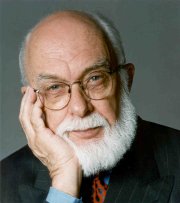
James Randi
Since 1964, stage magician James Randi has offered a large cash prize to “anyone who can show, under proper observing conditions, evidence of any paranormal, supernatural, or occult power or event.” Nobody has successfully collected the prize, and to some skeptical observers, this strongly suggests that such skills do not exist.
Ironically, these Randi acolytes seem to have abandoned their critical thinking skills. Even if paranormal abilities did exist, the Challenge would probably not uncover them. A simple thought experiment explains why…
To enter the Million Dollar Challenge, a claimant must be willing; to succeed, they must be able to demonstrate their power to the satisfaction of the JREF. Applying basic game theory, we can represent these possibilities in a four-cell matrix.
| Willing | Not Willing | |
| Able | “X-Men” | “Monks” |
| Not Able | “Conmen” | “Normals” |
The potential players are classified into four groups:
- X-Men possess supernatural power, and desire the money or fame they would earn by winning the challenge.
- Monks also possess this extraordinary ability, but are not interested in anything the JREF has to offer.
- Normals cannot win, and will not try.
- Conmen have no paranormal skills, but want to become rich and famous anyway.
The optimal success strategy is different for each type of player. By definition, Monks and Normals have nothing to gain from entering the Million Dollar Challenge, so they simply do not. The other two categories are more interesting.
The Conmen’s strategy is to claim extraordinary powers, while simultaneously avoiding any objective tests that would expose their true identity. Conmen can easily become rich and famous without James Randi’s assistance, by preying on the large population of people who want something—anything—to believe in.
Indeed, the JREF’s often juvenile and emotionally tone-deaf missives are more likely to strengthen the Conmen’s position than to weaken it, by recasting them as victims in need of rescue—an ineffective approach for an organization purportedly dedicated to scientific education!
This leaves only the “X-Men” (übermenschen is too awkward), for which the Million Dollar Challenge would at first seem a worthy endeavor. X-Men want cash, Randi offers cash; so what’s the problem?
A Psychic Star Search
Is it the rigors of the test? The official rules state that the claimant must beat a one-in-one-million chance of success, which is far a more demanding standard than is typically used in this type of inquiry.
(One wonders if James Randi, who professes to know the alphabet, would be able to recite it even one thousand times in succession, without error. In the name of science, I hereby extend this One Dollar Challenge to him—but I will not cover travel expenses.)
Let us assume that genuine X-Men can meet this requirement without difficulty, and ask a more important question: what is the market value of such a reliable psychic ability? If X-Men are rational actors, motivated by material wealth, fame, or both, should they expose themselves in public for a measly million-dollar reward?
Obviously not. A privately held psychic ability would offer an incalculable advantage in the potentially lucrative fields of gambling or securities trading; a dousing rod that locates oil instead of water could make its owner a multi-millionaire; and so on.
Money is no trouble for X-Men, if they exist. And as for the fame: a person with demonstrable supernatural powers would need publicity help from the JREF, like a fish needs a bicycle.
The Hustle
If false, it is of no importance, and if true, it is of infinite importance. The only thing it cannot be is moderately important.
— C. S. Lewis
I have no doubt that the James Randi Educational Foundation is staffed with intelligent workers, who have thoroughly considered the issues above. Yet the challenge remains open. They cannot hope to prove the negative, that no “paranormal, supernatural, or occult power or event” exists; they are harangued by mentally impaired contest applicants (is there any other kind?); what is their motivation to continue?
The Million Dollar Challenge FAQ cites Webster’s definition of paranormal: “not scientifically explainable, supernatural.” As science continues to move forward, we can state with certainty that today’s paranormal will be tomorrow’s normal. To assert otherwise is to claim that science is finished, which is absurd. A piece is missing from this puzzle.
Rule 12 states that the JREF is only interested in testing applicants with an established “media presence”, and rule 4 grants the JREF the right to publish the applicants’ identities and performance data as they see fit. These official rules were designed to govern the challenge, and also to advance the JREF mission…
And that mission is?
MD –
I’ll leave Randi to defend himself and his organization if he so chooses.
However, I will point out that you CAN prove a negative beyond a reasonable doubt and assign a probability to it.
There really isn’t such a thing as a “purely” negative statement, because every negative includes a positive, and vice versa. Thus, “there are no psychic monks in my closet” includes “this closet contains something other than monks” (in the sense that even “no things” is something, e.g. a vacuum).
“Something” is here a set restricted only by excluding monks, such that for every set S there is a set Not-S, and vice versa. In almost-English: Every negative entails a positive and vice versa.
To test the negative proposition one merely has to look in my closet: Since psychic monks being in my closet (p) entails that we would see monks when we look in my closet (q), if we find q false, we know that p is false. Thus, we have proved a negative.
Of course, we could be mistaken about what we saw, or about what a psychic monk looks like, or things could have changed after we looked, but within the limits of our knowing anything within reason, and given a full understanding of what a proposition means and thus entails, we can easily prove a negative in such a case.
This is not “proof” in the same sense as a mathematical proof, which establishes that something is inherent in the meaning of something else (and that therefore the conclusion is necessarily true–often 100% true based on numbers), but it is proof in the scientific sense and in the sense used in most courts of law. So my monk example holds because when p entails q, it means that q is included in the very meaning of p. Whenever you assert p, you are also asserting q (and perhaps also r and s and t). In other words, q is nothing more than an element of p.
Thus, all things being as we expect, “Bigfoot is in my kitchen” means if you look in my kitchen you will see Bigfoot, so not seeing him means the negative of “Bigfoot is in my kitchen.”
Negative statements often make claims that are hard to prove because they make predictions about things we are in practice unable to observe. For instance, the statement “there are no psychic monks” means that “there are no monks in this universe,” and unlike my closet, it is not possible to look in every corner of this universe, thus we cannot completely test this proposition. All we can reasonably do is look around within the limits of our ability and our desire to expend time and resources on looking, and prove that, where we have looked so far, and within the limits of our knowing anything at all, there are no psychic monks.
In such a case we have proved a negative, just not the negative of the sweeping proposition in question, and we can assign a probability to it. Obviously the probability of me seeing a psychic monk in my closet is quite low. On the other hand, assigning a probability to the existence of a psychic monk “somewhere” in the universe might be ill advised, because we do not have the ability to look “everywhere”. So, in t hat example I might suspend my judgment.
So, the Randi test or just about any other scientific test which has tested for “paranormal powers” has proven a negative, in my opinion.
Bob Patterson
See also Michael Shermer’s article titled “You can prove a negative.”
http://www.skeptic.com/eskeptic/07-12-05.html#feature
~BCP
I have once written an article about the challenge on my site and it raised heated discussions with more than 40 comments.
It appears to be a very controversial subject, as skeptics swear by Randi and his challenge and psi-proponent actively attack it.
See: http://www.mind-energy.net/archives/163-About-the-James-Randi-Million-dollar-challenge.html
Bob, thank you for your comments. I’ve addressed your valid objection by changing “a negative” to “the negative”. Moving on…
if the Randi Challenge was dedicated to investigating the strongest claims, rather than debunking the loudest ones, then its sample size might be relevant.
As it is, the Challenge is analogous to evaluating Aikido by watching Steven Seagal movies, or measuring Ralph Macchio’s Karate. (Translated for non-martial-artists: a complete waste of time.)
http://www.centerforinquiry.net/forums/viewthread/3283/P0/
to see how we stopped Randi’s Challenge
Nice post. My impression about the Randi challenge has always been that it’s more about publicity than anything else.
comparing a MONSTER LIKE *NOSTRADAMUS* TO A LITTLE *GEEK* LIKE DAWKINS:
http://www.middle-fork.org/archives/dSpiderWithSpider.gif
and FINALLY:
guess what is inside angel’s ENVELOPE:
______________________________
these folks should stick to BIOLOGY
______________________________
FINAL DRAFT FOR WORLD-WIDE CIRCULATION:
now with EMBEDDED VIDEOS!
please FWD all your appreciations to randi@randi.org and richard.dawkins@oum.ox.ac.uk and myersp@morris.umn.edu
SEE HOW WE CAUSED THE PRESIDENT OF AMERICAN ATHEISTS, ELLEN JOHNSON,
TO QUIT HER JOB AND STOPPED RANDI’S MILLION DOLLAR PARANORMAL CHALLENGE:
for randi & dawkins and all the so-called “critical thinkers”
the ORIGINAL *KING OF TERROR* VIDEO…..
the *MODEL* of mental health:
“Look at the ANGLE OF THE KEY….see that, see that….”
this Randi is…..a REAL CRITICAL THINKER….
Visit:
http://nostradamus-usa.netfirms.com
to see how we stopped the MILLION DOLLAR PARANORMAL challenge…..
watch carefully the consequences of Randi’s *idea*…..
For over 40 years James Randi Zwigert (is this even a REAL NAME?) has
had total control over who and how the testing was conducted,
yet despite all this he has terminated the challenge.
The ONLY REASON why the challenge was stopped is because he lost
and refused to pay.
Apparently, Randi likes to break the rules when it serves him:
“14. This prize will continue to be offered until it is awarded.
Upon the death of James Randi, the administration of the prize will
pass into other hands, and it is intended that it continue in force. ”
Great force…..it’s over……
where is my MILLION DOLLARS
PS: Almost Forgot: Love the IRONY of the *BULLSHIT* sign over
Randi’s head….
and to wrap up….
where is my MILLION DOLLARS, randi
and what about this COMPLETELY *DELUDED* IDIOT?
http://www.mgs.org/wps/content/images/page_567/dawkins_lg.jpg
HAHA
and what about this one:
http://borkweb.com/wp-content/upload/WTF_hax.jpg
HAHA!
[Deleted excessive Randi-bashing. -ed.]
Hi my name is Dennis Andrew Jewell and I will be in London i n a couple of weeks.
I would like to be in the challange. I am very intutive and gifted.
I am currently in the Fairmont Orchid Resort on the big island in Hawaii.
Please contact via email
I’m not sure you understand science or logic very well Mr Blogger. I don’t think you understand philosophy very well if you’re going to reference Pascal’s Wager in trying to justify psuedoscience, ignoring that Pascal was discussing the possibility of God’s existence and life after death (thus ‘playing it safe’ actually making a modicum of sense, which it doesn’t in your context).
People have been debunking these ‘psychics’ and ‘chi artists’, or should we say ‘conmen’ and ‘wannabes’, for centuries now. Houdini revealed several psychics to be frauds as one example. Just remember you are defending an industry that steals huge volumes of money from the desperate, lonely and vulnerable, from the wolves of scientific and thought (one of many particularly vocal advocates of which is James Randi).
Maybe it’s time to cleanse the herd. Do we really need more fakers, liars and conmen, Mr Blogger? Or do you think selling people outright lies and psuedoscience for rediculous fees is an acceptable behaviour?
Hi – know I can nail pass the james Randi test. Son of God. Dennis andrew jewell
Dude,
Your logic is incredibly faulty. You presume that all people with super natural powers will fall into only one category. You presume that claims of incredible power + taking the Jref challenge mean that the person MUST be a fraud or conman or “X-Man”.
News flash, every monk (including those practicing martial arts and kungfu) that I have ever met has accepted either A) donations or b) money in exchange for services rendered.
Furthermore, many of the most successful martial artists and monks have a media presence. Meaning that they are not just some basement, self taught kungfu guru making carp up as they go along.
Anyone who has spent time withing the martial arts communities knows of these types. The kungfu master of chi gong who learned everything they know in the garage with a few friends and sorted out a new fighting style..
I think that the point of the JREF’s restrictions is to provide a baseline so that mentally ill people (see above) won’t take up limited resources..
The categories above are defined such that nobody can fall into multiple categories with respect to a specific paranormal skill, dude. It’s pretty simple. I can’t make it any simpler for you.
Anyone who knows anything about martial arts, knows that the second- and third-tier masters receive the most publicity. Whereas many of the best guys prefer to keep quiet, so as not to be bothered by tire-kickers, fanboys and piss-ant rationalists.
I proved that creation and destruction are impossible thus eliminating the possibility of gods and super natural phenomenon… therefore no one can claim the million dollar thing. I wish I get the million dollars for proving that gods can’t exist and here is my proof…
http://sagargorijala.blogspot.com/
nimzosagar@yahoo.co.uk