Equality. Transparency. Trust. Fairness.
These are all qualities one would expect to find in a good Chinese martial arts school. Expecting the modern American cultural interpretation of these ideals, however, can lead to confusion and disappointment.
The traditional distinction between indoor and outdoor disciples tends to bother American martial artists. Following this tradition, a master selects a subset of his students for special attention and secret information. Indoor disciples are given the privilege and responsibility of inheriting the complete art. Meanwhile, outdoor disciples remain in an indefinite probationary state, in some cases learning exclusively from senior students.
Although this arrangement probably never held much appeal for outsiders, it was acceptable from a Confucian cultural perspective. Americans today do not share this perspective, and few would join a commercial kung fu school on the explicit promise of second-class treatment. The indoor disciple system offends their sense of equality and fairness.
Rumors of its death, however, are greatly exaggerated.
Life On The Outside
“If you sit down at a poker game and can’t figure out who the pigeon is in the first five minutes…it’s you.”
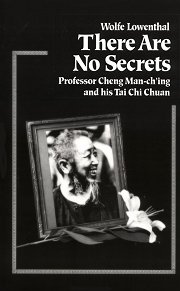
According to a popular martial arts meme, “there are no secrets” in martial arts. This is nonsense on multiple levels; primarily, because everything you haven’t learned is a secret to you—and you cannot expect to learn everything. Secondarily, because if there were secrets, nobody would tell you about them!
If you are a martial arts insider, you might choose not to disclose that fact, whereas, if you are an outsider, you may not even know it.
Is any secrecy justifiable? What do you think?
Or, to put it differently: for how much money would you sell all of your own secrets?
Yeah, but you ignore the third possibility. Shallow, ego-centric students and teachers who convince themselves they are in possession of secrets…
I think most mainstream martial arts, including Chinese ones, have pretty much become known during the 20th century. Who know if there is anything “missing,” but I am reminded of the famous phrase, “Any system is good if the teacher is good.”
Secrecy does not a secret make. That is a good point.
I am less convinced that one will find “a good teacher of a bad system”. Surely a “good” teacher would move on? What does that say about their perception and judgment otherwise?
OK, the phrase does overstate things to make a point. How about the more exact: “If looking among the good systems available to choose from, the quality of the teacher is the most important consideration.”
I think that’s the basic intention of the phrase, though my paraphrase doesn’t have the same ring to it.
Best
The school I belong to has regular students and disciples. It’s not clear to me just how one goes about becoming a disciple, or what are the benefits vs the obligations if any. I can say for a fact that all the disciples are very committed to their practice and to their school. I think they are also recognized by the Wu family (I study Wu style Taijiquan) as a part of the lineage.
While I think that is very cool, I don’t know that I would want that for myself.
When I was a young man training in aikido many years ago, there was an “old guy” whom I admired much. As I write this, I realize that I’m the age now that the old guy was then.
He showed up for class regularly. Happily worked on whatever it was that we were going to work on. He clearly practiced on his own. Previous to his aikido training he never did anything athletic in his life.
He was happy to just work hard on what was put before him and to let his training forge him. He tested for rank when his teachers told him he should test for rank. Sometimes he didn’t make it, so he just went back to work.
I think I’m going to follow the example of the old guy. I still admire him.
Rick, how would you feel if your instructor saw an area for improvement in your practice, but decided not to inform you, because you are not a formal disciple?
Just want to comment a little bit on this. I see the relationship of disciples and masters a little bit different than most. I see it as an honor to be taught by a master, even if I have to pay for it (as long as it’s not thousands of dollars). I don’t feel entitled to all of his teachings or feeling left out if I am not taught everything that the master knows. I feel honored just to be taught by my master/teacher. Whether whom he teaches the ultimate style or teaching is his decision and I have to honor him for it. It’s like a parent to his children. Which child will get the most of the inheritance is the decision of the parent, not the child feeling entitled to all of the inheritance. I think this sense of entitlement is corrupting many relationships between teachers and disciples.
“I don’t feel entitled to all of his teachings or feeling left out if I am not taught everything that the master knows. ”
If the master is not teaching more advanced teachings “for now,” as he is waiting for the student to be ready for it, or mature enough, or dedicated enough, or something like that, that’s fairly straight forward and acceptable.
If he’s holding back from a student who is otherwise ready because he wants only his son to have it all, or he wants only members of a certain ethnicity or race to have it or whatever, that’s bunk and he’s not a teacher for the 21 century.
I don’t think there are too many of the latter type teachers any more. If for no other reason, he would eventually lose his students to the masters who do teach all they know. There are plenty of them out there.
In any case, I just don’t believe there is much to be held back. The notion that a martial art has secret teachings, known only to a few wend out with the dodo. It was really just a way of preserving a monopoly. When the “secret” stuff was revealed, it turned out not to be all that secret.
There was a time when the tai chi forms were “secret.” Outside students were taught the practical applications, but only trusted insiders were given the whole form, as the form was seen as the vehicle to preserve the art. Does that mean the student who didn’t learn the form didn’t know some movements? Of course not! They just didn’t practice the form as we do today. But those students were still internal martial artists and probably made up for the lack of form with other methods.
A good master, I think, should be wise enough to know if a student is worthy of the teachings. Martial art can and is deadly. For a teacher to teach anybody who comes and pays him money, and teaches him a deadly technique without really knowing the student is a careless teacher. If you are not taught the “secret” techniques, even though you’re ready, it could be that your temperament isn’t suitable to handle such technique. Someone who is ready, skill wise, might not be ready, mentally. Real great martial art should be taught carefully because if a student uses the technique to purposefully injure someone, or even kill him (innocent or otherwise), then, the teacher is at fault. A great wise teacher will teach a student whom he deem worthy (without any bias to gender, race, or class). Sometimes knowledge can be too powerful and to tempting for a person to handle. Power corrupts.
“Chris // Nov 16, 2008
Rick, how would you feel if your instructor saw an area for improvement in your practice, but decided not to inform you, because you are not a formal disciple?”
She hasn’t been shy so far!!
“According to a popular martial arts meme, “there are no secrets” in martial arts. This is nonsense on multiple levels; primarily, because everything you haven’t learned is a secret to you—and you cannot expect to learn everything.”
This is a great observation and really applies to practicing anything in any field. New styles, especially combination and “freestyle” forms will always generate new technique.
Hi, I’m new here and just wanted to add to the discussion if I may.
I went through bai shi in two systems and both experiences were similar. It wasn’t like the teachers were holding back. More that they wanted a serious commitment from you. And in return they invest themselves in teaching you everything. Some of what they “held back” were perhaps techniques or concepts you weren’t ready for. As in, he could have given them to you earlier but you weren’t far enough in the style to understand them correctly. Not that you’re stupid or anything. 🙂 Only that some knowledge and understanding only comes with time and practice.
Waiting to let you “inside the door” can also be seen as a sort of test, to see if the teacher isn’t going to waste his time when he decides to invest heavily into teaching you. In that regard, I think it’s a good tool. How many people quit training as opposed to those who stick to it for a life time?
Those that quit soon deserve good training too but it’s up to them to prove to the teacher that they’re worth his time and effort.
Just some ramblings. 🙂 Great post and discussion here.
Happy Holidays,
Wim
“Holding back” suggests a cognitive framing of entitlement. I agree that teaching and sharing require continuous effort, and therefore silence should not be equated with secrecy. They are separate, and they definitely both occur.
There is so much information available to ‘any’ of todays “truth seekers” within the internal arts, that to even suggest such a thing as secret knowledge handed down only to select few (of course this is true) that to dwell or waste the mental energy and time worrying about it is an exercise in mental masturbation. You could take the ‘available knowledge out there, and with a good teacher and good ‘fellow students’ take a lifetime in learning just a portion of it !
The meridian systems of Yang Family taijiquan have rarely if ever been published. Many students took oaths not to write such things, only to teach them. Then there is the line system of Yang taijiquan, this too is kept secret and even unknown in many systems.
When the system became form oriented and books were published there was material that was deemed unfit for the general public. Not a ton of material but some interesting stuff. It is one of the ways you can tell reconstituted taiji from true transmissions. The reconstituted stuff totally lacks meridian based targeting and the system of lines, which are among the aspects considered secret or reserved.
More interesting is that the songs of taiji were once considered secret but are now easy to find in print. The Michuan form itself was once secret, but is now known to the general public as well.
“Or, to put it differently: for how much money would you sell all of your own secrets?”
a bad question leads to a useless answer….
Money doesn’t interact at that level. All real martial artists can understand why someone receive secrets why someone doesn’t and those will never transfer knowledge to someone who won’t be able to handle it… martial logic
More important than my own secrets are other secrets that I’m privy to. You know how it is, someone passes something on to you that you do not feel is yours to share but yours to use. It’s like I might borrow a friend’s bicycle but I would not sell it to my neighbor.
My secrets are yours for the asking. The others you need to go to the source for. I should note that this is also about protecting the secrets themselves. I might be qualified to use a technique but would not be successful in teaching it. A favorite technique of mine is the diao-chin of Tanglangquan which I can show to friends for fun but I will not teach them because I would not do it well. My diao-chin is inferior to my Sifu’s but adequate for fighting. If I taught it to a student, would his be?
I don’t think so, so it stays in Pandora’s Box.
Maybe this was already said but here goes. In my experience with teaching you can teach and say just about anything and the real secret is practice. The students who are meant to learn the “secrets” will learn them on their own. In other words many of the “secrets” cannot be taught, but can be learned, depending on the “disciple.”
I that sense, I love passing on secrets, because the very nature of passing them on makes people take them less seriously and the teaching remains obscured. This is also motivation for me to talk less and train more with the students so that they may have a greater chance of discovering the secrets on their own. Outsiders are outsiders by choice, even if they don’t know it. 😉
I discover secrets all the time, by training with the less experienced.
Some information is easy to transmit while other information can only be passed by personal interaction. Approximately four out of five people want to proclaim they have the ultimate of everything and are short-term planners and arrogant. People that are vain only want the skin of the art so these people can proclaim how good they are which is actively avoiding substance. Only a limited number of people actually want the fruit and vain people that desire to look good at all cost demand cosmetic correctness.
This schooling because of attracting vain people will easily convert the four out of five vain people to nine out of ten being vain people. The result is most people must because of vanity must be allowed to proudly strive to achieve death while substance will be slowly distributed to people willing to endure it. Ability to endure substance also causes Christian Churches with substance to be small because vain people demand showiness and are the majority.
I agree with what the articles said on secrets.
Personally even in my continuing study of martial arts I have no secrets.
But there are things I’ve learned like Mike said, that I can use but I could never teach.
My experience is that my Sifu is very wise.
For him to try to give me or any student “everything” at any given time would be a waste of his breath and our time.
There are good questions that I don’t know enough to ask let alone understand the answer to.
More is revealed through practice. I now have questions that I couldn’t ask when I first started. I now know the answers to questions that I didn’t know I had when I first started.
I know enough to know that my knowledge is limited.
My Sifu and his disciples and senior students are skilled in the art of offering teachings at a level that is accessible and challenging to their various students in our various stages of development.
An artful teacher can speak to students at several stages of progression simultaneously and offer lessons that are accessible and revelatory to us regardless of our different levels of experience, knowledge, and insight.