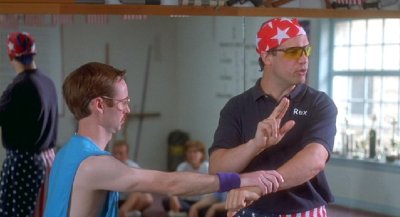
The skills that engender competence in a particular domain are often the very same skills necessary to evaluate competence in that domain—one’s own or anyone else’s. Because of this, incompetent individuals lack what cognitive psychologists variously term metacognition, metacomprehension, or self-monitoring skills. These terms refer to the ability to know how well one is performing, when one is likely to be accurate in judgment, and when one is likely to be in error.
Several lines of research are consistent with the notion that incompetent individuals lack the metacognitive skills necessary for accurate self-assessment. Work on the nature of expertise, for instance, has revealed that novices possess poorer metacognitive skills than do experts. In physics, novices are less accurate than experts in judging the difficulty of physics problems. In chess, novices are less calibrated than experts about how many times they need to see a given chessboard position before they are able to reproduce it correctly. In tennis, novices are less likely than experts to successfully gauge whether specific play attempts were successful.
We propose that those with limited knowledge in a domain suffer a dual burden: Not only do they reach mistaken conclusions and make regrettable errors, but their incompetence robs them of the ability to realize it.
~ From “Unskilled and Unaware” by Justin Kruger and David Dunning
Learning a martial art is inevitably a process of trial and error. To a limited degree, we are all inventors of our own unique style of martial arts.
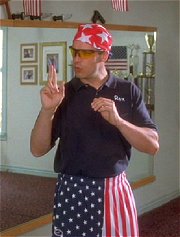
Some ambitious individuals choose to go further. Rather than building on the experiential framework provided by a living martial arts expert, these innovators attempt to create a superior new system from first principles.
Is it harmless creative expression, or dangerous folly? How do we distinguish the brilliant martial inventor from the incompetent Kung Fu crackpot? Security expert Bruce Schneier suggests the following approach:
When someone shows me a [new style] by someone I don’t know, my first question is, “What has the designer broken?” Anyone can design a security system that he cannot break. So when someone announces, “Here’s my security system, and I can’t break it,” your first reaction should be, “Who are you?” If he’s someone who has broken dozens of similar systems, his system is worth looking at. If he’s never broken anything, the chance is zero that it will be any good.
I agree with Bruce in theory. In practice, I do not know how to demonstrate that a martial art style has been conclusively broken. What do you think?
I think that the number of people who really have time to thoroughly understand even one old system, let alone several, is very small and that it requires a certain amount of cheek for a person to think he can improve substantially on systems that he very likely doesn’t fully understand in the first place.
I is apparent to me that I will be mining Naihanchi Shodan for information for years to come. Likewise with Sanchin and Seisan.
I told my oldest son not too long ago that though my knowledge of tuite is trifling compared to my instructor’s, it is still enough that had I walked into the Taekwon-do dojangs I once trained in with it, I would have been mistaken for a jujutsuka. In a martial arts world where most knowledge is that superficial, claims of someone, especially someone with less than forty or fifty years of experience, coming up with something genuinely new under the sun generally strike me as overblown.
every martial artist has his own unique fighting style and u can’t break a martial art because there is nothing to break and if there is we hav’nt broken it yet
First you have to define “broken”.
Martial arts styles are hard to evaluate this way. Let’s say you can demonstrate a weakness in someone’s skills. Is that necessarily a weakness in the style, or a weakness in the training of that particular individual? Not easy to say.
In addition, every form of training has it’s weaknesses and its strengths. For example, I train Tai Chi and jujitsu. There are many similarities, but one really important difference in the way training is done. I’ve never seen anyone fall down at all in Tai Chi. Some teachers have told me it forms a bad habit, the habit of going to the ground. And many senior jujitsu people will tell you that going to ground is a very bad thing when more than one oppponent is involved. So that’s a sort of weakness.
On the other hand, fights often go to ground despite our best efforts, and jujitsuka are going to be more prepared for that. This is a tradeoff in training strategy, not a system that is “broken”.
words twice,
Extending the IT security analogy: a system is “broken” when an attacker, armed with a small amount of knowledge, can overwhelm a defender with a large amount of resources.
Consider, for example, the security-minded homeowner who installs two expensive deadbolts on their front door, but leaves their basement window open. Theirs is a broken system.
We practice breakfalls in my Taijiquan class.
If we use the security analogy, a martial arts system’s competency can be translated into efficiency of combat. Of course, this alone brings up problems that depend on where you are under what circumstances. The “broken” style would be the one that fails to another style (with the idea of personalized styles in mind) under these conditions.
In something like MMA, you see similar styles have failed against other similar styles. In the security analogy, these would likely be designers from the same school. All are separate, but learned from the same place and thus have similar weaknesses. Therefore you might even have a larger broken system: the school that produced them.
Excellent questions!
A few comments that come to my mind:
– I don’t think efficiency in combat is a good measure of a Martial Arts style. To begin with, you cannot let two styles compete, you can only let students compete who practiced at specific schools who claim to teach/focus on a certain “style”.
– If a student is no good at competing, who is to blame then? The student herself, the teacher, the school or the style?
– “Competing” depends on the rules of the competition. Obviously, someone who practices with a specific set of rules in mind is going to do better at such a competition than someone who practices with different rules. But does that necessarily say something about the Martial Art? Or rather about the rules of the competition?
– In a competition with “truly” no rules, the fighter who wields her gun best is (most likely) going to win. Therefore, is a gun slinger the ultimate Martial Artist?
– If not, why should the gunslinger devote her practice time on less effective techniques like kicking and punching?
– Everybody has different goals in mind, Martial Arts competitions may or may not be among them. However, is learning a Martial Art without sparring really a Martial Art or just some elaborate dance?
– I like the excerpt on the self-assessment a lot. It shows a problem that’s not limited to Martial Arts, but in general to “self-observation”. It is not always easy to find an expert who can tell me exactly what is wrong with my way of doing something. Sometimes I might even refuse to listen. Other times I might be doing things right and the self-proclaimed expert might have the problem of limited self-observation.
Aikido (the art I’ve been ucky enough to be involved in since childhood) is reknowned for people branching out and defining a new style. My feeling is that this is mainly due to a mixture of ego (in that they need to be regonized) and fear of ‘not-being’good-enough”. If you are the “head” of a style, you are by definition the best at it. My admiration and respect more often goes out to sensei in remote locations, that toil away running sometimes small organisations, dutifully studying their chosen art,.
I think you ask very valid questions and present mature attitude about what it would take to develop a “new style” or “system” of martial arts. As far as the “what have you broken” analogy goes I certainly agree. I add that one can break another martial artist but an impersonalized entity such as a style or system presents a different problem. Theoretically, if the situation is idea- any martial art style or system can be virtually “unbreakable”. This was what I faced in the developmental stages of the training approach that I promote known as “ICC” or “Integrated Combative Concepts”.
Prior to the inception of the ideas that formed ICC I had 15 years of martial arts experience in multiple systems and multiple instructorship levels. However, I felt a driving need to test the “claims” of these martial arts ranging from Jiu-Jitsu to Kali-Silat. What I did was arrange “friendly get togethers” with martial artist of similar and different systems, including brawlers and braggarts. We all agreed through a liabilt release form to do anything short of putting each other in the hopital or maiming or disfiguring each other. It was as close to any fight I have ever seen and was to par with what I have viewed in many MMA matches. Yikes, we had some very close calls! However, through 5 plus years of formulation I was able to determine with the aid of my trusty staff what was universally applicable and what required overly exact timing or too special of a set up to be practical. I was blown away at what was touted in these systems to be expressly effective when all of our fights showed them marginally applicable at best. What works best is what is simple and easliy ingrained into one’s skill set or toolbox.
Yes and No, I created nothing new- I discovered some pretty new stuff- things I haven’t seen in all my training. I ahve even went to very advanced teachers of different systems and couldn’t get the same results from my “live hands-on enlightenment” training. I admit all martial arts have something of great value to offer. The point is this, each martial art has specialties, no any one art specializes in everything. It is up to us to fill in the spots. This is close to JKD but also beyond JKD. I am not going to follow a drill, pattern, idea, or technique (no matter how cool it looks) unless I can pressure test it and discover what it can do for me. What works for me may not work for you. However, there are certain universal combat motions if applied correctly and trained correctly can virtually work for anybody (provided they have the mind-body connection to do so). In ICC we focus on these UCM’s because “You See EM” in almost any altercation between skilled and unskilled opponents. We amplify these abilities. If that is a new system then so be it..if not so what..as long as it works!
There are only proficient students in martial arts.
As long as they study the common basic principles which are the basis for all martial arts.
This is from a lifestyle training point of view.
Mainly because the best martial artist wins without actually having to physically defeat their opponent.
However in regarding, UFC/Pride fights, normal tourney fights, other full contact fights, and actual ‘fight club style’ fights(which I participated in from ages 16-25… and probably annually now because with my jobs , some injuries might stop me from working) there are certain principles that work better depending on the rules and pace of the particular fight.
Weight classes, targets, restricted techniques and similar require a fighter to developed refined skills in certain areas.
Grappling isnt really needed in point scoring competitions.
But a lot of the MMA guys dominate with it in the octagon.
In the open fights I participated in, it was hard to predict who would win. We had a nice good mixture of fighters from different places.
Eventually we had to get attorneys because we did get some people who talked about lawsuits in case they got injured, but for the most part we just took it instride.
We pretty much allowed anything except weapons, and would stop fights if it seemed like the person would get too badly injured. But I myself obtained several concussions, dislocated joints, broken ribs, elbows, and a kneee break. Some of which I could have avoided by tapping our or giving up, but I actually won many of the matches in which I sustained injuries just because I kept fighting.
Anyway… I have done demonstrations for some associates as far as self defense and have been asked to teach.
I started training at age 10 and now I am 30 years old.
However most of my training was private training in seminars and small groups. Mainly because the local dojos I trained at were good, but did not touch my spirit.
So I have declined on all counts.
Mainly because even though I practice daily and still attend seminars and some classes, I do not feel I will ever qualify to teach anyone.
I thought about gathering things I know together and trying to make a cohesive training regimen. but it did not work because its like certain things cannt be explained in words or just through showing.
Some things have to be grasped by the student.
Anyway.. dont know if I really answered anyone’s questions… just felt like sharing.
Greetings! Sorry for my bad english in advance…
I think that style can`t be broken as such. If you got speed and power you can break any opponent with a single punch…that doesnt mean that style is poor. But lets say that every fighter got same speed, same power and same mental ability. If you apply many different styles to these fighters, best style would emerge because best style is the style that uses minimum energy and no movements that counter body`s natural system of movement. That is the best style. I trained Baguazhang Dong style, Bagua Qi gong and Daito Ryu Aiki Ju Jutstu. I also studied some other Wushu practises and efficiency of their movements. I found out that you can use any style if you want to defeat a person that knows nothing of martial arts, but if you want to defeat the master, than you got to have very proficient and economic style and great speed. Every known style has a flaw…thats my conclusion and thats because every style has a flaw in philosophy that was its wellspring. So I decided to create a new, simple style with simple and valid philosophy. I just started. Punch line is…philosophy of my new style is forcing practicioner to move properly and with least perturbations in movements with least amounts of energy used. Everything comes natural, with or without opponent. I will share it with everyone when I create more forms(movement cycles and logics that supports it) and write down principals. So when you ask if you can break a style…the answer is NO! You can only break human body…nothing more. Maybe masters are better learners of new fighting concepts but other side of the coin says that you cant learn old dog a new trick. Like scientists…if everything they now is based on couple of principals and one day someone discovers that they are false, they would have gigantic problem of overcoming that fact…layman wouldnt because they dont have system of knowledge intergrated in their mind. So…lets just wait and see…surprise always come from unexpected directions. Lets not underestimate anyone and maybe we will learn something new.
Best regards,
Tomislav (Croatia)
About, “to break a style”,
The author of this thread do have an interesting point to make. But I would say that the one thing the author is aming at, does not nessesary have abything to do with the other. In my poor english I can try to explain what I mean.
By inventing a new product for the people, one does not nessesary need to have the aim at breaking something thats old. I find it hard to believe that the Thaiboxers from Thailand, invented their style and had an aim at beating the Judokas from Japan. Why would that even be a point in doing so? When creating a new song, one is not trying to beat the other songs or artists or music styles. What sounds good in my ears, I prefer to listen to, if I dont like the sound I turn it of or switch chanel if possible. I believe the same goes with Martial Arts, there are billions of people out there, at least a million different martial arts would be needed to pop up to this world in order to make them all satisfied in joining our sports. Thai Chi goes for some, no matter if a wrestler would make them stay in a hospital for weeks after an encounter, and boxing goes for others.
I my self have been doing most martial arts since I was 7 years of age and Ive been competing and holding classes in most of them and I´ve been in the game for over 30 years. I believe that there will be new fight sports comming up, both for the sake of the demanding sports viewers, and also for the sake of the fighters. There are really great sports of fighting out there, and if youre talking about the “fight” in martial arts then there will allways be people who feel, for example, that the piont system rules are not fair and that something “new” needs to pop up to make it more fair. And if a totaly new pointsystem in a sport comes up, well then you might need to start training in a complete new fashion, and if the old fashion is gone for the people seeking the new style, well then the new sport is born.
Long thread, I know, but my point is clear as you can see. Something “new” does not have to try to “break” something old, even if that happends to be the result in some ways.
Take care you all and stay well 🙂
you cannot just create a new martial art. the ones we have already have been evolving for hundreds of years and so will continue to evolve. but all martial arts are limited to there own style. it is the student who is not limited. as a student myself i have practiced, ninjutsu, jujitsu, aikido, thai boxing, western boxing, wing chung and karate. i have not stayed more than three years in any of the arts i practiced. however i feel confident in my own ability and knowledge of what i have learnt. out of all the arts i have done, ninjutsu was the one that challenged me more and encouraged me to learn other martial arts. it tought me to be flexible with my training and to always introduce new elements. i have come to the conclusion that new martial arts will develop over time but they will be hybrids, crosses of other arts. the only martial arts that will survive will be the ones that allow change. eventualy and ultimatley leaving one art, this being a combination of all arts. all the excess will be removed leaving only knowledge without style, where you are judged or graded, not on your ability to remember set moves or paterns but more on your adaptation to the form you are learning. you will not wear a belt to show your seniority as it will be displayed in your behavior in every thing you do. i leave any one who reads this with a qoute.
i follow no book, only the pages i have torn!
What if…the best security system is one that is broken?
Or: no security system…could it be that relaxing eventually reduces the reactive potential of the body. That, after reducing residual tension and eliminating False Evidence that Appears Real, we might never need the security system?
Like an Ode to Joy…
It’s my impression of the Ancienty Masters that they got so burly, they didn’t need to defend themselves, and, at that point, they each, on their own terms, begin teaching peace.
Likewise, when I was younger, I had a roommate who had a shroud of thieving in his reputation. When I lived with him, I owned close to nothing, and nothing that interested him. I was one among few of his roommates who did not experience loss.
Back to the martial, I’d maintain that inside, beneath the layers of common self-defense, lurks an instinctual, easy, survival mechanism that defies any martial system. And the best systems are designed to reveal That, rather than create a set of movement to superimpose on It.
Last: a Wookiefoot quote: “The Monkeys were afraid of Nothing, so they locked themselves in cages for protection.”
Each martial art was created or assembled by someone or some group of someones. Each was created with a purpose or function in mind that applied to the social-political climate of each respective time and circumstance. There was a point of birth, a moment of truth for all of them. The arts as we know them today are built on those foundations. Some have lasted longer than others based on the initial concept and some have verged away from the “old traditions”.
Of all the developments, valid or not, change has been the only constant. Evolution has forced its way into nearly every art form and this evolution has been met with strong resistance by most all art forms. The basic idea being that no one man could devise or surpass the collective efforts of those that came before him. Especially, if that man is not, at least, as equally versed as those that come before him.
I would tend to agree with this to an extent. Yet, if one is to became as versed as his or her master prior to inacting evolution how could one ever accomplish this in his or her lifetime. The vast concepts, styles, methods and opinions serve to help the martial arts world as much as they serve to hinder. I have seen things become so complicated that many have forgotten that all rivers return to the sea. Often times when this simplification is presented its mislabled a new creation when its truly the oldest of ideas.
No two people do the same art in an identical way.,
Uniqueness is as unavoidable as a lack of it.
Few people have the obsessive nature required to master a new style as they create one. For those few there is no problem but for most people it is best to follow and not lead.
The most outstanding thought of 21-st century in the martial arts!
Timur Kuzgov is a first man around the world who made experiment with all kinds of methods in the martial arts and combined all these methods, which never combined before him. In his concept there are three types of martial arts methods. These are effective, ineffective and middle methods or something stands right between effective and ineffective. In first in the history of martial arts he mixed these three types of means and as a result he invented three systems and now we will describe only two of its which are really unique systems of combat.
Timur says that his system of martial art “hardfight” consist of inefficient methods of all martial arts such as aikido, capoera, taekwondo, boxing, judo etc. Also he says about another technique, which he calls midfight. This technique consists of middle methods of all martial arts. Under the word “middle ” he means something between effective and ineffective methods. These are karate, judo, boxing, kungfu, taekwondoand many others. I need to say, – adds Timur, that a selection of these means for example ineffecient is individual process and not same for everybody because something that may be ineffective for me personally perhaps will effective for another person or it may be “middle” for him.
The basic technique of kicking, parries, and stances, assimilated from capoera, and taekwondo in particular most complex methods. The style of fight seems like these martial arts with its wide, long strikes, circular, and semi circular kicks although it is something original. The basic technique of striking, parries, and stances benefited from kungfuand there are wide, long circular punches and parries by straight fingers of hand. A one of difference of the hardfight is that almost all strikes doing by finger tips as well as grabbling and neverstless it is a rare picture there are all techniques applying by counterclockwise rotation of the blade with a reverse leg, hand or without it. A manner of midfight’s fight seems like karate, but in any way it has essential distinction. For instance, basic kicks benefited from karate, taekwondo, execute by means of bended fingertips of leg and as you can see it makes difference. All kicks are semi crouched and not wide as well as not short. The leading punches benefited from karate, boxing, and hands commonly at hips level before it will strike by bended fingers. Moreover, these partisipants of body can grab an opponent! It is almost constant and leading form of hands. In the left stance a right hand pinned tight to hip and a leading hand near the hand, which is right, or both of hands may be at hips level.
By the way, the inventor of martial arts tells that always reconsider his creation and change if it is necessary some principles, details, and positions. I suppose, – said Tamerlan, while my systems will develop there will persons who found schools of my martial arts with different names but some teachers will not tell about a real founder of it. Of course there are nobody knows what will be happened tomorrow but we can be sure that there is nobody never makes such creative thoughts of martial arts invention better than Timur did. Really this thought to mix ineffective or middle devices of different martial arts ultimate point of creative work because there is in the martial arts no other type of methods to combine.
Source:
http://www.journalhome.com/martialbloger/69538/the-most-outstanding-thought-of-21-st-century-in-the-martial-arts.html
i have been delovoping my own style of karate for the last couple of years i am no way a master i have train in kenpo,jujustu,wrestling,kendo,mma, and army combatives i do not train at a dojo no more because of money and having a sick son so i devolped my own style and train at home i have won 2 state championships 3 years ago and havent competed sense i wont to start competing again but when you enter a tourment you fill out a form that ask for school,instroctor,and rank what would i put since i dont have any of those accapt rank wich when i was at a dojo i had a green jujustu ,orngana in kenpo, black in kendo but i got that when i was 12 so i dont rember any of it and wrestling and mma have no rank please write back if any on can help
I was taught by a friend a style of Kung fu. He taught me basic as well as advance techniques. i did not get ranked like you would at a karate or kung fu school from white to black belt.He tought, I learned. I have tought this kung fu style on and off for several years. I teach it as if all i was doing is teaching a self defense class. this way i am not a fraud and no one questions my level of expertise. I have seperated all the techniques in to levels that will allow me to rank a student from white to black belt. So you could say I have developed my own untraditional style of martial arts that already exist and would like to know how i can get approval to be accepted by the marial arts association that will recognize me as the instructer of this style and leagally be able to give students the ranking the diserve and award them authentic level certfication. Since i do not hold a certification of instructor I cannot reward them with one. I have to be accepted first and recieve some sort of documentation that says I am the teacher/ founder of this untraditional style of kungfu. How could I obtaion it and where would need to go to aquire it.
if you want to be ranked or have documentation that you are teacher, instructor of any style which created before you it to ask federation of this martial art, for example kung fu monkey style. If you created a new system with original concept like systems descripted above your comment i do not know what you have to do..
As plenty have said already, I think that given how martial arts is transmitted, it is truly a rare thing for someone to substantially improve a style in a positive way. I’m not sure even a life-time’s worth of training can guarantee such insight.
I really like the security system analogy, but I don’t know that I’d get hung up on the idea of ‘breaking’ a system. The point seems to be that to warrant a new system (martial art styles are ‘systems’, really), it has to have come from the full understanding of others. But to say that someone has to prove their style superior to others in order to prove themselves gets really sticky; as others have pointed out, styles can’t really be compared or matched up against as they all have (even going beyond the clear distinctions of hard vs soft) different functions and contexts with which they were formed.
Instead, for a new style to be relevant and useful, it has to start with its own definition. It has to start with its own function and build from that, using a complete understanding of other styles in how they reach that goal. Lacking either, how can it be considered a new style and not something to append to another (or just throw away entirely)?
Mario, it is common for teachers to be self-certified, or to create their own organizations just so they can be the Top Grandmaster. Some students are impressed by that, and others are not. There are also martial arts diploma mills that will watch a DVD of your performance, and mail you whatever rank or certification (e.g. black belt) you have paid for.
I’m not interested in creating a new style, but I am interested in having a (training) method of my own, one that works for someone that doesn’t want to drill and spar with other people all of the time.
I guess you could take Bruce Lee for example. He started with a method named after him when practicing Gungfu, and after that it turned into an analysis of other methods, Jeet Kune Do.
These are what I am interested in, method and analysis. I’m a pragmatist. 🙂
some people here want to be like someone, brucelee for example..do not forget it is mistake because you will lose your individuality…it is rather better to be bad fighter but have a difference than always feel a shadow of the great man who expressed himself already…
Uh, you misunderstand. Bruce Lee is the biggest example of “create your own style” and so many other people copy him, but not me. I’m the kind of person who needs something custom, and I’m not finding it elsewhere. If it is elsewhere, then it’s too far away.
Travel very far to learn how to defend myself? What?! You know what, it’s hard, obviously, but I’ll go for it. Sometimes ya just gotta think for yourself!
yes someone imitate brucelee by creating effective styles or systems….but if you create something really new and differ from others it is not imitation!! Brucelee never invented style he said: “style without style” and refused to recognize the word “style”. some people imitate Lee by using his image, or principles he developed and taught people. For example, you said a one of these principles…
TO INVENT SOMETHING NEW AND DIFFERENT FROM OTHERS AND YOU WILL BE REALLY GREAT MARTIAL ARTIST!!
We’re talking about different things.
Maby what we need is a revamp of our martial arts community, afterall every kata had a creator and every style an inventor from kung fu to karate. For example what I look for in a system is functionality in the real world. After leaving Japan I have been unable to find this in America. For example (just my opinion) is is absolutly absurd to see a 6 year old with a Blackbelt (and yes I fefused to train is a school that had the 6yr old blackbelt class). I hope this isnt the future of martial arts in America. Mayby we need some new inventions or just revamps of the classics. I think that the martial arts evolves over time with each new student that becomes a serious student to master. I think that the Martial Arts is kinda like a living thing that grows and changes like all things.
also like this guy is he just trying to sell his new invention(virtous science of self defence) by infusing doubt within our own creative minds by using some psudo psychology in his article??? where would we be if the Sholin monk had not meditated for “9” years to create Sholin Kungfu. That was the invention of someone who used primitive observations of nature to creat form and then turned that into a respected system. (please forgive the typos guys) Thanks
to create system you do not need 9 years and so on…it can be done for several months by means of knowledge of the martial arts or a lot of books…you need 9 or all of your life to become the brilliant martial artist..to invent something is easy..just to combine different techniques and that’s all! and to become the real martial artist of this system is requires great time and difficult very much..you all right, the author of “virtuous science of system” has no fresh idea and can’t be considered as greatest in the future…
why we can’t create something what will be the new vision of the martial arts?!…the great martial artists like oyama masutasu, funakoshi gitin, kano djigoro, brucelee were inventors and they are NOT THE END of martial arts invention and seeking a new opinion to the combative arts..people who can say a new word in the martial arts are GREAT MARTIAL ARTISTS LIKE THIS GUY ABOVE IN THE ARTICLE…let’s give progress and evolution go on..
To practice a martial arts style, is to repeat what someone else has come up with already. What kind of embarrasment and ridicule do you think Jigoro Kano faced when he presented Judo to the JuJitsu community? Or how about Bruce Lee when he came up with the controversial idea of having no set way as your way, and crossed trained in many styles to show that he has limited weaknesses. Who is to say that someone is so “ego” driven, just because they came up with a different approach to training than what had been presented to them before? I think it’s fine to come up with unique ways to train that suit the individual, and if other people like to train with them than thats great! Personally, I don’t feel fulfilled by going to just a Karate class, or just a Jiu Jitsu class, I like to go to both, and some Kung Fu, and then when I’m with my friends, expressing our knowledge of martial arts, I use all of the techniques I have accumulated in training. I think the source of techniques is more important than the name of the school that or style that offers them. Don’t be jealous just because someone else got creative. And there is no new style, only new training methods that consist of borrowed techniques.
While I agree that many people just throw things together to create a style, I do believe that many are well meaning. Just as I believe that any black belt can teach, provided he knows what he is doing. I teach a Eclectic art, with no so called Dan, masters, or Grandmasters. The reason – read how the masters got their ranks. In this modern age a black belt can research and use what works and create their own style. But that is just my opinion.
A style per say is individual. Now a new system, that is another matter. Jujutsu is constantly evolving with new systems known as Ryu’s. I am a Marine Corps Martial Arts Instructor, a Rapid Assault Tactics Instructor, and a 2nd Dan In Go Ho Ryu Jujutsu. All of these have laid a foundation for my system. With any valid system, it doesn’t invent anything new, but strives to translate it’s effectivness to the practitioner. This is a trial and error, even for the founder of the system. I have not invented anything new, but have and constantly continue to perpetuate and grow from experience, in learning, teaching and real world applications. There is no mastery, we even as teachers are eternal students. Now, there are those out there that promise all sorts of things for business and status. With or without a solid background in fact, they do these things. A true practitioner of the arts, will know it is universal, and constantly adapting to reality of defense and combatives, favoring not one range, but using the right rools within a range. This in fact is a continued aspect of being humble and constantly learning to give the best we can to the student.
I think that we should worry less about becoming internationally recognized, or having our martial art included in the Olympics, and we should worry more about breaking away from ridged techniques that serve more for flash than function. We see this in MANY martial arts, especially those which have their roots deep in the past. We should focus on teaching a handful of students the best techniques that we can find, and doing away with the useless. For example, Shotokan Karate has no ground fighting that I’m aware of, BJJ is mostly ground fighting, and neither have defense against someone with a firearm. So if you focus 100% of your efforts in either one, you will be sorely lacking in the other. It’s like throwing a right hook and leaving your other arm down. Wide OPEN. Now, what I think is best, is to train in enough combat systems that you never have an arm down. If you know what I’m saying… Learn how to defend against long distance strikes, meanwhile, don’t neglect the in-fighting techniques, and be sufficiently trained for when you hit the ground. NOW… There are countless techniques that can be taken from countless martial arts to fit various needs and requirements. So, by simply learning to defend yourself properly, in all fields, you create your own martial art, or better yet, your own combat system. i.e. Krav Maga, techniques from various arts. i.e. Kajukenbo… Don’t think that all the combat systems have already been invented. Think of a round house kick, as a cinder block. A focus punch is another. Now every possible strike and block, for the most part already HAS been created, so you have all these blocks laying around. Every brick has been made, but every possible house has not, so get to work 🙂
Breaking another style? This guy is for real? I think that he actually describe himself in that cute story. I am 21 u practise martial arts since I was 4 and never but ever I thought that obe style is better than another. Well better then another can be for a person. I mean karate is not for everyone’s taste. Others prefer judo, box… I develop my own style due to one of my masters that got killed when he was 86. He left me all his notices and tols me to develop the best style in the world. And I do. But when I say the best in the world I dont say. O mine is better. Thats selfish. The best I mean that I wanna make it suitable for eveyone. Everyone to love it and to make it powerful but easy. I just need to find out how to get a certificate to legalise it and thats it. I made a book and everyone who saw it they asked me to train them already. That is how you make your style better not by judging other atyles or “break them” like a douce bag. But by making people to love it. And I know some martial arts schools that are not what I want. But I want to make a partnership with them making contests together. This is how you break a style if you have brain by making it your ally. Not enemy
Most styles are based on the need for techniques in the , time , environment, mission and enemy. So the style, what ever it is should change to meet the challenges of modern day individuals needs. Its just an opinion but i felt it valid enough to post here . It has been years since i studied under a teacher . Fortunately i have barely ever had to use any of what i have learned as my training was in several different styles and only for short periods. The longest being Wu tang and Northern Kung fu oriented arts for 5 years plus. But that being said the style should fit the student, as when you embrace a style you do embrace a culture. Japenese, Malaysian, Russian, American , Irish ,Chinese, Phillipino , Indian, India you name it. Each of these cultures had a vast history that followed religious,survival and evolution . The martial arts evolved with that. These movements would not exist without need and that should be respected . Evolution of an art is natural if you look at modern arts out there like modern Systema, Hagannah and a few others that are behind the guessing 1000 year mark. There are many , many similarities with the cultures i have mentioned. And every culture had a martial art . Without Traditionalists , Mixed artists would be nowhere and without Mixed the Traditionalists would not change too much . As long as the movements are done properly and taught properly by a qualified professional why not form a martial art.Although, the idea of doing a completely new technique that has never been done is close to impossible . On the other side i say that it should take Many Many Many years of evolution , well over a single lifetime and a need for it would have to be there . Bruce said it was a philosophy , and he was an amazing philosopher and martial artist. Especially , for his time not to mention his wing chun , tai chi, wrestling,fencing and bagua training which be researched. Absorbing purpose , is the first step in my opinion the stronger the purpose the better the art . As i said its just an opinion but i felt it valid to mention. And i love the martial arts and good and humble people . I have read a few of the posts on here and just wanted to share my thoughts . Ty.
Building a foundation, and standing upon a foundation are two very different things.
If it took a lifetime to build a strong foundation, then it may take half a lifetime to construct something new on top of it.
Invention and innovation are brothers, but understand what either one excels at.