A martial arts school is defined primarily by the skills and the personality of its teachers. While technical ability is important, and universally known to be so, the importance of a teacher’s personality and attitude is often underestimated.
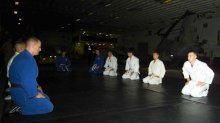
Teachers invest far more time and effort sharpening their martial skills, than in improving their attitude. It is attitude that determines how much they are willing to teach, and what they expect from students in return.
Countless students have been short-changed by teachers who are technically able, yet unwilling to openly share their knowledge and experience. Before committing to any school, a potential student should evaluate the teacher’s attitude.
The Scarcity Mindset
Many people are motivated by fear to study martial arts. Unfortunately, some of these people advance and begin teaching others before they have mastered their fears. These teachers conduct their classes from what I call a “scarcity mindset”.
Under the scarcity mindset, everything and everyone is a potential threat—including one’s own students. It is a zero-sum game, where, as students become empowered, the teacher grows weaker. Therefore, this type of teacher will carefully manage the information available to their students, to keep them from learning too quickly.
Teachers with a scarcity mindset thrive under popular stereotypes of traditional Asian martial arts practice. Students who directly or indirectly question their wisdom and authority are branded as disrespectful, disloyal and lacking in self-discipline, or even verbally and physically abused. Naïve and inexperienced students have been conditioned by books and movies to accept this as a routine aspect of martial arts training; in any other discipline, such behavior would be rightly condemned.
The methods used by these teachers to control their students include:
- Excessive corrections during forms and sparring practice. Their unstated purpose: to ensure a student gains no experience that could contradict the teacher’s previous instructions.
- Constant criticism of other teachers and schools. This is a great way to stretch 30-40 minutes of actual instruction into a 60-minute class. It also guarantees that trusting students will never leave for greener pastures.
- Needless complexity. Replacing the simplest actions (e.g. straight punch) with complicated procedures, and embellishing them with foreign words and technical jargon, hinders a student’s ability to advance beyond the basics.
Teaching From Abundance
Teachers who have achieved a measure of physical, emotional and financial independence and self-sufficiency, do not fear their students. Such teachers can help their students reach their full potential in a relatively short amount of time.
Teachers with an “abundance mindset” exhibit these qualities:
- Openness. The teacher is willing to answer a student’s question, even when the topic isn’t listed on the daily lesson plan. No student is unqualified to ask a question.
- Simplicity. The teacher gives instruction and explanations in plain language, without jargon. Demonstrations and hands-on corrections are used to prevent confusion and remove ambiguity.
- Patience. The teacher does not look to their students for validation, nor claim ownership of their performance. A student is allowed to repeat their mistakes, without harassment, until that student is ready to abandon them.
Teachers with an abundance mindset are willing to help their students reach their own level of ability, or even exceed it. Many such teachers can be found, and a student or potential student of the martial arts need accept nothing less.
I know what you mean. My Bagua teacher, Mr. Steve Madafarri comes from great abundance. He is skilled in not only Bagua, but also Tai Chi, Xing Yi, Wing Chun, Hung Gar, and various Shaolin arts. His teacher, Dr. Wu, spent 14 years teaching him very openly. My teacher is big on the basics of my Bagua training, but is very patient to explain why we practice in the way that we do.
Interesting article. I’ve always striven to teach with an “abundance mindset” as you have described. Anyone teaching martial arts must always be mindful of their own limitations and openings for further development so that the instructor does not fall into the mentality that they know all there is to know.
I more or less agree with you on the scarcity-issue, however there is a reason for this: there are students who hop from dojo to dojo, basically plundering systems under the guise of cross-training and using them purely for their own benefit without ever given proper respect and recognition to their teachers. These leechers are very disrespectful and basically undermine good teacher-student relations, therefore it is only normal you wouldn’t want to give your most trusted techniques and secrets to someone who is utterly undeserving and instead reserve them for your advanced students who have proven they’re responsible (would you teach killing techniques to someone whom you barely know and might very well be a hothead or criminal) and know about loyalty and respect. Besides that teaching too many techniques at once or introducing new ones each class is not a good idea if you want to produce good students with a solid technical understanding and proficiency in the basics. Overawing students with your technical ability and improvisation is easy, as is giving in to the shallow, childish mindset of ‘I want everything and I want it now’ that is so typical in society these days. Oftentimes making students go over the basics time and time again and waiting until they reach the appropriate level before teaching them new techniques is the best thing you can do for them in the long run, even though they might resent you for it and you might end up with less students than you’d hoped for. The sincere ones will stay and chances are they’ll end up masters and teachers themselves who’ll do you proud instead of having to give belts to people who want to take the easy way and end up with a collection of techniques they hardly know themselves and couldn’t explain to someone else if their life depended on it. Or worse: completely misinterpret techniques and perpetuating that mistake resulting in a bad name for the art or style all because they think they can actually teach because they reached a certain belt and you encouraged them in their stupidity.
As to correcting beginners: too much is too much of course and critizing too harshly is a sign of an insecure individual, however paying close attention to students (especially beginners) is a good thing as there is nothing more difficult than unlearning bad habits you ingrained into your body through countless hours of practice. Critizing other schools or styles is unnecessary and probably not very accurate unless the teacher actually has enough experience on the matter. Complexity should never be a goal in itself and especially for beginners and intermediate students everything should be kept as simple as possible to avoid confusion and irritation, however certain arts are inherently complex and this should be taught to the higher belts since they are the heirs and are supposed to carry on the art or style. “Everything should be made as simple as possible, but not simpler.” (Albert Einstein) Jargon is fine aslong as it serves a practical purpose: if you teach karate and consistently use gyaku-tsuki instead of ‘reverse punch’ there’s nothing wrong with that. On the contrary: it’s easier when you train with people from a different nationality and it means paying respect to the origin of the martial art. You should never dumb things down (cfr. Einstein) and learning a few extra words has never hurt anyone. I actually enjoy hearing a foreign language in the dojo as it further separates training for more mundane activities and it might even help certain students remember the names for techniques better since they sound somewhat exotic.