Two underappreciated facts about self-defense:
- The time for avoidance is before the fight starts. Once it has started, you should abandon any notions of yielding or appeasement, and focus on not losing the fight. To honor this distinction, you must be able to recognize the seeds of violence before they sprout.
- Statistically speaking, your probable attacker does not care about you. It’s nothing personal, really. If someone else had walked into the wrong place at the wrong time, they would have been assaulted instead.
No martial arts training should be required to appreciate these points, which can be derived from basic human empathy. The worst Karate move I ever learned, however, flagrantly disregards both of them. Before examining that inferior technique—and a superior alternative—let’s briefly consider the context in which it is taught.
Whether or not you consider Karate an effective means of physical self-defense, rest assured that most serious Karate students believe in its potential. Nevertheless, Karate authority Gichin Funakoshi insisted that the art should be used defensively, and only then in the gravest circumstances. “There is no first strike in Karate,” and one should “never be easily drawn into a fight,” he famously said.
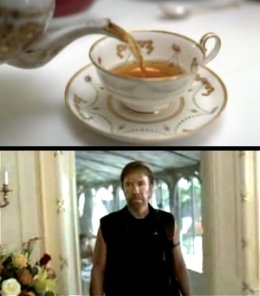
Extracted from their original context, these statements have a strange and detrimental effect on the average American Karate student. They seem to foster a quixotic illusion of knight-errantry: “My Karate is deadly, but fortunately for you, I am too courteous to use it.”
It is when this chivalrous fantasy overpowers a Karateka’s innate sense of empathy, that they are most likely to attempt the worst Karate move ever: uttering the suicidal phrase “I don’t want to fight you.”
Karate World vs. Real World
To the self-absorbed martial artist, saying “I don’t want to fight” represents the epitome of Bushido virtue. It is meant to be heard as “I don’t want to beat you up, but know that I can, and I will unless you back down immediately.”
Disregard that intention, honorable though it may be. What does this statement actually communicate to the potential attacker? Let’s consider it in light of the two self-defense points above:
- “I don’t want to fight.” There is no right time for such words. Either there is no threat, in which case they indicate an escalation, or there is already a threat, in which case they are tardy.
- “I don’t want to fight.” Well, of course not. The potential attacker has already figured you for the loser, or they wouldn’t dare to threaten you in the first place! Anyway, nobody cares what you want!
More direct phrasings, such as “I know Karate,” are hardly any better, for the same reasons. Reciting tough-guy dialogue from Hollywood movies is worse. (I once had a martial arts instructor warn me, after I proposed to knock him over: “I wouldn’t recommend that.”)
Empathy is a Self-Defense Skill
In such circumstances, I would recommend appealing to the potential attacker’s sense of self-interest, rather than your own sense of self-righteousness. The message that embodies this strategy is not “I don’t want to fight with you,” but “You don’t want to fight with me.” It is most effective when delivered non-verbally, and most easily communicated when it is actually true.
There are legal implications to be considered with such a strategy, to be sure. It requires unusual finesse to employ sen sen no sen in the presence of witnesses, without appearing to be the aggressor; even more when executed without physical contact.
Know your limits. And if such an attempt should fail: remember that you don’t need to win the fight, only to avoid losing it.
So how do we go about executing this? Sen sen no sen itself is a difficult skill to master, and how will we know we are executing it properly? Do you have any specifics on how to convey the message?
That is the million-dollar question. Please remit this sum for a prompt answer.
When I was at university, I remember reading a collection of articles on martial arts entitled “The Overlook Martial Arts Reader”. There are two volumes of this fantastic collection, and I would recommend them to any martial artist.
One of the articles was by an Aikidoka, and it relates an occasion when he was training in Aikido in Japan. Travelling home from a late-night training session, he was sharing a train carriage with a young woman, an old man, and a rather loud and belligerent drunk man. The drunk man was, of course, causing hassle for the young woman, and the Aikidoka, in his chivalry, stepped forward to help the young woman. He stood ready to face the drunk, who was enraged by the audicity of the Aikidoka to challenge him, and combat was about to ensue when the old man suddenly spoke up to the drunk.
“Is that saké you’ve been drinking? My wife and I love saké. We like to drink it in the evening as we sit in the garden, admiring the spring cherry blossom. Cherry blossom is lovely, isn’t it?”
The drunk, perplexed by this friendly display, simply nodded and grunted along with the old gentleman’s winding conversation and, calmed and stopped better by that than any attack, simply sat down. The Aikidoka returned to his seat, shamed by this display that had demonstrated the core of Aikido better than any fancy wristlock.