BLACK BELT – That uniform accessory most coveted by students of martial arts, who, upon receiving it, pretend it never held any interest at all.
PRACTICE – To endlessly repeat the same sequence of movements, always hoping for different results. (See also: INSANITY.)
KATA – An awful form of dance, often assumed to divulge some hidden meaning after sufficient PRACTICE.
[Read more →]
Equality. Transparency. Trust. Fairness.
These are all qualities one would expect to find in a good Chinese martial arts school. Expecting the modern American cultural interpretation of these ideals, however, can lead to confusion and disappointment.
The traditional distinction between indoor and outdoor disciples tends to bother American martial artists. Following this tradition, a master selects a subset of his students for special attention and secret information. [Read more →]
In thousands of halls across our great nation, an archaic manuscript hangs on the wall. Written many decades ago, in a time and place quite foreign to our own, this inscrutable document anchors us to a primitive culture that we would do well to forget. I submit to you that it holds no value to us today; as rational men and women, we should put our sentiments aside and discard this anachronism immediately. Our traditions must not be allowed to stand in the way of progress.
What makes this document so odious? Simply put, it is subjective. Instead of identifying specific behaviors for its reader to follow, it describes general principles and leaves each reader to interpret them as they see fit. These statements are so vague and meaningless that they could conceivably be used to justify anything.
Who decides what this document really means? [Read more →]
Patrick Parker (of Mississippi’s Mokuren Dojo) asked for comments on the article, Martial Arts Poison. Unlike author Kim Soo, I am not a 10th-dan black belt and do joo nim (founder) of my own Karate style. Nevertheless, I venture to offer my own perspective on the topics he addresses.
How do martial arts build character?
Many people believe martial arts training is helpful in building one’s character. This is especially important for growing boys and girls — to build their characters, and give them self-defense skills for life. Parents often want to send their children to martial arts schools, for they have heard of the benefits of traditional training.
But all too often, the negative consequences of poor martial arts teaching appear, and very quickly — injuries in the dojang; development of radical, trouble-making attitudes; declining grades; fighting; discipline problems in school. When children turn out to be aggressive, parents regret sending them to the dojang. But the problem is not martial arts, but poor instruction and improper values (such as emphasizing competition and fighting).
So, parents may think the dojang is a source of such troubles, but the children still are drawn to martial arts training because of consistent exposure to movies and TV—that constant advertising for martial arts schools. Parents may not think martial arts training is good for children, yet the children still nurture powerful and glamorous images
they are getting through the media. This can also set the stage for discord and strife in the home and family.
I am among those who believe martial arts practice has character building potential—a potential that many students and teachers never realize. Therefore, when a Karate dojang (dojo) claims their lessons will build character, I expect to hear some illuminating details.
Why do so many schools tout character, without defining what they mean by the term? [Read more →]
February 10th, 2008 · 4 Comments
With thousands of martial arts authorities publishing online and in print, how do you decide whom to trust, and whom to ignore? Credibility is an important factor, but determining a martial artist’s credentials is a perilous task.

Frankie Chan vs. Lam Ching-Ying
Since crossing hands in a duel can lead to serious injury or death, most sane martial artists look for alternative means of establishing credibility. Lineage reputation is one such method.
Great masters beget great masters, whereas the students of charlatans go nowhere. Under this Confucian-flavored principle, the martial disciple inherits a portion of their master’s reputation, and would-be authority figures that decline to identify their lineage are viewed with suspicion.
Lineage is indeed a useful heuristic, in my experience. Yet here I am, writing a weekly martial arts column, without providing a list of my teachers; and I do not accept challenge matches; I am not even Asian. How cheeky!
The absence of my declared martial pedigree is no oversight. [Read more →]

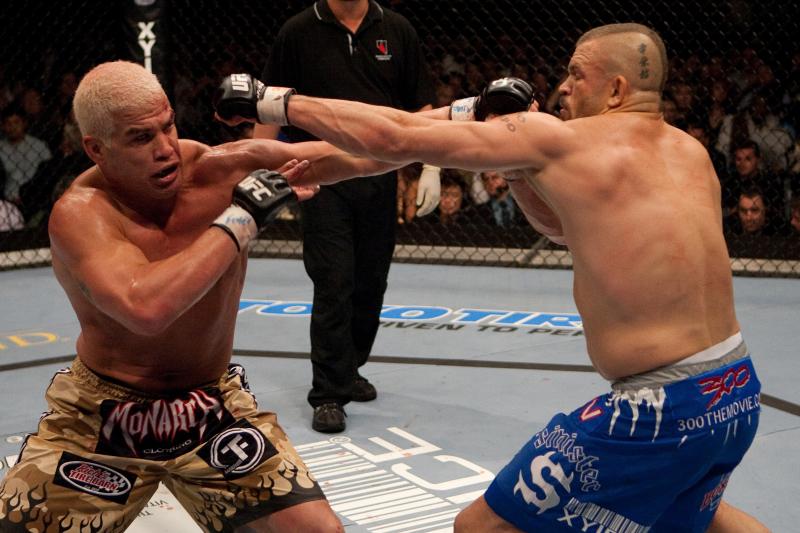
In the past few years, mixed martial arts has enjoyed remarkable commercial success. Some fans imagine that its popularity is a result of its vast technical superiority over traditional martial arts styles. But neither MMA techniques nor training methods are particularly innovative; much of what you see in the competition ring was pioneered decades or even centuries ago.
The recent success of the MMA product is best explained with a sociological model, not a technical one; and this model predicts an inevitable fall from grace. MMA will decay, like every style before it, into a traditional martial art. [Read more →]
While conducting some unrelated research, I recently came across an book written by the disciple of a blind kungfu master. I was gratified to read his advice, so similar to that which I received from my own martial arts teachers. I’ll explain why in a moment; first, a few quotations:
On the primacy of coordination…
The principle of “divide and conquer” may have some validity in those branches of education concerned with knowing rather than doing, but in the education of the artist, “integrate to coordinate” should be the battle-cry.
Demonstrating the ability to make one single movement by genuinely coordinated means, is worth more to the growth of the student than showing them now to negotiate any supposed technical difficulties by the employment of “end-gaining” methods.
Clumsiness in general, and technical failures in particular, have no other origins than in the making of simultaneous contradictory gestures.
[Read more →]
Best practices are those methods and techniques that deliver a desired outcome as quickly, cheaply and reliably as possible. Every field of human endeavor, from mundane household tasks to sophisticated technological processes, has its own set of best practices.
Best practices are the accumulated wisdom of years, decades or even centuries of human experience. Often the result of pain and suffering, these prescriptions tend to follow a simple and practical formula: do this to avoid that.
Doctors wash their hands after examining a patient, to prevent the spread of disease. Runners tie their shoelaces, to avoid tripping and falling on their face. Employers check references before extending a job offer. These best practices remind us how to approach a particular task, and why we should favor one tactic to another.
What then are traditions? [Read more →]