Martial Development

Martial arts for personal development

Totally Nude Tai Chi: A DVD Review With Pictures

April 28th, 2008 · 25 Comments

Can the fire of man breathe within the waters of woman? Only if she allows. From Eden’s Gate, through Taoist teachings, through sexual revolutions and on into time eternal, women have been, are, and always will be the masters of ultimate sexuality.

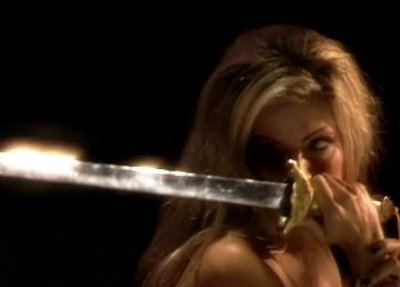
Totally Nude Tai Chi is the most comprehensive, and most bizarre martial arts instructional video I have ever reviewed. Five naked female models demonstrate Tai Chi theory, the solo hand form, sword and saber practice, circle walking and palm changes, push hands and fighting applications, all within one hour. [Read more →]

Ordosclan, The Grumpy Savant of rec.martial-arts

March 31st, 2008 · 7 Comments

Long before the invention of the blog, and even before the creation of the World Wide Web, there was Usenet. The world’s first electronic social network was established in 1980, and martial artists have been arguing there ever since.

Back in the late 1990s, I started reading the rec.martial-arts newsgroup as most people do, with posts sorted by discussion topic. I soon discovered that, since 90% of the replies on any given topic were rubbish, it made more sense to sort by author instead. Although I abandoned rec-martial arts years ago, due to its low-signal-to-noise ratio, I can still remember the names of some of my favorite writers. At the top of that list, I place the mysterious Ordosclan, also known as Turiyan Gold.

I don’t know Ordosclan’s real name, or his training history. I don’t know how many of his posts were written under the influence of anti-psychotic medication, as his critics claimed. Perhaps not enough of them.

Black Belt Mama's Admired Martial Artists Month

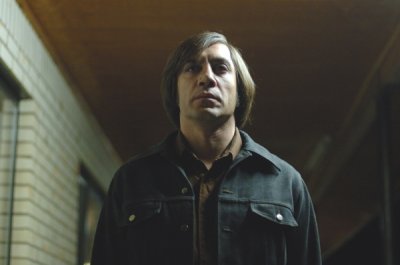
Ordosclan’s martial arts commentaries were sagacious and entertaining, sometimes cryptic and unfortunately brusque. In honor of Black Belt Mama’s Admired Martial Artists Month, I’d like to highlight a few:

Why punch from the hip?

In boxing, the boxer keeps his hands up on either side of his face for protection. Punches are thrown from this position. One hand goes out, the other stays by the face for protection.
Why does karate require that you throw a punch from the hip? What is gained by this?

The point of pulling the fists back is to open the chest. Doing so during stance changes makes it harder to use the arms for balance. It’s not for punching. Punches done from the hip are just a training exercise. The Japanese simply copied basic Shaolin from the Chinese. Some teachers try and read ridiculous theories into why something is the way it is: “It’s for qi,” “it’s for jing,” “It trains you to monkey elbow a guy that puts you in a bear hug from behind”, etc.

If you start taking things out of MA that are not combat-relevant, you’re left with punches and kicks, knees and headbutts. The simple answer is: it’s not martially oriented. Its just a myth that Shaolin monks are/were “fighting” monks. That’s nonsense. And everyone knows it.

[Read more →]

Cure Your Sore Lower Back with Tai Chi Ruler

March 16th, 2008 · 9 Comments

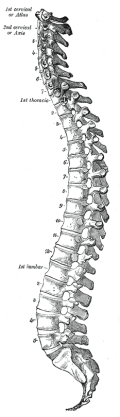
Vertebral column

Although Tai Chi is an effective treatment for stiffness and lower back pain, the complexity of its forms discourages some from learning the practice.

Fortunately for back pain sufferers, not all Tai Chi forms are long and elaborate. While some traditional forms contain more than one hundred movements, others contain less than a dozen. The short forms are easier to learn and faster to complete, but no less beneficial to the practitioner’s health.

Among the short forms, Tai Chi Ruler is the easiest to learn. The ruler, or chih, is a simple wooden dowel, approximately one inch thick and one foot long. Fundamental ruler practices consist of a single movement, repeated a few dozen or few hundred times.

Many of the Tai Chi Ruler movements do not actually require a ruler, and can be performed just as well without it. Here I will describe one such exercise, which is suitable for any age and fitness level. [Read more →]

A Strange Location for Kung Fu Training

February 17th, 2008 · 9 Comments

Dow Jones Index, January 2008
Credit: maveric2003

Some Americans find the park a strange location to practice Tai Chi, or other martial arts. The Chinese, however, consider it normal behavior.

Visit any Chinese park in the early morning, and you will encounter scores of people conducting their daily exercise regimen; not only kung fu, but also gymnastics, dancing and of course ping-pong. Basically, their park is our health club—without a membership fee. [Read more →]

A Letter From a Seattle Tai Chi Exhibitionist

February 14th, 2008 · 12 Comments

A Seattle Weekly reader asks:


Credit: Rod Filbrandt

Dear Uptight Seattleite,

Please explain the compulsion some Seattleites feel to practice tai chi in public. This week on the Seattle-bound run of the Winslow ferry, I observed a middle-aged man practicing tai chi who looked like he was going to mate with the bulkhead, until he almost fell down. Note that it was a calm day and there were no swells. A regular on the ferry told me the man does this every morning. My dog and I always see this other guy who’s tai chi’d to death all the grass around a tree in a park near my house. I see the same thing at Volunteer Park, Green Lake, and other places around the city: middle-aged white guys sweeping the air in elaborate, self-conscious slow motion. Why do they have to do it in public?

Signed,
Why Chi?

Dear Mr. Chi, [Read more →]

Get a Tucking Clue: Tai Chi and Your Tailbone

November 16th, 2007 · 6 Comments

Practiced properly, Tai Chi is among the most beneficial activities for improving one’s health. Unfortunately, some students misunderstand one fundamental alignment principle, resulting in collapsed and contorted postures that are more likely to injure health than restore it. The principle: tucking the tailbone.

A straightened spine is required for most Tai Chi postures, and the proper way to accomplish this is explained the Tai Chi classics. The top end of the spine should be lifted, from the head; the bottom end of the spine should be relaxed and allowed to drop.

Over time, the combined forces of intentional expansion and natural contraction (supplied by gravity) will pull the spine taut, as if suspended in the air. The musculature will automatically adjust to support this straightening—unless it is prevented from doing so. [Read more →]

Chen Taiji—Tekken Style

September 30th, 2007 · 2 Comments


Chen style Taiji in a real (video game) fight

Ling Xiaoyu

Watching Kung mix the art of Chen style Taiji with Ling Xiaoyu’s wushu, I can see why MMA has become so popular lately.

Why Good Listeners Make Better Learners

September 17th, 2007 · 6 Comments

Born without the gift of sight, Raymond Thiberge’s disability proved to be one of his greatest strengths. 

During his lessons with expert pianists, Raymond used his refined senses of touch and hearing to compensate for his blindness.  Listening to his teachers’ instructions and following their hands, he made a critical observation that his fellow students missed.

The experts did not follow their own advice.  [Read more →]

Jacky Wu Jing, The Tai Chi Master

September 16th, 2007 · 27 Comments

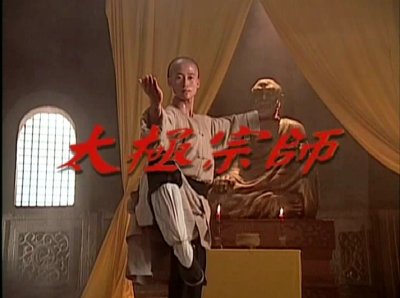
Wu Jing, The Tai Chi Master
The Tai Chi Master (太極宗師)

Have you ever wondered how the slow and graceful movements of Tai Chi could possibly be applied in a real fight? If so, this expertly choreographed movie will give you some ideas.

In The Tai Chi Master, Chinese action hero Wu Jing (a.k.a. Jacky Wu, Jason Wu) portrays real-life master Yang Lu-Chan, the founder of Yang Style Tai Chi. Here, Wu Jing re-enacts the famous tower sequence from Bruce Lee’s Game of Death. [Read more →]

Three Benefits From Lifting Your Bai Hui Point

July 17th, 2007 · 30 Comments

Taiji master Yang Cheng-Fu said that, without lifting your Bai Hui point, even 30 years of practice would be a waste of time. Why is this particular point so important to martial artists, and to everyone else?

The Bai Hui point, which sits on the crown of the head, is known by many different names. In acupuncture, it is identified as Du Mai 20 (百会), the point where the body’s Yang energy naturally converges. In kundalini, tantra and other Indian yogas, this point is named the Sahasrara (crown) chakra. In many esoteric traditions, Bai Hui is regarded as the gate between Man and Heaven.

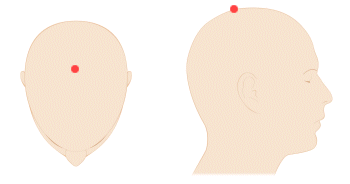
Bai Hui diagram
Bai Hui is not in the middle of the head, but near the twirl of the hair.

If your Taiji practice is in line with the instructions of the old masters, then you are probably already familiar with the benefits of lifting the Bai Hui point. If, on the other hand, you do not currently practice Taiji, zhan zhuang or any other meditative discipline, here is a sampling of the benefits you can expect—benefits which exceed mere self-defense. [Read more →]