December 13th, 2008 · 4 Comments
After reading my previous articles on Mesmerism, James Randi’s Million Dollar Challenge and related subjects, some visitors have expressed skepticism over my meta-skepticism. Why am I so skeptical of skeptics?
Actually, I do respect philosophical skepticism, the frequently claimed pedigree of modern scientific skeptics.
Philosophical skepticism is both a philosophical school of thought and a method that crosses disciplines and cultures. Many skeptics critically examine the meaning systems of their times, and this examination often results in a position of ambiguity or doubt. [It] is an old movement with many variations, and contrasts with the view that at least one thing is certain. Indeed, for Hellenistic philosophers, claiming that at least one thing is certain makes one an [irrational] dogmatist. ~Wikipedia

The relationship between philosophical and popular (“scientific”) skepticism is roughly analogous to the relationship between Cheese and Cheez. [Read more →]
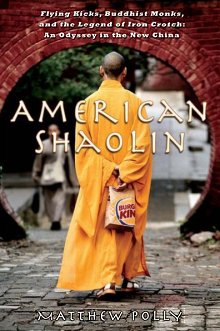
From American Shaolin, a autobiographical tale of Matthew Polly’s intensive training at the modern Shaolin Temple:

With most TV programming so dull, the boys at Shaolin were kungfu movie freaks, constantly visiting Shaolin’s multiplex to watch the latest blood-spattered Hong Kong releases on VHS. Wanting to undermine the assumption that laowai (non-Chinese outsiders) suck at martial arts, I brought VHS copies of Steven Seagal’s Above the Law, David Carradine’s Kung Fu, and Jean-Claude Van Damme’s Lionheart back to Shaolin after winter vacation.
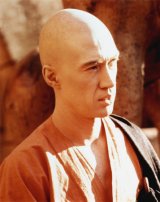
The monks were used to highly fictionalized portrayals of the Shaolin temple, so they weren’t bothered by the fantasy version of Shaolin in David Carrdine’s Kung Fu. They were, however, shocked by the casting of David Carradine.
“The actor is a laowai,” I said. “He’s pretending to be half-Chinese.”
“That explains why his kungfu is so terrible,” Little Tiger said, as he ducked to the back row to avoid another cuff from monk Deqing.

For the rest of the movie I ignored the slights about Carradine’s kungfu skills, which were admittedly poor. (To be fair, however, he did capture that California New Age, faux-Zen blankness perfectly.) I was waiting for that climactic moment that nearly every American male who was alive in the early 1970s remembers: the scene where Carradine lifts a burning chalice to pass the final Shaolin test, permanently branding a dragon one one forearm and a tiger on the other. I hadn’t seen or heard anything like this legend since my arrival, but I had to know.
“Is the story true?” I asked. “Did that used to be the final test for Shaolin monks?”
[Read more →]

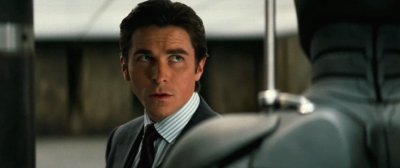
Batman: The Dark Knight
Excerpted from Dark Knight Shift: Why Batman Could Exist—But Not for Long by J.R. Minkel:
Batman is the most down-to-earth of all the superheroes. He has no special powers from being born on a distant world, or bitten by a radioactive spider. All that protects him from the Joker and other Gotham City villains are his wits and a physique shaped by years of training—combined with the vast fortune to reach his maximum potential and augment himself with Batmobiles, Batcables and other Bat-goodies, of course.

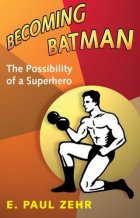
To investigate whether someone like Bruce Wayne could physically transform himself into a one-man wrecking crew, ScientificAmerican.com turned to E. Paul Zehr, associate professor of kinesiology and neuroscience at the University of Victoria in British Columbia and a 26-year practitioner of Chito-Ryu karate-do. Zehr’s book, Becoming Batman: The Possibility of a Superhero, is due out in October 2008.
What’s most plausible about portrayals of Batman’s skills?
You could train somebody to be a tremendous athlete and to have a significant martial arts background, and also to use some of the gear that he has, which requires a lot of physical prowess. Most of what you see there is feasible to the extent that somebody could be trained to that extreme. We’re seeing that kind of thing in less than a month in the Beijing Olympics.
What’s less realistic?
A great example is in the movies where Batman is fighting multiple opponents and all of a sudden he’s taking on 10 people. [Read more →]

Land of the Free, Home of the Brave
Trenchant and timely words from Eric Hoffer, one of Bruce Lee’s favorite philosophers:
There is always a danger that the suppression of a specific clearly defined evil will result in its replacement by an evil that is more widely diffused—one that infects the whole fabric of life. Thus, the suppression of religious fanaticism usually gives rise to a secular fanaticism that invades every department of life. The banning of conventional war-making may result in an endless undeclared war.
[Read more →]

An Unauthorized Bibliography
There’s nothing new within this book; there are no secrets. “It’s nothing special,” Bruce used to say. And so it wasn’t.
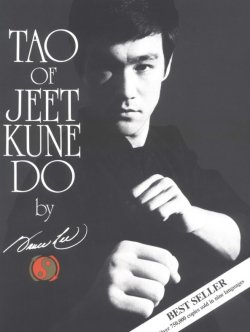
With over 750,000 copies sold in nine languages, The Tao of Jeet Kune Do is the bestselling martial arts book in modern history. Although Bruce Lee’s name and photo appear on the cover, dedicated fans know that he did actually write Tao of Jeet Kune Do—at least not in its current form. (The book is a compilation of Bruce’s personal notes, organized and published posthumously by Dan Inosanto, Linda Lee and Gilbert Johnson.)
While credit for fighting methods expressed in Tao of JKD is rightfully given to boxer Edwin Haislet, fencers Hugo and James Castello, and others, we are left to infer that Jeet Kune Do’s philosophical underpinnings are Bruce’s unique contribution.
Quite the contrary, Jeet Kune Do is an orthodox expression of Taoist, Buddhist, and Western metaphysical principles. From the poem on the book’s opening page, to the passionate expressions of its final chapter, ideas in Tao of JKD can be traced directly to earlier written works. Here is a sampling of these sources. [Read more →]

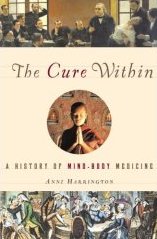
The following passage is excerpted from “The Cure Within: A History of Mind-Body Medicine” by Anne Harrington—a recent addition to my recommended reading list.
The End of Medical Exorcism in Europe
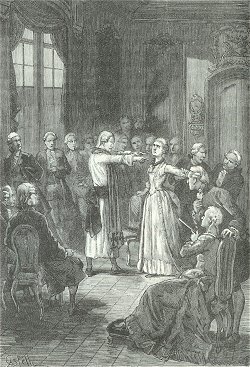
Appreciating the interweaving religious, philosophical and political stakes [in 18th century medicine] is important, because it can help us make sense of an episode whose significance we might otherwise misinterpret: the showdown between the German exorcist Father Johann Joseph Gassner and the Viennese physician Anton Mesmer.

Gassner was an exorcist whose ability to cast out devils was legendary. People came from all over to be healed, and in dramatic public performances—witnessed by crowds from all sectors of society—Gassner would oblige. Official records were made; competent witnesses testified to the extraordinary happenings. All agreed on the basic facts. On being presented with a supplicant, Gassner would typically wave a crucifix over his or her body and demand in Latin that, if the disease he was seeing had a “preternatural” source, this fact must be made manifest. The patient would then typically collapse into convulsions, and Gassner would proceed to exorcise the offending spirit.
Sometimes he added flourishes to this basic routine: in one dramatic instance, for example, he ordered the demon inside a woman to increase the poor woman’s heartbeat and then to slow it down. [Read more →]

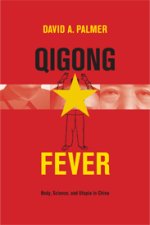
Excerpted from Qigong Fever: Body, Science, and Utopia in China by David A. Palmer
There were no officially sanctioned qigong activities in China until its rehabilitation in 1978, after the end of the Cultural Revolution. However, one woman, Guo Lin, an artist and cancer victim from Guangdong province who had cured herself by practicing qigong during the 1960s, was brave enough to teach other cancer patients in the parks of Beijing as early as 1970. Her ‘New Qigong Therapy’ inaugurated a new, collective form of qigong teaching and practice that would later be adopted by most qigong masters. Guo Lin can thus be said to have triggered the qigong wave of the 1980s.
Born near Zhongshan, Guangdong in 1909, Guo Lin was trained as a young girl in traditional body technologies by her paternal grandfather, a Taoist in Macau, where her family had fled following the 1911 revolution. Later, as a student of landscape painting, she visited several holy mountains; the breathing technique she used when climbing the steep slopes would become the basis for her future qigong method.
In 1949 Guo Lin was hit by uterine cancer, which was treated by hysterectomy. The cancer recurred in 1959 while she was teaching at the new Beijing Painting Academy. Guo Lin remembered the techniques that she had learned in her youth, and decided to practice them to treat her cancer. [Read more →]
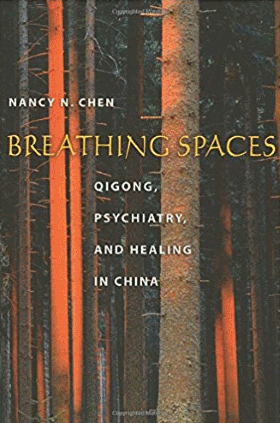
Excerpted from Breathing Spaces: Qigong, Psychiatry, and Healing in China by Nancy N. Chen

Qigong in the Scientific Community
Qigong began to be actively debated within the [Chinese] scientific community during the 1980s, when scientists, especially physicians, sought to legitimate the phenomenon of qi. While popular publications focused on practice or gave life histories of particular masters, the discussions of qigong among scientists addressed questions of how to measure the force field of qi energy. Qi as a material phenomenon had to be quantified. This interest paralleled attention to the phenomenon of teyigongneng, or special psychic abilities.
…The doors of scientific research opened when Qian Xuesen, the prominent founder of China’s space research, declared that teyigongneng merited serious study. In his account of this movement, Paul Dong, a US-based qigong master, described how young children in China were tested for their abilities to “hear” characters being written and to perform psychokinesis (the power to move objects with their minds); there were reports of pills disappearing from bottles only to materialize outside their containers.
Scientific experiments also commenced during this period, as many researchers believed that special abilities could be enhanced with qigong. Over a dozen scientific journals and publications, among them, Zhiran Zazhi (Nature magazine) and Dongfang Qigong (Eastern qigong), began to discuss human potential and somatic science. [Read more →]
February 10th, 2008 · 6 Comments
Recounted by psychologist Robert Cialdini:
One night at an introductory lecture given by the Transcendental Meditation (TM) program, I witnessed a nice illustration of how people will hide inside the walls of consistency to protect themselves from the troublesome consequences of thought.

The lecture itself was presided over by two earnest young men and was designed to recruit new members into the program. The program claimed it could teach a unique brand of meditation that would allow us to achieve all manner of desirable things, ranging from simple inner peace to the more spectacular abilities—to fly and pass through walls—at the program’s advanced (and more expensive) stages.
I had decided to attend the meeting to observe the kind of compliance tactics used in recruitment lectures of this sort, and had brought along an interested friend, a university professor whose areas of specialization were statistics and symbolic logic. As the meeting progressed and the lecturers explained the theory behind TM, I noticed my logician friend become increasingly restless.
Looking more and more pained and shifting about constantly in his seat, he was finally unable to resist. When the leaders called for questions at the completion of the lecture, he raised his hand and gently but surely demolished the presentation we had just heard. In less than two minutes, he pointed out precisely where and why the lecturers’ complex argument was contradictory, illogical, and unsupportable. [Read more →]

Credit: bluefootedbooby
The same strategies used by a military commander to defend the nation can also be used to protect one’s self. Sun Tzu’s classic manual The Art of War is therefore required reading for all serious martial artists.
Here is a summary of Sun Tzu’s most important points (based on translations by Roger Ames):
On Assessments (計篇第一)
Warfare is the art of deceit. Therefore, when able, seem to be unable; when ready, seem unready; when nearby, seem far away; and when far away, seem near. If the enemy seeks some advantage, entice him with it. If he is in disorder, attack him and take him.
Attack where he is not prepared; go by way of places where it would never occur to him you should go. These are the military strategist’s calculations for victory—they cannot be settled in advance. [Read more →]