This is a distillation of previous interviews with Master Wang. Original, unedited translations are available at Formosa Neijia (in part) or from the Yiquan eBookstore (in full).
Having traveled across China, I know that Taijiquan has the most practitioners of any martial art. Upon hearing that this boxing method was handed down from Zhang Sanfeng, I despised him for a long time.
Later on, I read the collected edition of Zhang Sanfeng’s teachings, and realized that he had progressed deeply into the great Tao—and I came to believe that Taiji was not handed down from him at all! Actually, it doesn’t matter; even if one is a descendant of Sanfeng, he is not worthy to talk about this method without first gaining its essence. [Read more →]
Can the fire of man breathe within the waters of woman? Only if she allows. From Eden’s Gate, through Taoist teachings, through sexual revolutions and on into time eternal, women have been, are, and always will be the masters of ultimate sexuality.
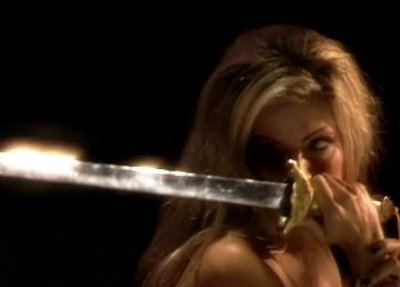
Totally Nude Tai Chi is the most comprehensive, and most bizarre martial arts instructional video I have ever reviewed. Five naked female models demonstrate Tai Chi theory, the solo hand form, sword and saber practice, circle walking and palm changes, push hands and fighting applications, all within one hour. [Read more →]
With his proclamation Cogito ergo sum, Descartes set the stage upon which most Western philosophers have played for the last four hundred years. Under his model, the human being is composed of two distinct entities: mind and body. Some thinkers agree, and others disagree, but few challenge the validity of the model itself, and its silent implication that nothing lies between.
Following George Orwell’s advice, I will begin by stating the obvious: East Asian martial arts training was never meant to be performed within this framework.
Although Descartes’ model allowed for each aspect to influence the other, he did not recognize the full breadth and depth of the mind-body relationship. So, like the atomic model of physics failed to explain observable and repeatable quantum phenomena, Descartes’ atomic metaphysics obscures the potential of high-level martial arts. When authentic traditional training is reformatted to fit into the duelistic model, the result is typically and predictably Bull-shido.
Theory and Application, and Nothing More
Two tragic outcomes result from the application of duelistic mind-body theory to martial training. First, the Complete Martial Art is defined as one containing both Theory and Application—and where Theory is given undue precedence. [Read more →]
Long before the invention of the blog, and even before the creation of the World Wide Web, there was Usenet. The world’s first electronic social network was established in 1980, and martial artists have been arguing there ever since.
Back in the late 1990s, I started reading the rec.martial-arts newsgroup as most people do, with posts sorted by discussion topic. I soon discovered that, since 90% of the replies on any given topic were rubbish, it made more sense to sort by author instead. Although I abandoned rec-martial arts years ago, due to its low-signal-to-noise ratio, I can still remember the names of some of my favorite writers. At the top of that list, I place the mysterious Ordosclan, also known as Turiyan Gold.
I don’t know Ordosclan’s real name, or his training history. I don’t know how many of his posts were written under the influence of anti-psychotic medication, as his critics claimed. Perhaps not enough of them.
Ordosclan’s martial arts commentaries were sagacious and entertaining, sometimes cryptic and unfortunately brusque. In honor of Black Belt Mama’s Admired Martial Artists Month, I’d like to highlight a few:
In boxing, the boxer keeps his hands up on either side of his face for protection. Punches are thrown from this position. One hand goes out, the other stays by the face for protection.
Why does karate require that you throw a punch from the hip? What is gained by this?
The point of pulling the fists back is to open the chest. Doing so during stance changes makes it harder to use the arms for balance. It’s not for punching. Punches done from the hip are just a training exercise. The Japanese simply copied basic Shaolin from the Chinese. Some teachers try and read ridiculous theories into why something is the way it is: “It’s for qi,” “it’s for jing,” “It trains you to monkey elbow a guy that puts you in a bear hug from behind”, etc.
If you start taking things out of MA that are not combat-relevant, you’re left with punches and kicks, knees and headbutts. The simple answer is: it’s not martially oriented. Its just a myth that Shaolin monks are/were “fighting” monks. That’s nonsense. And everyone knows it.
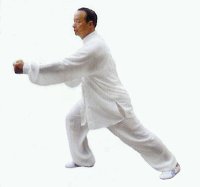
Welcome to the fourth edition of Qigong and Energy Arts Forum, a monthly collection of the best new articles on qigong (chi kung), reiki, kundalini yoga, meditation, and other related disciplines. This edition focuses on the risks and dangers–physical, intellectual, and spiritual–of improper practice.
Army’s New PTSD Treatments: Yoga, Reiki, and Bioenergy by Noah Shachtman (The Danger Room) The military is scrambling for new ways to treat the brain injuries and post-traumatic stress of troops returning home from war. And every kind of therapy–no matter how far outside the accepted medical form–is being considered. The Army just unveiled a $4 million program to investigate everything from “spiritual ministry, transcendental meditation, [and] yoga” to “bioenergies such as Qi gong, Reiki, [and] distant healing” to mend the psyches of wounded troops…
Dangers of Kundalini Yoga by Anmol Mehta (Mastery of Meditation, Enlightenment and Kundalini Yoga) Kundalini Yoga is certainly a powerful science and if not approached with intelligence and respect it can produce some challenges and difficulties for the practitioners. That is not meant to discourage you from taking up its practice, it is meant to help guide you so that you undertake Kundalini Yoga practice safely and thus, enjoy the enormous benefits that this form of yoga bestows…[Read more →]
Although Tai Chi is an effective treatment for stiffness and lower back pain, the complexity of its forms discourages some from learning the practice.
Fortunately for back pain sufferers, not all Tai Chi forms are long and elaborate. While some traditional forms contain more than one hundred movements, others contain less than a dozen. The short forms are easier to learn and faster to complete, but no less beneficial to the practitioner’s health.
Among the short forms, Tai Chi Ruler is the easiest to learn. The ruler, or chih, is a simple wooden dowel, approximately one inch thick and one foot long. Fundamental ruler practices consist of a single movement, repeated a few dozen or few hundred times.
Many of the Tai Chi Ruler movements do not actually require a ruler, and can be performed just as well without it. Here I will describe one such exercise, which is suitable for any age and fitness level. [Read more →]
Some Americans find the park a strange location to practice Tai Chi, or other martial arts. The Chinese, however, consider it normal behavior.
Visit any Chinese park in the early morning, and you will encounter scores of people conducting their daily exercise regimen; not only kung fu, but also gymnastics, dancing and of course ping-pong. Basically, their park is our health club—without a membership fee. [Read more →]
Please explain the compulsion some Seattleites feel to practice tai chi in public. This week on the Seattle-bound run of the Winslow ferry, I observed a middle-aged man practicing tai chi who looked like he was going to mate with the bulkhead, until he almost fell down. Note that it was a calm day and there were no swells. A regular on the ferry told me the man does this every morning. My dog and I always see this other guy who’s tai chi’d to death all the grass around a tree in a park near my house. I see the same thing at Volunteer Park, Green Lake, and other places around the city: middle-aged white guys sweeping the air in elaborate, self-conscious slow motion. Why do they have to do it in public?
The position of refinement of consciousness in the theory and practice of martial arts is utterly critical. It pervades the fundamentals of training in martial arts as well as the most advanced contents of their highest level. This is the technical and theoretical core and quintessence of martial arts.
To abandon this is tantamount to throwing away the living soul and fundamental work of the techniques and theories of martial arts, leaving only low level “external exercises” with their peculiarities of outward form…
Consciousness as we use it here does not mean consciousness in the ordinary sense, abstract logical thought, or abstract ideation; neither is it formal thinking in the ordinary sense…it is always a result of combined refinement of body and mind.
Master Shi Ming, from Bill Moyers’ Healing and the Mind
Shi Ming’s demonstration, and similar performances by other Taiji masters always draw criticism from the incredulous.
The most common objection is at the appearance of cooperation between teacher and student: the disciples appear to be throwing themselves. In many cases, that is exactly what they are doing. This fact alone does not, however, prove that the master is a fake. [Read more →]
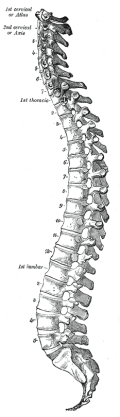
Practiced properly, Tai Chi is among the most beneficial activities for improving one’s health. Unfortunately, some students misunderstand one fundamental alignment principle, resulting in collapsed and contorted postures that are more likely to injure health than restore it. The principle: tucking the tailbone.
A straightened spine is required for most Tai Chi postures, and the proper way to accomplish this is explained the Tai Chi classics. The top end of the spine should be lifted, from the head; the bottom end of the spine should be relaxed and allowed to drop.
Over time, the combined forces of intentional expansion and natural contraction (supplied by gravity) will pull the spine taut, as if suspended in the air. The musculature will automatically adjust to support this straightening—unless it is prevented from doing so. [Read more →]