Martial Development

Martial arts for personal development

Entries Tagged as 'Philosophy'

Wushu and the Second Cultural Revolution

June 25th, 2007 · 5 Comments

In 1966, the Chinese government began a violent purge of traditional culture. Communist Party Chairman Mao Zedong called for the abolishment of all things old, and enlisted a youth militia to perform the destruction. Local police were forbidden to interfere.

Mao’s regime criminalized the practice of traditional wushu. Threatened by harassment, imprisonment or torture at the hands of the Red Guard, some martial arts experts went underground. Other unfortunate practitioners were “re-educated” to death.

The first Cultural Revolution has ended, but wushu now faces a new peril. This second revolution transcends national boundaries, and there is little hope of escaping its reach. [Read more →]

Tags: Philosophy · Psychology · Teaching

Haiku Tournament Winners

June 24th, 2007 · 2 Comments

The martial arts haiku tournament has officially ended. Thank you to all the participants. Here are some of my favorite haiku from among the submissions: [Read more →]

Tags: Martial Arts Humor · Philosophy

Why Wing Chun Punches Never Miss

June 7th, 2007 · 1 Comment

Watching a Wing Chun expert apply their art, you will never see a failed attempt to punch. Every strike hits the target. The reason for such consistent success is not size, strength, or natural talent, but strategy. [Read more →]

Tags: Fighting and Self-Defense · Philosophy · Wing Chun

Kosta Danaos on Combat Sports and Martial Arts

June 3rd, 2007 · 2 Comments

Excerpted from The Rediscovery of Panmachon by Kosta Danaos:

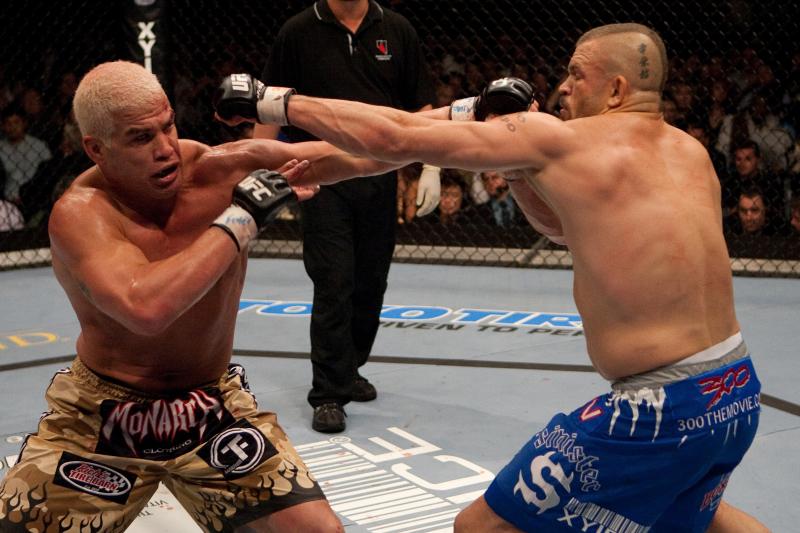
Anyone with a more than elementary involvement in the martial arts and combat sports is able to tell the difference between the two. A combat sport is, by definition, an athletic contest between two individuals, the main intention of which is, in the end, to assure the participants’ safety. Wrestling, judo, taekwondo and boxing are principal examples of combat sports. Techniques that are by definition hazardous to the participant’s health and continued wellbeing are (or should be) prohibited. It is plainly understood that contestants are not allowed to (nor desire to) attack one another’s eyes or genitals, bite through each other’s flesh, or attack the spinal chord and skull using lethal strikes, locks, or other techniques. Killing or permanently disabling the opponent is not the objective of combat sports, though injuries abound… [Read more →]

Tags: Philosophy

Three Ways to Measure Your Personal Development

May 3rd, 2007 · 5 Comments

The correct practice of martial arts develops physical health, emotional maturity and intellectual acuity. In this sense, it is one of the world’s oldest personal development disciplines.

Whether you enjoy martial arts, or any other activity for personal growth, you need to measure your results at regular intervals; otherwise, as time passes, you are likely to drift away from your original goals. As Taijiquan master Wang Zongyue allegedly wrote, “If you are off by just one inch at the start, you will deviate by one thousand miles in the end.”

But how can you accurately gauge your progress in a complex and personal pursuit? [Read more →]

Tags: Fighting and Self-Defense · Philosophy

Students: Burn The Ships, Not Your Contracts

April 29th, 2007 · 2 Comments

A contractual relationship with your martial arts school could end miserably; former classmates and I know this from experience.  Despite this experience, I believe that the potential benefits of a contract to the student outweigh the risks. 

Before I explain the benefit, let me tell you the tale of an Aikido dojo gone sour. [Read more →]

Tags: Aikido · Philosophy · Teaching

Should You Sign a Karate Contract?

April 24th, 2007 · 11 Comments

Karate class

So you visited the local Karate dojo. You enjoyed the free introductory class, and you’re ready to enroll. One minor detail stands between you and black belt prowess: The Contract.

[Read more →]

Tags: Karate · Philosophy · Teaching

Lightworking Lessons From the Hubble Telescope

April 20th, 2007 · 6 Comments

Supernova LMC N 63A

In the ancient spiritual text Bhagavad-Gita, Krishna defined two paths to the highest realization of human potential. For those inclined towards introspection and contemplation, Krishna recommended the path of transcendent wisdom, or Jnana Yoga. For more active and extroverted people, he suggested the path of selfless service, or Karma Yoga.

Blogger Steve Pavlina discussed these paths in his recent article Are You a Lightworker or a Darkworker? After insisting that mastery requires a polarizing commitment to one path—and one alone—Steve denigrated the path of self-knowledge:

If you polarize as a lightworker, you are dedicating your life to serving the greater good. If you polarize as a darkworker, you are dedicating your life to serving yourself. To use a Star Wars analogy, it is similar to deciding whether or not to become a Jedi or a Sith.

For a darkworker the level of unconditional love is directed inwardly as love of self. It’s like a highly concentrated form of arrogance. It may not be expressed outwardly in the form of a smug attitude, but inwardly the person comes to embrace the idea that s/he is the most important person on earth and should act accordingly. Honoring this perspective can actually lead to a state of peace that is virtually the opposite of humility.

While some might label the darkworker path as evil path, I dislike using words like good or evil to describe these paths. They’re really two different sides of the same coin.

Are the paths of lightworking and darkworking truly exclusive? To understand the flaw in this theory, let’s examine a tool that is literally dedicated to gathering cosmic light: the Hubble Space Telescope. [Read more →]

Tags: Meditation · Philosophy · Spirituality

Wuji Zhuang: The Self-Knowledge Stance

April 16th, 2007 · 12 Comments

Wuji zhuang is the weakest stance in Chinese martial arts. Standing straight and still with their arms down at their sides, the practitioner of the wuji stance is in no position to deliver an attack, or to defend against one. They are sitting ducks, utterly unable to resist force from any of the four directions. So why is wuji zhuang so esteemed among high hands, and considered an important part of training in taijiquan, yiquan, and other arts?

The practice of wuji zhuang, or standing meditation, releases the hidden power of self-knowledge. [Read more →]

Tags: Health and Fitness · Meditation · Philosophy · Qigong · Tai Chi · Training Tips

Black Belt Envy

April 1st, 2007 · 88 Comments

Let me tell you a dirty little secret about black belts. They have no particular meaning at all. [Read more →]

Tags: Aikido · Karate · Philosophy · Psychology · Teaching